

Table of Contents
- Step 1: Empty the Appliance Completely
- Step 2: Defrost Fully
- Step 3: Deep Clean the Interior
- Step 4: Dry It Longer Than You Think You Need To
- Step 5: Neutralize Odors Before Storage
- Step 6: Secure (But Don’t Seal) the Doors
- Step 7: Transport & Position It Correctly in Storage
- Common Refrigerator Storage Mistakes to Avoid
- How Long Can You Store a Refrigerator or Freezer?
- Storage Preparation Matters More Than Storage Length
- FAQs
How to store a refrigerator or freezer seems straightforward—until you open it later and are hit with musty odors, mold growth, or lingering food smells that won’t go away. Appliances trap moisture easily, and if they aren’t prepared correctly before storage, even a short storage period can cause long-term damage.
Whether you’re moving, remodeling, downsizing, or storing an extra fridge or freezer, following the right steps will protect your appliance and save you from expensive cleaning—or replacement—later.
Below is a step-by-step guide to storing a refrigerator or freezer properly, with real-world tips that most storage guides omit.
Step 1: Empty the Appliance Completely
Before you proceed, remove all food, ice, shelves, drawers, and bins.
This matters a lot because:
Forgotten crumbs and spills are the #1 cause of storage odors
Removable parts trap moisture underneath them
Ice makers and freezer trays often hold hidden water
Tip: Check door shelves and drawer tracks carefully. These are common “forgotten zones.”
Step 2: Defrost Fully
If you’re storing a freezer or a fridge with a freezer compartment, defrost it completely.
Unplug the unit
Leave doors open
Allow all ice to melt naturally
Never chip ice out (this can damage internal coils)
Place towels underneath to catch runoff and empty them frequently. Even a small amount of residual ice can become trapped moisture once the doors are closed in storage.
Step 3: Deep Clean the Interior
This is where the odors start. Once defrosted, clean all interior surfaces with a gentle yet effective solution.
Best cleaning mix:
Warm water
Mild dish soap
Optional: baking soda
Avoid harsh chemicals like bleach—they can leave lingering fumes that settle into plastic liners.
Remove the shelves and drawers, then clean them separately. Let everything air dry completely before reassembling.
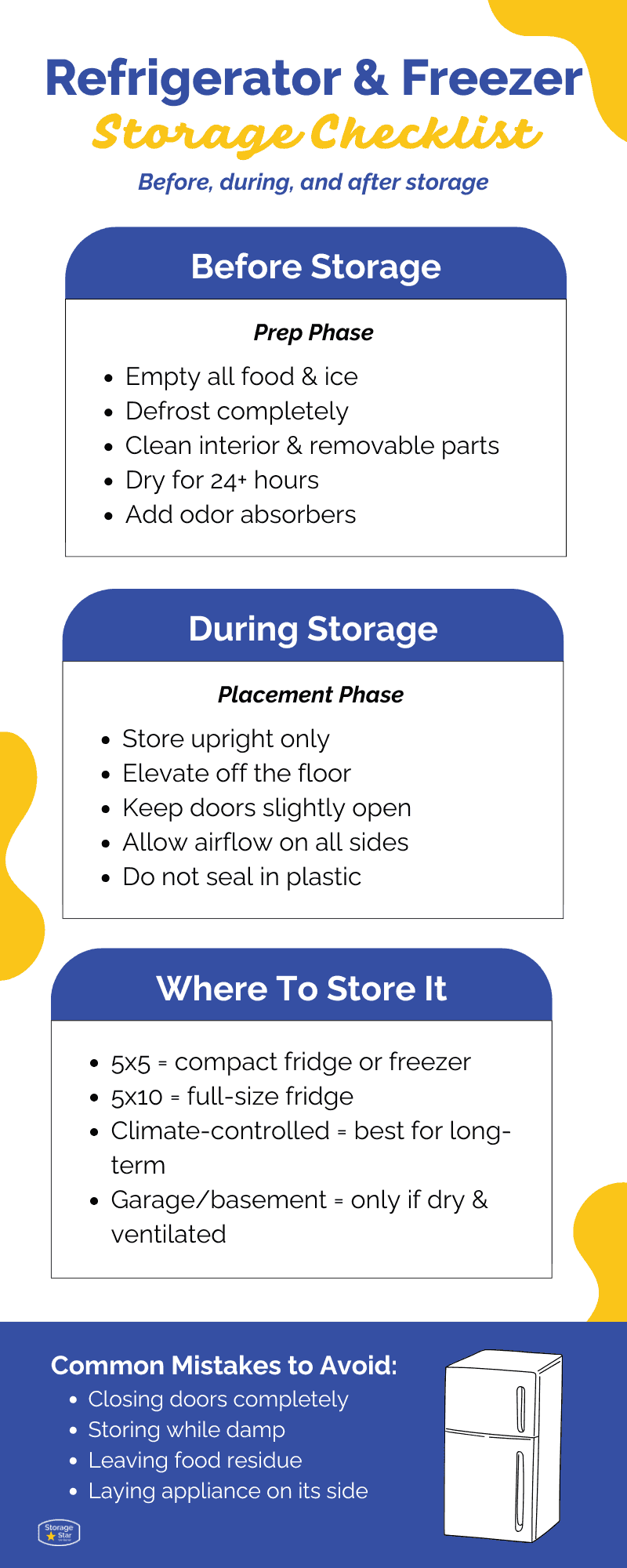
Step 4: Dry It Longer Than You Think You Need To
This is one of the biggest storage mistakes, and where mold problems begin. Trust us, we've made the mistake before.
After cleaning:
Leave the refrigerator or freezer open for at least 24 hours
Use a fan if possible to circulate air
Make sure seals, corners, and drain holes are fully dry
No moisture should remain. Even condensation can cause mold growth in a sealed appliance.
Step 5: Neutralize Odors Before Storage
Before closing the appliance for transport or storage, add odor-absorbing materials inside.
Recommended options:
Baking soda (open box or shallow bowl)
Activated charcoal
Dry coffee grounds (in a breathable container)
Avoid moisture-absorbing gels that could spill or leak.
Step 6: Secure (But Don’t Seal) the Doors
This is a crucial difference between safe storage and moldy storage.
DO:
Secure doors slightly open using a bungee cord or towel
Allow airflow to prevent trapped humidity
DON’T:
Tape the doors shut
Wrap tightly in plastic with doors sealed
Airflow is your best defense against mold and mildew.
Step 7: Transport & Position It Correctly in Storage
When moving and placing the refrigerator or freezer in a storage unit (or wherever else you're going to store the appliance):
Always transport upright
Never store it on its side
Elevate it slightly off the floor using pallets or boards
Keep it away from walls to allow air circulation
Storing upright protects internal components and prevents damage to the compressor.
Best Places to Store a Refrigerator or Freezer
Where you store your refrigerator or freezer matters just as much as how you prepare it. The right location helps prevent moisture buildup, odor issues, and accidental damage during storage.
Best Storage Unit Size for a Refrigerator or Freezer
Choosing the correct unit size keeps your appliance protected without paying for unnecessary space.
5' x 5' storage unit
Works for compact refrigerators, chest freezers, or small apartment fridges.5' x 10' storage unit
Ideal for full-size refrigerators or upright freezers, with room to keep doors cracked and allow airflow.10' x 10' or larger
Best if you’re storing a refrigerator alongside other household items or appliances, or during a move or renovation.
Always leave enough clearance around the appliance so air can circulate freely.
Best Type of Storage Unit for Appliances
Not all storage units offer the same environment.
Indoor storage units
Provide better protection from weather, dust, and temperature extremes.Climate-controlled storage (when available)
Helps regulate temperature and humidity, reducing the risk of condensation—especially for long-term storage.Avoid outdoor-only exposure
Storing appliances directly outdoors or in uncovered areas increases the risk of moisture buildup and rust.
Regardless of unit type, always store the refrigerator or freezer upright and slightly elevated off the floor.
Can You Store a Refrigerator at Home Instead of a Storage Unit?
If you don’t plan to rent storage, some at-home locations can work—with the right precautions.
Better at-home options:
Dry basements with good airflow
Climate-controlled garages
Utility rooms with space to keep doors cracked
Locations to avoid:
Damp basements
Sheds or outdoor structures
Areas prone to temperature extremes or humidity
Even at home, follow the same rules: clean thoroughly, dry completely, and keep doors slightly open.
Storage Placement Tip Most People Miss
No matter where you store it:
Keep the refrigerator a few inches away from walls
Avoid stacking items directly against it
Maintain airflow around the unit at all times
Air circulation is one of the most important factors in preventing mold and lingering odors during storage.
Common Refrigerator Storage Mistakes to Avoid
These are the errors that cause most appliance damage during storage:
Closing the doors completely
Storing while still damp
Leaving food residue inside
Wrapping tightly in plastic
Plugging it in “occasionally” inside storage
Avoiding these mistakes dramatically improves your appliance's reliability.
How Long Can You Store a Refrigerator or Freezer?
With proper preparation, refrigerators and freezers can be stored safely for months or even years.
For long-term storage:
Check periodically if accessible
Replace odor absorbers every few months
Ensure doors remain slightly open
Storage Preparation Matters More Than Storage Length
Most odor and mold issues don’t come from how long an appliance is stored — they come from how it was prepared.
Taking the extra time to clean, dry, and ventilate your refrigerator or freezer before storage ensures it’s ready to use again without unpleasant surprises.
Still unsure of how to store a refrigerator or freezer in your storage unit? Contact our expert storage team for tips and tricks!
FAQs
Can you store a refrigerator or freezer without it smelling?
Yes, but only if it’s properly prepared. To prevent odors, you must completely empty the appliance, defrost it, deep clean the interior, and allow it to dry fully before storage. Keeping the doors slightly open and using odor absorbers like baking soda or charcoal also helps prevent smells.
Do you need to clean a refrigerator before putting it in storage?
Absolutely. Any food residue, spills, or moisture left behind can lead to mold, mildew, and strong odors during storage. Clean all interior surfaces with mild soap and water, remove shelves and drawers, and let everything air dry completely before storing.
Should refrigerator doors be left open in storage?
Yes. Refrigerator and freezer doors should be kept slightly open during storage to allow airflow. Sealing the doors shut traps moisture inside, which is one of the main causes of mold and mildew buildup.
Can you store a refrigerator in a storage unit long-term?
Yes. A refrigerator or freezer can be stored safely for months or even years if it’s properly cleaned, dried, and ventilated. For long-term storage, it’s best to check on it periodically and replace odor absorbers as needed.
What size storage unit do I need for a refrigerator or freezer?
5' x 5' unit: Small refrigerators or chest freezers
5' x 10' unit: Full-size refrigerators or upright freezers
10' x 10' or larger: Appliances stored with other household items
Always allow space around the appliance for airflow.
Is climate-controlled storage necessary for a refrigerator?
Climate-controlled storage isn’t required, but it can help reduce humidity and condensation, especially for long-term storage. The most important factors are proper cleaning, complete drying, airflow, and keeping the appliance upright.
Can I store a refrigerator in a garage or basement instead?
You can store a refrigerator at home if the space is dry, well-ventilated, and protected from extreme temperatures. Climate-controlled garages or dry basements can work, but damp basements, sheds, or outdoor areas should be avoided.