
Table of Contents
- Austin Cost of Living at a Glance
- Monthly Budget Breakdown for a Single Person in Austin
- Housing: The Biggest Line Item
- What Salary Do You Need to Live Comfortably in Austin?
- Groceries & Food
- Utilities
- Transportation
- Healthcare
- Entertainment & Lifestyle
- Austin Cost of Living vs. Other Texas Cities
- Tips for Living Affordably in Austin
- Frequently Asked Questions About the Cost of Living in Austin, TX
- Planning a Move to Austin? Storage Star Can Help.
- FAQs
Austin has been one of the most talked-about cities in America for the better part of a decade — and if you're reading this, there's a good chance you're trying to figure out whether you can afford to live here. That's a fair question, and it deserves a straight answer.
This guide breaks down what you can realistically expect to spend in Austin across every major cost category, so you can plan your budget before you make the move.
And if you’re looking for storage in Austin before you make the move, Storage Star has four convenient locations in the city, making it easy to find secure storage from a name you can trust.
Austin Cost of Living at a Glance
Here's the honest version: Austin is not cheap. But it's also not the budget-buster that cities like San Francisco or New York are. The overall cost of living in Austin runs about 3–11% above the national average, depending on the source and methodology, and that gap is almost entirely driven by housing. Things like groceries, healthcare, transportation, and utilities are largely on par with the national average.
In other words, if you can solve for housing, Austin is a very livable city.
Category | Austin Est. | vs. National Average |
Overall Cost of Living | ~3–11% above | Higher |
Housing (rent) | ~$1,638–$1,829/mo avg | Higher |
Median Home Price | ~$500,000–$570,000 | Higher |
Groceries | ~$300–$450/mo per person | 3–4% lower |
Utilities | ~$200–$340/mo | ~1–6% lower |
Transportation | ~$100–$500/mo | ~5–11% lower |
Healthcare | ~$140–$621/mo (insurance) | ~3–5% lower |
Median Household Income | ~$86,000–$91,461 | Higher than TX avg |
Sources: RentCafe, Salary.com, UHomes, C2ER, OysterLink, CultureMap Austin — March/April 2026
Monthly Budget Breakdown for a Single Person in Austin
Here's what a realistic monthly budget looks like depending on lifestyle and location within Austin.
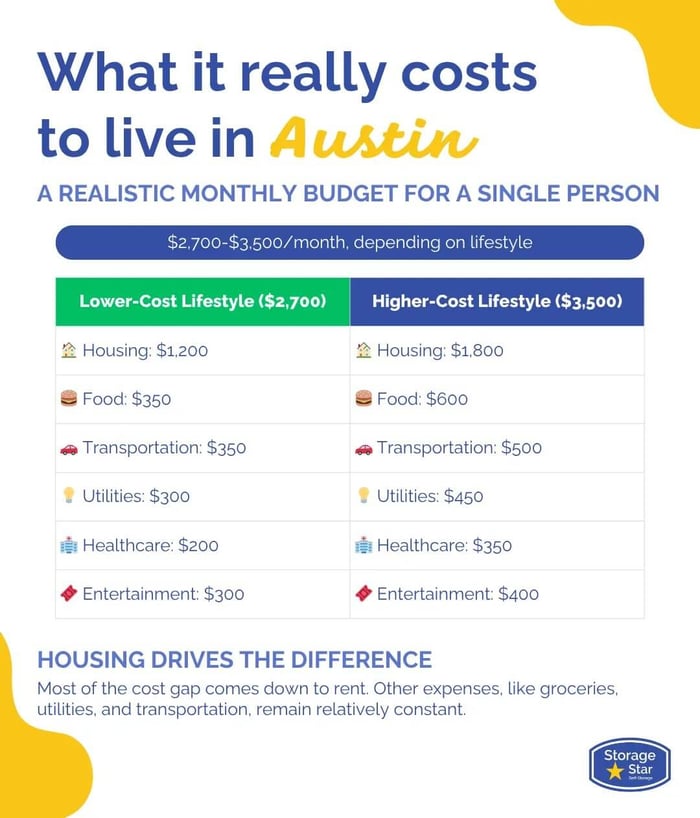
Want to lower your monthly costs? See tips below.
Housing: The Biggest Line Item
Housing is where Austin's cost of living diverges most sharply from the national average, and it's the number you need to plan around first.
Renting in Austin
The average monthly rent in Austin runs between $1,638 and $1,829 depending on the source and neighborhood — making it the most expensive rental market in Texas. Here's what that looks like broken down by unit type:
1-bedroom apartment: $1,400–$1,900/month in central Austin neighborhoods; lower in suburban areas like Pflugerville, Round Rock, and Cedar Park
2-bedroom apartment: $1,700–$2,600/month in walkable, central neighborhoods
Suburban rentals: Generally $1,000–$1,400/month in areas like Riverside, Pflugerville, and North Austin
The most affordable rental neighborhoods and areas:
North Loop
East Austin (select pockets)
Pflugerville
Round Rock
The most expensive tend to be:
Downtown
South Congress
Bouldin Creek
One important note: Austin's rental market has softened since its 2022 peak, when rents spiked 20–30% in a matter of months. The 2025–2026 market represents a more stable entry point for renters than the pandemic-era surge, so if you've been scared off by headlines from a few years ago, it's worth taking a fresh look.
Buying a Home in Austin
The median home price in Austin currently hovers between $500,000 and $570,000 which is roughly 3–4% above the national average. That's a significant number, and it's worth understanding the context: Austin home prices surged 40–60% between 2020 and 2023 before cooling off. Since then, prices have moderated by about 10–15% from their peak.
For buyers who are flexible on location, the suburbs offer substantial savings. Communities like Kyle, Buda, outer Pflugerville, and Cedar Park offer new construction homes at 30–40% below central Austin prices, with the tradeoff of a longer commute to downtown (typically 30–45 minutes).
Explore some of the best neighborhoods in Austin to see what area works for you and your budget!
Property Taxes
One thing that catches a lot of newcomers off guard: Texas has no state income tax, but it makes up for it with higher-than-average property taxes. Austin-area property tax rates typically run 1.8–2.2% of assessed value annually, meaning a $500,000 home could carry a property tax bill of $9,000–$11,000 per year. Budget for this if you're planning to buy.
If you're moving into a master-planned community in the suburbs, also factor in HOA fees, which typically range from $75–$200/month in communities like Steiner Ranch, Mueller, and Cedar Park neighborhoods.
What Salary Do You Need to Live Comfortably in Austin?
This is the question everyone really wants answered. According to a 2026 analysis:
Single adults need approximately $98,550/year to be considered "financially stable" in Austin
Families of four (two working adults, two children) need a combined household income of approximately $229,050/year for the same designation
Those numbers are based on a 50/30/20 budgeting framework (50% needs, 30% wants, 20% savings) and may feel high — but keep in mind that Austin's tech sector regularly pays $100,000–$200,000+ for many roles, and the city's median household income of $86,000–$91,461 is meaningfully above both Texas and national averages. The income potential here is real.
A more practical rule of thumb for most people: a single person earning $80,000–$100,000 can live comfortably in Austin's suburbs with homeownership within reach. Living in Central Austin comfortably typically requires $110,000–$140,000+.
Groceries & Food
Here's some good news: food in Austin is surprisingly affordable, especially if you cook at home.
Groceries
Grocery costs in Austin run approximately 3–4% below the national average, which is a genuine bright spot in an otherwise above-average cost-of-living picture. H-E-B (the beloved Texas grocery chain that Austinites are irrationally passionate about) is the dominant grocery retailer in the area and is well known for competitive pricing and quality.
Expect to budget around $300–$450/month per person for groceries, depending on your diet and shopping habits. Cooking at home consistently is one of the most effective ways to keep your Austin budget in check.
A few real-world price benchmarks:
Gallon of milk: ~$4.64
Dozen eggs: ~$3.97
Pound of potatoes: ~$4.69
Dining Out
Austin's food scene is world-class, and eating out is one of the city's great pleasures, but it can add up quickly. Here's a realistic range:
Food trucks: $8–$15/meal — one of the best values in the city
Casual dining: $15–$25/person
Mid-range restaurants: ~$50/person
Dining out budget: $150–$400/month depending on how often you go out
The good news: Austin has more affordable food experiences than almost any city its size. Between food truck parks, farmers markets, happy hours, and free events, you can eat extremely well without spending a fortune if you're intentional about it.
Utilities
Utility costs in Austin run slightly below the national average, about 1–6% lower depending on the category. Here's what to expect monthly:
Electricity: $150–$300/month (higher in summer due to heavy AC use — expect the upper end of that range June through September)
Water/sewage: $50–$100/month
Internet: $50–$70/month
Natural gas: $30–$45/month
Total monthly utilities: approximately $280–$515/month
The biggest variable is your electricity bill in summer. Austin's heat is relentless from June through September, and air conditioning costs can spike 30–50% during peak summer months compared to spring or fall. So keep that in mind when setting your thermostat.
You also may need to keep the heat in mind when renting a storage unit. For temperature-sensitive items, we strongly recommend a climate-controlled unit to keep your things safe during the hottest months.
Transportation
Transportation costs in Austin run about 5–11% below the national average, one of the city's genuine cost-of-living bright spots. That said, the practical reality is that Austin is a car-dependent city, and most residents budget accordingly.
Owning a Car
For most Austinites, car ownership is a necessity. Budget approximately:
Car payment + insurance + gas: $350–$500/month
Gas: ~$2.86–$3.07/gallon (currently below the national average)
Parking downtown: $15–$20/day — a real cost to factor in if you work downtown regularly
Public Transit
Capital Metro operates Austin's bus and light rail network, and while it's improving, it doesn't yet replace car ownership for most residents. That said, it's a legitimate option for some commuters:
Single bus ride: $1.25
Monthly transit pass: $33.25–$52.50
MetroRail: $3.50/ride
For tech workers based near The Domain or in North Austin, public transit and occasional ridesharing can be a viable alternative to full car ownership, and can save meaningful money compared to maintaining a vehicle plus downtown parking.
Healthcare
Healthcare costs in Austin are generally below the national average, a pleasant surprise for a city with above-average housing costs.
Routine doctor visit: ~26% more affordable than the U.S. average
Optometry check-up: ~$117/visit
Dentist appointment: ~$136/visit
Monthly employer-sponsored health insurance: ~$140/month average
Silver plan premium (individual): ~$621/month
Austin has a strong healthcare infrastructure anchored by the Dell Seton Medical Center at UT, St. David's Medical Center, and a robust network of specialty practices, so access to quality care is not a concern.
Entertainment & Lifestyle
One of Austin's most underrated financial advantages is how much of what makes the city great is either free or very affordable.
Free and low-cost options:
Swimming at Barton Springs Pool ($3–$9 admission)
Hiking the Barton Creek Greenbelt, Lady Bird Lake trail, and Walnut Creek Metropolitan Park — all free
Blues on the Green — free outdoor concert series in Zilker Park
Congress Avenue Bridge bat watching — free, and genuinely one of Austin's most spectacular experiences
Farmers markets, local festivals, and neighborhood events throughout the year
And if you plan to store your boat, check out these boat storage tips for Austinites.
Paid entertainment:
Live music at bars and venues: $10–$30 cover typically
Austin FC soccer games: tickets from ~$30
Movie tickets: ~$12–$15
Monthly entertainment budget: most residents spend $100–$300 depending on lifestyle
The bottom line: if you lean into Austin's outdoor culture and live music scene, you can have an incredibly rich social life without spending a lot of money. If you prefer upscale dining and nightlife every weekend, the bills add up faster.
Check out some of the most popular annual events in Austin.
Austin Cost of Living vs. Other Texas Cities
Considering other Texas cities alongside Austin? Here's how the numbers compare:
Factor | Austin | San Antonio | Dallas | Houston | Fort Worth |
Avg Monthly Rent | $1,638–$1,829 | ~$1,200 | ~$1,554 | ~$1,329 | ~$1,572 |
Median Home Price | ~$500,000–$570,000 | ~$290,000 | ~$476,573 | ~$397,435 | ~$443,224 |
Overall COL vs. National | ~3–11% above | Below avg | Near avg | Below avg | ~4% below |
State Income Tax | None | None | None | None | None |
Major Industries | Tech, healthcare, education | Military, healthcare, tourism | Business, government | Energy, technology | Aerospace, manufacturing |
The takeaway: Austin is the most expensive major Texas city by a meaningful margin, particularly for housing.
San Antonio stands out as the most affordable alternative if budget is the primary driver.
Dallas and Fort Worth offer a middle ground — slightly cheaper housing with similar big-city amenities.
Houston is more affordable than Austin overall but trades the Hill Country scenery and outdoor lifestyle for a flatter, more sprawling urban experience.
That said, Austin consistently offers higher average wages which partially offsets the higher cost of living for many residents. The city's no-state-income-tax policy is a meaningful financial advantage regardless of which Texas city you choose.
Explore all of Storage Star’s Texas storage facilities.
Tips for Living Affordably in Austin
If Austin's numbers feel like a stretch, here are the most effective ways locals keep their budgets in check:
On housing:
Consider suburbs like Pflugerville, Round Rock, Cedar Park, or Kyle for significantly lower rents and home prices
Look for apartments that include utilities in the rent — it simplifies budgeting and can reduce costs
Roommates are common and socially accepted at all ages in Austin — splitting a 2BR can cut housing costs dramatically
On food:
H-E-B is your best friend — shop there consistently and you'll spend less than the national average on groceries
Embrace food trucks — Austin's food truck scene is elite, and a $10–$12 meal from a great truck beats a $25 casual restaurant plate most of the time
Take advantage of happy hours — Austin's bar and restaurant scene has excellent happy hour specials that make going out significantly more affordable
On transportation:
If you work near the Domain or in North Austin, explore whether Cap Metro can replace or supplement car ownership
Carpool when possible — Austin's traffic is bad enough that carpooling saves both money and sanity
Budget realistically for a car — it's not optional for most residents, so plan for it upfront rather than being surprised
On utilities:
Set your AC to 78°F in summer — it makes a real difference on your monthly bill
Look into Austin Energy's time-of-use pricing to shift energy use to off-peak hours
Bundle internet and phone service wherever possible
Frequently Asked Questions About the Cost of Living in Austin, TX
Is Austin expensive compared to other Texas cities?
Yes. Austin is the most expensive major city in Texas, particularly for housing. The median home price in Austin (~$500,000–$570,000) is significantly higher than San Antonio (~$290,000), Houston (~$397,000), and Fort Worth (~$443,000).
What is the average monthly cost of living in Austin for a single person?
Most estimates put the monthly cost of living for a single person in Austin at $2,700–$3,500 depending on lifestyle and neighborhood. That range typically covers rent, utilities, groceries, transportation, and some entertainment. Living in the suburbs on the lower end of that range is realistic; living in a central Austin apartment with an active social life will push you toward the higher end.
Are storage units in Austin affordable?
Absolutely! Storage units in Austin typically cost between $20-$150, depending on the size you need. They’re a great way to keep your home organized, especially if you live in an apartment or smaller home. If you’re not sure what size storage unit you need, use our interactive storage size tool or contact a Storage Star near you.
Planning a Move to Austin? Storage Star Can Help.
Whether you're moving to Austin from across the country or relocating within the city to find a more affordable neighborhood, Storage Star Self Storage makes the transition smoother. With four convenient Austin-area facilities, we offer month-to-month storage rentals with no long-term commitment — perfect for bridging the gap between leases, managing a home renovation, staging a house for sale, or simply keeping your belongings secure while you get settled.
FAQs
Is Austin expensive compared to other Texas cities?
Yes. Austin is the most expensive major city in Texas, particularly for housing. The median home price in Austin (~$500,000–$570,000) is significantly higher than San Antonio (~$290,000), Houston (~$397,000), and Fort Worth (~$443,000).
What is the average monthly cost of living in Austin for a single person?
Most estimates put the monthly cost of living for a single person in Austin at $2,700–$3,500 depending on lifestyle and neighborhood. That range typically covers rent, utilities, groceries, transportation, and some entertainment. Living in the suburbs on the lower end of that range is realistic; living in a central Austin apartment with an active social life will push you toward the higher end.
Are storage units in Austin affordable?
Absolutely! Storage units in Austin typically cost between $20-$150, depending on the size you need. They’re a great way to keep your home organized, especially if you live in an apartment or smaller home. If you’re not sure what size storage unit you need, use our interactive storage size tool or contact a Storage Star near you.