
Table of Contents
Truth be told, I will take champagne over wine any day - and when it comes to trips to the liquor store or Reims, I may be known to take home more bottles than I need for entertaining. Enter the need for proper champagne storage. From an open bottle leftover from a dinner party to an unopened case you're collecting, you need to know how to store champagne the proper way.
Our quick guide runs through how to store champagne, as well as how to store opened champagne (and for how long!), and how you can use self-storage to store an overflowing champagne collection.
What is the Difference Between Sparkling Wine & Champagne?
Champagne is a type of sparkling wine, but not all sparkling wines can be called Champagne. True Champagne is exclusively produced in the Champagne region of France under strict AOC (Appellation d'Origine Contrôlée) regulations. AOC sets rules for the region where Champagne is made, the varieties of grapes used, and how it is produced.
Other than being from the Champagne region, this type of sparkling wine has a few key characteristics:
- Champagne is primarily made from one or a mix of three grape varieties: Pinot Noir, Pinot Meunier, and Chardonnay
- There are four other grapes that can be used, grown in the northern area of this region, but very small amounts are typically produced
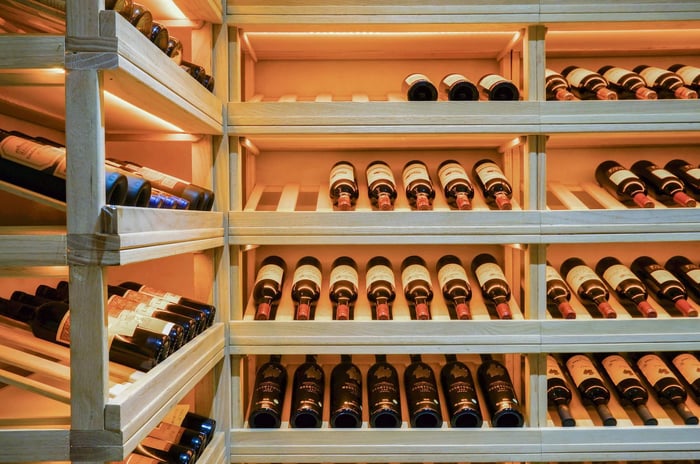
- To become a champagne, this wine must undergo a second fermentation in bottles under pressure and be aged for at least three years in a wine cellar before it is ready
- Champagne is known to have complex flavor profiles
Why Are Some Champagnes Sweet and Some Dry?
Like all wines, champagne can range in sweetness. Typically, when you go to the liquor store or a wine purveyor, the most common type you will come across is Brut, which tends to lean bone dry. The term Brut actually refers to the sweetness level of champagne, too!
Here's a quick rundown of champagne sweetness.
- Extra Brut: Bone dry
- Brut: Dry
- Extra Dry: Fruity, still dry
- Demi Sec: Sweet
Also, one thing to note for the calorie-conscious: the sweeter the champagne, the more calories.
What Are Other Sparkling Wines Called?
You may have another bottle of sparkling wine at home that's not technically a champagne, but has a different name. These wines most likely have a different fizz or bubbliness and come from another growing region. Here are a few common ones you may encounter:
- Prosecco: Made in Italy. Have larger bubbles than champagne
- Cava: Made in Spain. Made with small bubbles
- Crémant: Also made in France, but in a different region
How Should I Store Unopened Champagne at Home?
Now that we've covered what makes this sparkling wine unique, how to store champagne becomes even more important for preserving its carbonation, flavor, and overall quality.
Unopened champagne is more delicate than many people realize. While it may seem similar to still wine, the pressure inside the bottle and the carbonation make proper storage even more important.
According to Comité Champagne, proper champagne storage should prioritize a stable temperature, darkness, and minimal vibration to preserve quality and effervescence. Aim for:
A cool, consistent temperature (ideally 45–55°F)
A dark environment with minimal light exposure
Low vibration
Moderate humidity
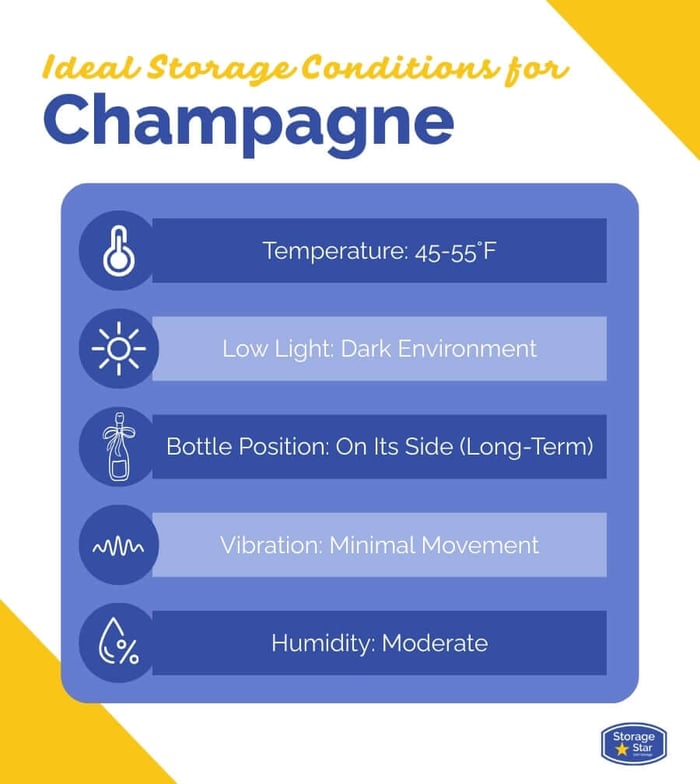
The ideal champagne storage temperature is typically between 45–55°F, with consistent conditions being more important than exact temperature.
Unlike long-term red wine storage, champagne is typically best stored upright if you plan to drink it within a few months. Keeping bottles upright helps maintain carbonation and reduces the surface area of the contents exposed to air. However, for long-term aging, some collectors store bottles on their sides to keep the cork moist.
Luxury champagne producers, including houses like Veuve Clicquot, recommend you avoid storing champagne in:
Direct sunlight
Near heat sources (like ovens or radiators)
Areas with frequent temperature swings (kitchens, garages, or near windows)
A pantry, wine fridge, basement, or interior closet often works much better than a display shelf or countertop.
Can I Store Champagne on a Bar Cart?
Technically, yes, but it’s not ideal for long-term storage.
Bar carts are convenient and aesthetically pleasing, but they usually sit in high-traffic, well-lit areas of the home. This exposes champagne to:
Light
Temperature fluctuations
Vibration from movement and daily activity
If you’re planning to drink the bottle within a few days or weeks, a bar cart is perfectly fine. But if you’re building a small collection (or, like me, occasionally come home with more bottles than planned), it’s better to move unopened champagne to a darker, cooler storage location.
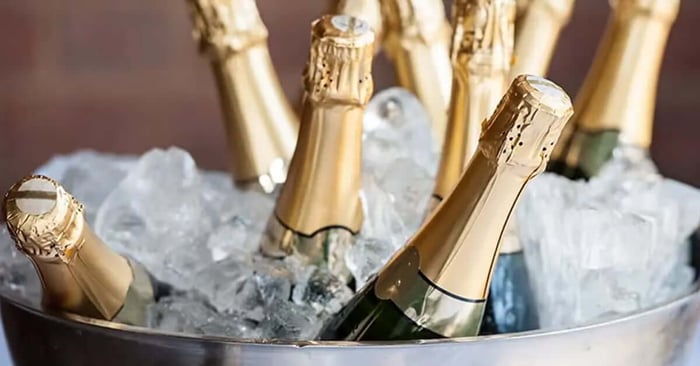
Think of the bar cart as short-term staging, not long-term storage. When hosting a party, I love to display a chilled bottle of champagne in a champagne bucket on my bar cart. But once the party is over, unopened bottles are returned to proper storage.
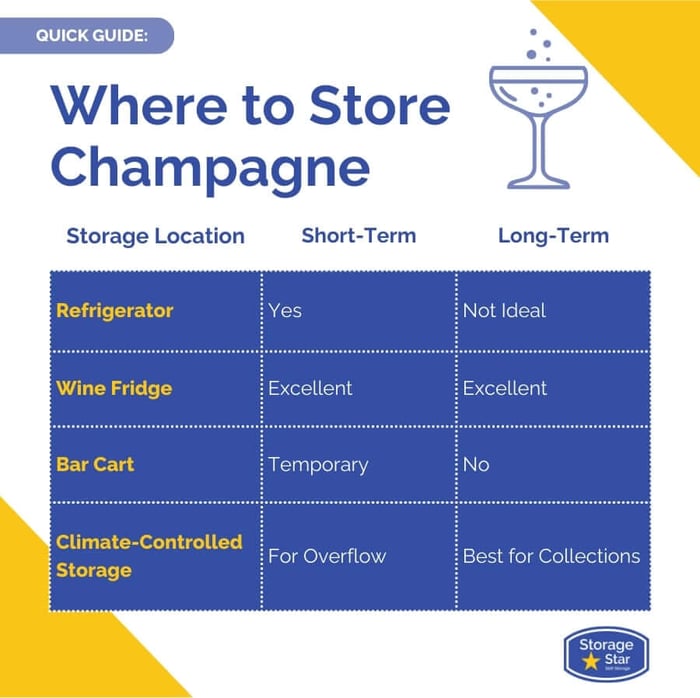
Should I Store Champagne in a Refrigerator?
Yes, but with one important caveat.
A refrigerator is great for short-term champagne storage, especially if you plan to open the bottle within a few weeks. The cool temperature helps preserve carbonation and slows down flavor degradation.
However, standard kitchen refrigerators are:
Colder than ideal for long-term wine storage
Very dry environments (which can dry out corks over time)
Frequently opened, causing temperature fluctuations
For long-term storage (several months to years), a wine fridge set to around 45–50°F is a much better option than a standard refrigerator.
If you’re storing champagne in a regular fridge:
Keep it toward the back where temperatures are more stable
Avoid storing it in the door
Limit long-term storage to a few months
How Should I Store Opened Champagne?
Once opened, champagne begins to lose carbonation almost immediately, but if you know how to store champagne, you can extend its life longer than expected.
To store opened champagne:
Use a champagne stopper (not a regular wine cork)
Refrigerate the bottle immediately
Keep the bottle upright
Avoid shaking or moving it excessively
A proper sparkling wine stopper creates a seal that helps preserve both the bubbles and flavor. Simply placing a spoon in the neck (a popular myth) will not meaningfully preserve carbonation.
If sealed and refrigerated, opened champagne typically stays enjoyable for 3–5 days, though the bubbles will gradually soften.
Tip: For me, I feel champagne begins to lose its luster after 1-2 days, but it is still excellent for champagne cocktails. If you're hosting a party and have some unopened champagne, impress your guests with a Kir Royale when they arrive! It's a simple, elegant French cocktail that uses champagne and a 1/2 ounce of crème de cassis, a black currant liqueur. Finish it off with a twist of lemon or a floating raspberry.
How Long Can I Store Champagne?
Storage lifespan depends heavily on the type of champagne and how it’s stored.
Storage experts and champagne producers generally recommend enjoying non-vintage champagne within a few years of purchase, as it is typically released ready to drink.
Non-vintage champagne: Best within 3–5 years of purchase
Vintage champagne: Can age 5–10+ years under proper conditions
Prestige cuvées: May age for decades in ideal environments
This changes, though, once the bottle is opened.
With stopper + refrigeration: 3–5 days
Without proper sealing: 1–2 days (with noticeable loss of carbonation)
Keep in mind that champagne is usually released when it is already aged and ready to drink, unlike some still wines that benefit significantly from decades of cellaring.
Can I Store Champagne in a Storage Unit?
Yes, but only under the right conditions.
If you’ve built up a collection, whether from celebrations, entertaining, travel, or just loving a good bottle, storing excess champagne in your home can quickly become impractical. I am a prime example. A storage unit can be a smart solution for overflow inventory, especially during moves, renovations, or downsizing.
However, champagne should never be stored in:
Non-climate-controlled units
Units exposed to extreme heat or freezing temperatures
Areas with significant vibration or direct sunlight
Extreme temperature swings can dry out the cork, impact pressure inside the bottle, and ultimately affect both taste and aging.
Should I Use Climate-Controlled Storage for Champagne & Wine?
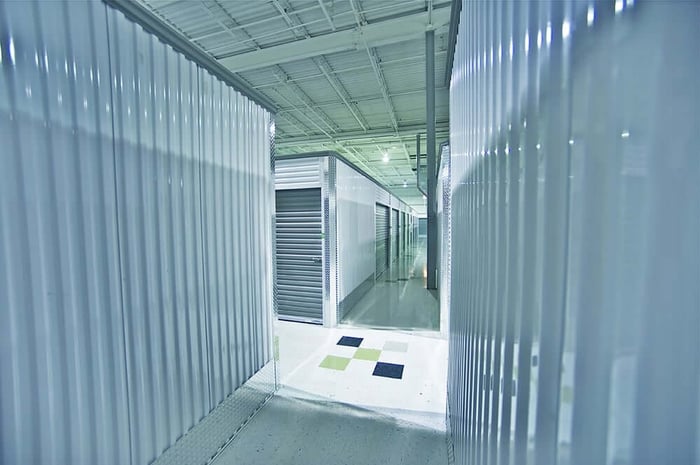
Absolutely. Climate-controlled storage is the safest option for storing champagne and wine outside your home. Some storage facilities even offer special wine storage lockers that also work well for champagne bottles.
Ideal long-term storage conditions include:
Stable temperatures (typically 50–60°F)
Protection from heat spikes and freezing
Low light exposure
A consistent environment year-round
For collectors, entertainers, or anyone who occasionally returns from the store (or Reims) with more bottles than expected, climate-controlled storage helps preserve both quality and value. It’s especially useful if you’re short on space, living in a smaller home, or managing seasonal storage needs.
From a practical standpoint, using a climate-controlled storage unit can:
Free up kitchen and fridge space
Protect higher-end bottles
Provide a stable environment during relocations or life transitions
If your champagne collection is growing faster than your cabinet space allows, a temperature-stable storage solution is far safer than a garage shelf, an attic, or a standard storage unit.
Find a Climate-Controlled Storage Unit Near You
Ready to Protect Your Champagne Collection with Proper Storage?
At the end of the day, bubbly is meant to be enjoyed, but how you store champagne directly impacts how much you’ll enjoy it when the cork finally pops. Whether you’re saving a special vintage bottle, keeping a few extras on hand for celebrations, or managing an ever-growing collection (no judgment here), proper storage protects the flavor, bubbles, and overall experience.
The key is consistency: cool temperatures, low light, minimal vibration, and the right environment for both opened and unopened bottles. In the short term, a refrigerator or interior storage space works well. Long-term, especially for collectors or those short on space, climate-controlled storage offers a far more stable solution than garages, attics, or kitchen cabinets.
If you’re anything like me and tend to leave the store with “just one more bottle” than planned, having a dedicated, temperature-stable place to store champagne simply makes life easier. It keeps your home organized, protects higher-end bottles, and ensures that when a celebration, dinner party, or spontaneous toast comes around, your champagne is stored properly and ready to enjoy at its best.
FAQs
Should champagne be stored upright or on its side?
For short-term storage, champagne is best stored upright to help preserve carbonation and reduce the surface area exposed to air. For long-term aging, some collectors store bottles on their side to help keep the cork moist, but consistent temperature matters more than position.
Can champagne go bad if stored incorrectly?
Yes. Exposure to heat, light, and temperature fluctuations can damage the cork, reduce carbonation, and negatively impact flavor. Champagne stored in warm environments like garages or kitchens may age prematurely or lose its intended taste profile.
Is it okay to store champagne in the fridge long-term?
A refrigerator works well for short-term storage, especially if you plan to drink the bottle within a few weeks. However, standard fridges are colder and drier than ideal for long-term wine storage. For longer storage, a wine fridge or climate-controlled environment is a better option.
How long does unopened champagne last?
Most non-vintage champagnes are best enjoyed within 3–5 years of purchase, while vintage champagnes can age 5–10+ years under proper storage conditions. Prestige cuvées may last even longer when stored in a stable, cool environment.
How long does opened champagne stay good?
Opened champagne typically stays enjoyable for 3–5 days when refrigerated and sealed with a champagne stopper. Without proper sealing, carbonation and flavor can noticeably decline within 1–2 days.
Can I store champagne in a storage unit?
Yes, but only in a climate-controlled storage unit. Extreme heat, cold, and temperature swings in standard units can damage the cork, affect internal pressure, and reduce overall quality. Climate-controlled storage provides a more stable environment for long-term bottle preservation.