
Table of Contents
Camper trailers, RVs, and mobile homes are built tough, but even the sturdiest rigs benefit from extra protection when they’re not on the road. Leaving your trailer exposed can lead to faster wear, unexpected repairs, and lower resale value. Enter trailer storage.
The good news? You don’t have to settle for just any parking spot. From indoor units to covered outdoor options, there are plenty of ways to keep your trailer safe. This guide breaks down the main trailer storage options, highlighting the pros and cons so you can choose the right fit for your Class A or B RV, camper trailer, or mobile home.
Benefits of Trailer Storage
Storing your RV or camper at a storage facility is a great way to keep your vehicle safe. Indoor storage units protect your investment from:
Exposure to harsh winter weather
Debris
Direct UV rays
Heavy rains
Hail
High winds
Fluctuating temperatures
Theft
Vandalism
Covered units can protect your vehicle from:
Direct sunlight
Heavy rains
Hail
Theft
Vandalism
Understanding Trailer & RV Sizes
The size of your RV will be the most important factor when figuring out what storage unit you need. If it won’t fit, it won’t work!
Class A RVs are the largest on the road, typically ranging from 30 to 45 feet or more. These luxury motorhomes require substantial garage space or huge parking areas. Indoor RV storage is one of the most costly options you’ll encounter. However, many homeowners prefer indoor storage due to the cost of their motorhomes.
Class B RVs are more compact. They often measure between 16 and 22 feet. These vehicles are easier to maneuver and fit into smaller storage spaces. Their size makes outdoor and mid-sized covered storage viable and more budget-friendly. Class C RVs are slightly smaller.
Camper trailers, travel trailers, fifth wheels, and mobile homes vary widely in length and height.
Make sure you have the accurate dimensions of your vehicle, including bumpers, hitches, and rooftop accessories.
Types of RV & Trailer Storage Options
Here’s a closer look at the main storage options you can choose from after measuring your equipment.
Outdoor Trailer Storage
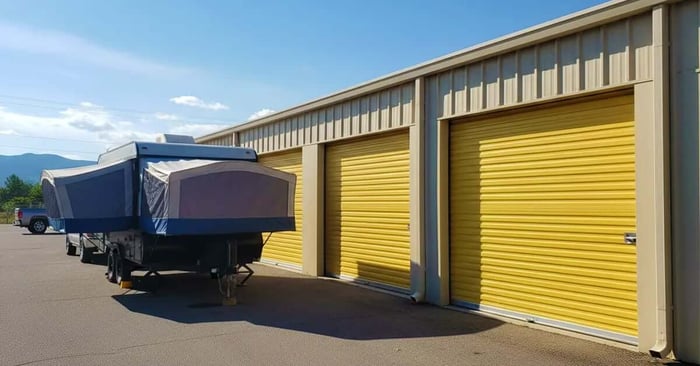
Parking your equipment in an open lot is the cheapest approach. While the facility is still gated, your equipment will be in the elements. This is a popular option for individuals who use their campers frequently. Uncovered parking spaces can work well for:
Utility trailers
Pop-up campers
Small teardrop trailers
Travel trailers with durable weather-resistant exteriors
However, your vehicles will be exposed to rain, wind, sun, and harsh weather. We highly recommend using a high-quality breathable cover to protect the paint and tires.
Covered Trailer Storage
Covered parking spaces are a solid choice. While your equipment will be outside, it will be shielded from harsh UV rays, heavy rain, and hail. The protective canopy is a great choice if you’ll be parking your camper or RV for several months at a time, and works particularly well for:
Motorhomes
Class B or Class C RVs
Camper trailers with extended components (awnings, slide-outs)
Fifth-wheel trailers
Since your trailer is not completely enclosed, it will be exposed to some wind, dust, and moisture. In general, this is not a major concern unless you’ve parked it in a climate with extreme weather swings. You should winterize your RV or camper ahead of cold snaps. Follow manufacturer maintenance tips before the sweltering summer months.
Height limits are a concern for RV owners. Make sure that the facility can accommodate your motorhome. When in doubt, call ahead before reserving a parking space.
Indoor Trailer Storage
Indoor trailer storage delivers the highest level of protection and security. These fully enclosed units or warehouse-style bays keep your trailer shielded from weather, UV exposure, theft, and pests. Many indoor storage facilities offer climate-controlled options, which help maintain interior materials and prevent moisture buildup.
Choose an indoor, climate-controlled unit for:
High-value or luxury RVs
Vintage campers or trailers
Motorhomes with sensitive electronics or wooden interiors
Specialty trailers (food trucks, show trailers, or collectible campers)
Choosing the Right Storage Option
Selecting between outdoor, covered, or indoor storage is the first step in choosing the right location for your trailer. Size is the biggest factor at play. If you have a large RV or Class A motorhome, you’ll need an oversized indoor bay or tall covered structure.
Next, think about how often you travel. Do you want to store your RV year-round and only take it out a few times? Or are you looking for quick outdoor access so you can travel at will?
From there, consider your local climate. Extreme heat and cold can be rough on your equipment, so you may want a storage unit with regulated climate control. However, if the climate is relatively stable, outdoor or covered RV storage may work just fine.
Other factors to think about include your budget and insurance requirements. Indoor storage is always going to be the priciest option. However, it can lead to lower insurance costs.
Storage Type | Protection | Best For | Approximate Cost |
Outdoor | Basic | Class B RVs, small campers | Budget |
Covered | Moderate | Medium RVs and trailers | Mid-tier |
Indoor/Enclosed | Maximum | Premium RVs and motorhomes | Premium |
Learn more about how much a storage unit costs.
Storage Unit Size Considerations
The biggest factor impacting the size of space you need is the class of your RV or trailer. For example, a small Class B RV or compact camper trailer can usually fit into a 10x20 unit or standard covered parking space. The height is manageable for most canopy-style structures.
Larger RVs, especially Class A motorhomes, usually need a space that is 12x35 or longer. There are limited indoor storage spaces of this size, so make sure you reserve your spot as early as possible. If you have a mobile home or oversized trailer, it may not fit a standard indoor facility. In that case, you’ll need a premium outdoor or customized covered storage option.
Before reserving a space, measure your trailer’s length, width, and height. Make sure to account for any accessories, such as your rooftop AC unit. The last thing you want to do is book a storage space and then find out when you arrive that it’s too small.
Still need help? Use our storage unit size guide or find your local Storage Star to speak with someone about choosing a unit.
Preparing Your Trailer for Storage
Don’t just pull your trailer in from the woods and back it into storage. You should always prep it first. Here are some simple prep tips to protect the condition of your equipment:
Start with a top-to-bottom wash to prevent mold or mildew
Dry the exterior to remove dirt, salt, or contaminants and prevent corrosion
Disconnect the batteries or attach them to a trickle charger
Drain all water tanks and empty propane lines
Use tire covers if you’ll be parking your trailer outside
Apply a breathable cover, unless you rented an enclosed storage space
These simple steps can protect your investment and extend the lifespan of your camper or RV.
Why Storage Star Is a Great Choice for RVs, Campers, and Trailer Storage
Storage Star offers a range of storage solutions designed specifically for RVs, trailers, camper trailers, and mobile homes. Our offerings include:
Open parking spaces
Covered storage
Fully enclosed indoor bays
Storage Star is all about flexibility. We can accommodate any budget or vehicle size. Many of our locations feature climate-controlled and drive-up units.
Most importantly, every facility is secured and fenced. We monitor our spaces 24/7 and have gated entry for peace of mind. Take advantage of our flexible month-to-month rental agreements that make short- and long-term storage easy.
Want to reserve a space online? Use our simple tool to book your space instantly. You can also contact our team directly if you need help identifying the right location and parking space for your equipment. Reserve your trailer storage unit today and keep your RV, camper, or mobile home safe year-round.
Keep Your Trailer Ready for Adventure
Choosing the right storage solution for your trailer, camper, or RV keeps your investment protected and ready to go. Use the tips above to identify the best way to store your equipment. When you are ready to reserve your spot, Storage Star has got you (and your trailer) covered.
Find the right trailer storage option near you and reserve your unit online with Storage Star today.
FAQs
What Are the Best Options for Trailer Storage?
There isn’t a one-size-fits-all “best” option. Instead, you should consider what type of trailer you have, how often you use it, and the climate you live in. Outdoor storage is popular if you travel frequently and have a small to mid-sized camper. Parking your equipment outdoors is convenient and budget-friendly.
Covered storage provides additional protection from the elements. It’s ideal for mid-sized RVs or trailers that are going to be stored for a few months at a time.
Indoor storage offers the most security and weather protection. It’s best for high-value vehicles or customers who want complete peace of mind.
What Size Unit Do I Need for a Class A RV vs. a Class B RV?
A Class A RV will usually need a unit that is at least 12x35 or larger. Make sure to account for the exact dimensions of your motorhome, as well as any rooftop accessories. Class B RVs are much smaller and can typically fit into a 10x20 unit or mid-sized covered space. Before reserving a spot, measure the full length and height of your RV to ensure the storage facility can accommodate it.
Can I Store a Camper Trailer Outdoors Safely?
Absolutely! You can store a camper trailer outdoors safely as long as you take the right steps to protect it. A breathable, high-quality cover is essential. It will protect the roof, paint, and windows. Tire covers help prevent sun damage and dry rot.
Remember, just because your trailer is in storage does not mean you can ignore it. Perform regular maintenance checks to keep your camper in good condition. If you are going to park your camper outside, choose a facility with fencing, a gate, and 24/7 monitoring.
What Is Covered in Trailer Storage Insurance?
The level of coverage varies depending on your insurance provider and the requirements of your policy. Some insurance plans may offer reduced premiums if you store your equipment indoors or in a secure facility. Speak with your local Storage Star facility to learn about our policies.
How Much Does Trailer Storage Cost?
Trailer storage prices depend on the type of storage you choose and the size of your vehicle. Outdoor storage is often much cheaper than indoor or climate-controlled units.