
Table of Contents
- What Are the Standard 2-Car Garage Dimensions?
- Garage Size Comparison Chart
- How Much Can a 2-Car Garage Hold?
- What Size Storage Unit Do You Need for a 2-Car Garage?
- Tips for Moving Items From Garage to Storage Unit
- Climate-Controlled or Drive-Up: Which Is Best for Garage Items?
- How to Estimate the Storage Space You’ll Need
- Why Store With Storage Star?
- Cost-Benefit Analysis: Is a Storage Unit Worth It?
- Your 2-Car Garage: A Dynamic Space for Every Stage of Life
- FAQs
For homeowners who need additional space for their belongings, an attached garage often serves as a valuable storage room. Depending on the size of your vehicles, there may be enough room for both cars, plus some extra storage. But what do you do when you run out of room?
Use this guide for two-car garage storage to help you organize your garage – or pick a suitable storage unit instead.
What Are the Standard 2-Car Garage Dimensions?
Garage sizes can vary in square footage, but there are standard sizes you can use when evaluating your storage needs.
The average U.S. two-car garage size is 400 to 576 square feet total. This puts the standard two-car garage dimensions between 20’ by 20’ to 24’ by 24’. The ceiling height usually ranges from seven to eight feet.
Make sure to measure your garage to get an idea of the space you have available. Dimensions are different depending on the type of home and the region.
Garage Size Comparison Chart
Are you unsure about whether you’ll have enough space in a storage unit? Use this chart to compare the dimensions of typical garage sizes in the U.S.
Garage Type | Dimensions (Feet) | Approx. Square Feet | Equivalent Storage Unit Size |
1-Car Garage | 12’ x 20’ | 240 sq. ft. | 10x15 or 10x20 unit |
2-Car Garage | 20’ x 20’ – 24’ x 24’ | 400-576 sq. ft. | 10x25 or 10x30 unit |
3-Car Garage | 30’ x 20’+ | 600+ sq. ft. | Multiple 10x20s or one large drive-up unit |
Tip: A 10x30 storage unit roughly equals the size of a standard two-car garage.
How Much Can a 2-Car Garage Hold?
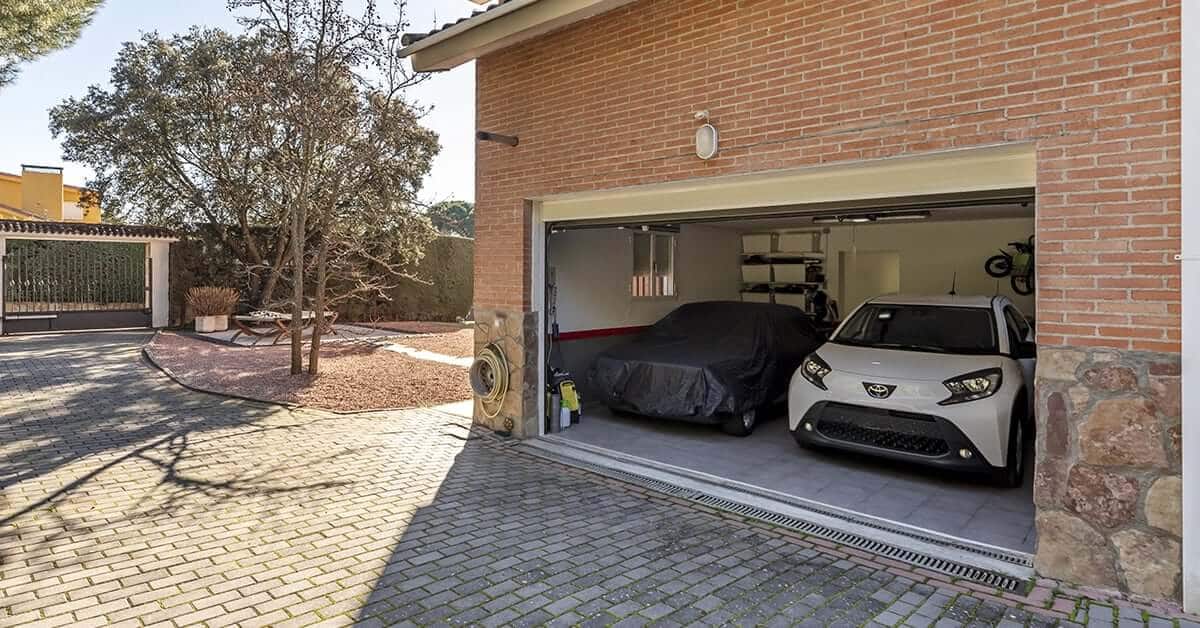
Based on the minimum size of a two-car garage, you can assume it will hold two mid-sized cars. This includes room to open the car doors on either side.
A two-car garage can hold two cars or one car plus a mix of stored items. These can include furniture, tools, bikes, boxes, and other items.
The storage capacity of a two-car garage is roughly equivalent to that of a two- or three-bedroom home, depending on how full the garage is.
Need help visualizing the space? Some common items homeowners store in garages include:
Outdoor/lawn equipment (mowers, snow blowers, etc.)
Tools and workbenches
Seasonal decor and camping gear
Bicycles and sports equipment
Extra furniture and household goods
[Recommended: Insert an infographic here that shows a 2-car garage with common household items, like two vehicles, workspace, and/or storage bins.]
A garage should allow you to come and go without dodging boxes or large items. Once you start losing functionality in your garage, it’s time to consider renting a storage space.
What Size Storage Unit Do You Need for a 2-Car Garage?
Here’s a look at how much storage space you need based on how much garage space your items are currently taking up.
Storing Half of Your Garage (One Car’s Worth)
Storing half of your garage, or about one car’s worth of space, translates into a 10x10 or 10x15 storage unit. Think of a 10x10 or 10x15 unit as a one-car garage equivalent. This unit can hold boxes, tools, and small furniture.
Storing Most of the Garage
If you’re currently using most of your garage for storage, you’ll need a 10x20 or 10x25 storage unit. This size accommodates the contents of a standard garage, including some larger items.
Storing a Full 2-Car Garage
A full two-car garage translates into a 10x30 storage unit (approximately 300 square feet). This larger unit is a great option for storing vehicles, lawn equipment, and multiple large pieces of furniture.
Think of a 10x30 unit as a detached garage. You get all of the necessary storage space without the house attached.
Tips for Moving Items From Garage to Storage Unit
Packing for a storage unit is a bit different than packing for moving to a new home. Longevity and protection are important when you’ll be storing items long-term.
Before you seal a single box, make an inventory list. This will come in handy for:
Storage Unit Insurance Claims: You’ll file a claim if anything is damaged or lost
Retrieval: You’ll want to know exactly what you have in storage
Decision-Making: You can easily forget what you’re storing if it’s not recorded
You can use a simple spreadsheet or a notebook. Record the box number, a brief description of the contents, and the condition of the included items.
It’s also helpful to take photos and videos of your packed items and your final walkthrough of the unit. This will make insurance claims a breeze.
Here are other organization tips and tricks to make the transition from garage to storage unit easier.
Declutter First
Before you start packing or moving, free up some space. Separate items based on what you’ll keep, sell, and donate. A good rule of thumb is to get rid of anything you haven’t used in at least six months and that doesn’t have sentimental value.
Group Items by Category
Separate items based on their purpose. For example, you can create separate spaces for tools, holiday decor, furniture, and large appliances. This makes the packing and loading process much smoother.
Use Sturdy Bins and Clear Labels
Simplify your organization process by using reliable storage bins. Label everything with clear, easy-to-read descriptions to avoid confusion and stress.
Store Heavy Items Low and Fragile Items High
Once you get to the storage unit, put small, breakable, and sentimental items on sturdy shelving or an elevated platform of some kind. Store your larger items (like furniture and lawn equipment) on the floor and along the walls.
Protect Equipment
Keep the moving process safe and protect your items by draining gas from lawnmowers and other gas-powered equipment. Remove any fragile or dangerous attachments from objects like trimmers and saws.
Use Pallets or Shelving
Quality shelving and storage pallets increase the vertical storage capacity of the unit. Take advantage of floor-to-ceiling space with overhead storage wherever you can. This way, you get more than just the baseline square footage out of your unit.
Still have questions? Check out these helpful articles:
Climate-Controlled or Drive-Up: Which Is Best for Garage Items?
Before the garage-to-storage-unit transition, you’ll need to decide which type of storage unit(s) works best for your needs. Climate-controlled and drive-up units both offer unique advantages for smaller, more fragile items and large equipment.
Climate-controlled storage units are best for items that are sensitive to temperature fluctuations and humidity. Think items like electronics, collectibles, and woodworking supplies, which can warp in certain conditions.
Drive-up units are best for heavy tools and large outdoor gear. If you need frequent access to your items, a drive-up unit may suit you. Note that if you’ve been using a carport to store some of these items, a drive-up storage unit is much more secure and protects your items from the elements.
If your garage items include both household goods and tools, you may want a mix of unit types. You can choose a larger, drive-up unit for convenience.
How to Estimate the Storage Space You’ll Need
Estimating the storage space you need is easier than you think. Using standard dimensions and simple calculations, you can start planning for storage unit rental.
As a rule of thumb, your garage’s total square footage divided by 10 is the approximate storage unit size you need to rent. For example, if your garage is 400 square feet, you’ll need a 10x30 unit for equivalent or similar storage space.
If you stack smartly, you can use vertical storage and reduce the total storage space you need. A 10x30 unit is not only 10 feet deep and 30 feet wide but also has vertical space, which adds to the 300 square feet available on the floor and around the perimeter.
Leave plenty of walking room inside the unit for easy access to your items and proper airflow. Vertical stacking helps with this as well.
Why Store With Storage Star?
Whether you’re clearing out your garage, moving to a new home, or need to store your extra vehicles, Storage Star helps make your transition from garage to storage unit seamless.
Our rental terms are month-to-month, so you’re never locked into a long-term contract (unless you want that).
We offer a range of unit sizes, including large 10x30 options for bulk storage and easy moving.
Our drive-up and climate-controlled units keep your belongings safe and improve your experience all around.
With Storage Star, you get 24/7 access using our digital gates. We also implement 24/7 security to give you peace of mind and instill a sense of safety. You never have to worry about your items when they’re in our care.
Our easy online rental process and digital payment options make renting your storage unit stress-free from start to finish.
Cost-Benefit Analysis: Is a Storage Unit Worth It?
A storage unit adds to your monthly expenses, but often the benefits outweigh the costs.
Benefits
Declutters your home or office
Protects your belongings
Allows you to keep your extra cars while complying with HOA restrictions
You can rent for one month, or one year – it’s up to you
Costs
Monthly rent
Insurance fees
Gas to get to and from your storage unit
Your 2-Car Garage: A Dynamic Space for Every Stage of Life
Whether you’re moving or looking to free up valuable garage space and declutter, a storage unit can help. Find affordable self-storage near you with Storage Star.
FAQs
What Are Standard 2-Car Garage Dimensions in Feet?
The average two-car garage size ranges from 20 feet by 20 feet to 24 feet by 24 feet.
How Many Square Feet Is a 2-Car Garage?
Two-car garages usually have an area of 400 to 576 square feet.
What Size Storage Unit Equals a 2-Car Garage?
A 10x25 or 10x30 storage unit is roughly equivalent to a two-car garage space.
How Do I Measure My Garage for Storage Planning?
Move everything out of your garage. If you can’t, put items in the center of the garage floor. Use an extendable tape measure to get the width, length, and floor-to-ceiling height of your garage. Record these dimensions and use them to plan your storage needs.
Can a 10x20 Unit Fit Everything From a 2-Car Garage?
If you only use a portion of your two-car garage for storage, a 10x20 unit may work. Otherwise, you should plan for at least a 10x25 unit to make sure you have enough space. A 10x30 unit is the safest bet if you currently use your entire garage for storage.