
Table of Contents
As winter winds down and the days grow longer and warmer, it’s time to put away your winter gear. But it’s not as simple as tossing everything into your garage or a storage unit. Proper winter storage helps protect your gear from moisture, rust, mold, and long-term damage so it’s ready to go when the snow returns.
Whether you have skis, snowboards, snowmobiles, or winter apparel, storing them correctly can extend their lifespan and keep them in great condition for next season. Below are some practical tips for winter gear storage, including how self-storage can help keep your equipment organized and protected.
Storing Your Skis and Snowboards
Clean and Dry Your Equipment
Before storing skis and snowboards, clean them thoroughly and allow them to dry completely. Any leftover snow, dirt, or moisture can lead to rust on metal edges or mold growth during the off-season.
Taking the time to dry your gear now helps prevent unpleasant surprises when you pull it out next winter.
Add Wax for Protection
Applying a thick layer of storage wax to your ski or snowboard base protects it during the off-season. Storage wax prevents the base from drying out and creates a protective barrier against dust and moisture.
If you prefer, many ski shops offer offseason waxing services designed specifically for seasonal storage.
Loosen Your Bindings
Reduce the tension in your bindings before storing your skis. This helps relieve pressure on the springs and internal components, preventing unnecessary wear while the gear sits unused.
Store Them Properly in a Storage Unit
Self-storage can be an excellent option for storing skis and snowboards, especially if space is limited in your home or garage. Small units, such as 5x5 or 5x10, often provide enough room for seasonal equipment.
When storing skis or snowboards in a storage unit:
Choose a climate-controlled unit to prevent heat or humidity damage
Store skis or boards vertically to maximize space
Use a padded ski or snowboard bag for protection
Keep equipment off the floor using shelves or racks
Avoid stacking heavy items on top of your gear, which can warp the shape
Storing Winter Apparel & Accessories
Wash and Dry Everything Thoroughly
Before storing winter clothing such as coats, snow pants, gloves, hats, and scarves, wash them according to the care instructions on the label.
Most importantly, ensure everything is completely dry before packing it away. Even small amounts of moisture can lead to mold, mildew, and stubborn odors.
Use Airtight Storage Containers
Plastic storage bins with airtight lids help protect winter clothing from dust, moisture, and pests. For long-term storage, vacuum-sealed bags are another effective option, especially for bulky coats or snow pants.
Store Your Boots Properly
Winter boots should always be completely dry before storing them. Drying times vary depending on the material:
Ski boots: a few hours
Leather or insulated boots: overnight
Sheepskin boots (like Uggs): 24–48 hours at room temperature
To help boots maintain their shape:
Insert boot shapers or rolled newspaper
Store them upright
Avoid stacking heavy items on top
Prepping & Storing Your Snowmobile
Clean Your Snowmobile
Start by thoroughly cleaning your snowmobile. Remove dirt, salt, and moisture, paying close attention to the undercarriage and track. This helps prevent corrosion during the off-season.
Drain or Stabilize the Fuel
Fuel left sitting in the tank can cause buildup and engine problems.
You have two storage options:
Drain the fuel tank completely for long-term storage
Add fuel stabilizer and run the engine briefly to circulate treated fuel
Change the Oil and Check Fluids
Perform an oil change before storing your snowmobile. Old oil can contain contaminants that may damage the engine over time. Also check coolant and brake fluid levels.
Disconnect the Battery
Disconnect the battery and store it in a cool, dry location. This helps extend battery life and prevents discharge during long periods of inactivity.
Elevate and Cover the Snowmobile
Avoid storing your snowmobile directly on the ground. Elevating it on blocks or a stand helps prevent flat spots on the track.
Use a breathable cover to keep dust and moisture away while allowing airflow.
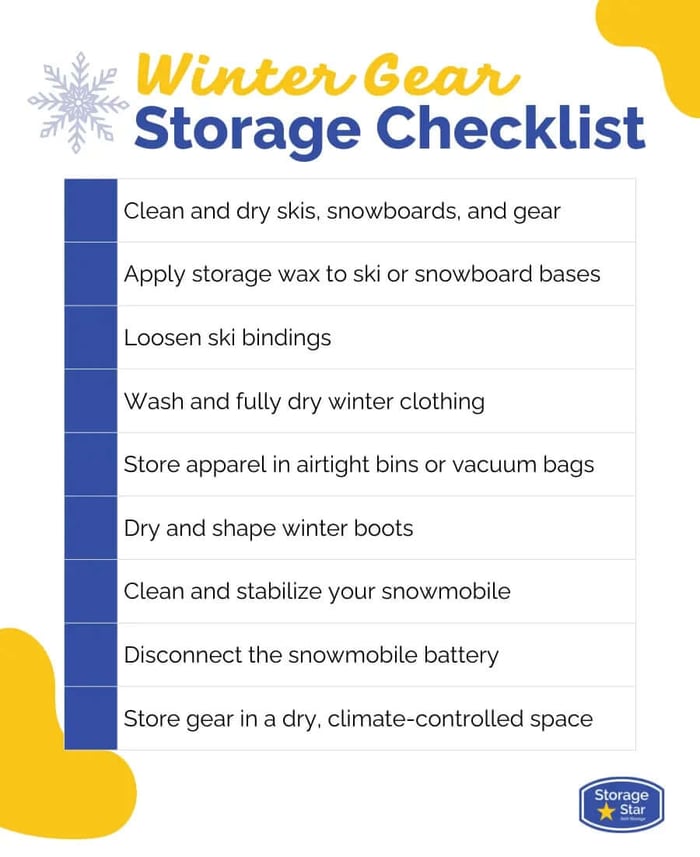
Quick Winter Gear Storage Checklist
Before putting away your winter equipment, make sure you:
✔ Clean and dry skis, snowboards, and gear
✔ Apply storage wax to ski or snowboard bases
✔ Loosen ski bindings
✔ Wash and fully dry winter clothing
✔ Store apparel in airtight bins or vacuum bags
✔ Dry and shape winter boots
✔ Clean and stabilize your snowmobile
✔ Disconnect the snowmobile battery
✔ Store gear in a dry, climate-controlled space
What to Look for in Self-Storage for Winter Gear
If your garage or home is running out of space, a self-storage unit can be a great solution for seasonal storage.
When choosing a storage unit, consider these features:
- Climate-Controlled Units
Protect sensitive gear, clothing, and equipment from extreme heat, humidity, and moisture. - Drive-Up Units
Drive-up access makes it much easier to load and unload large equipment, such as snowmobiles. - Security Features
Look for facilities with security cameras, gated access, and well-lit properties. - Flexible Month-to-Month Leases
Short-term leases are ideal for seasonal storage during the off-season months.
Get Your Gear Ready for Next Winter
Taking the time to properly store your winter gear helps ensure it stays in great condition year after year. From skis and snowboards to snowmobiles and winter apparel, proper storage protects your equipment from damage while freeing up space in your home.
If you need extra room for seasonal gear, a Storage Star storage unit can help keep everything safe and organized until the snow returns.
Find a Storage Star facility near you and rent your storage unit online today.
FAQs
What is the best way to store winter gear during the off-season?
The best way to store winter gear during the off-season is to clean and completely dry all equipment before storage. Skis and snowboards should be waxed, winter clothing should be washed, and boots should be fully dried and shaped before packing. Store gear in a cool, dry environment such as a climate-controlled storage unit, and keep items off the floor using shelves or racks to prevent moisture damage.
Can skis and snowboards be stored in a storage unit?
Yes, skis and snowboards can safely be stored in a storage unit. For best results, store them in a climate-controlled unit to protect against humidity and temperature fluctuations. Keep skis and boards in padded bags, store them vertically if possible, and avoid stacking heavy items on top that could cause warping.
What size storage unit do you need for seasonal winter gear?
Most seasonal winter gear can fit in a 5x5 or 5x10 storage unit. These units typically have enough space for skis, snowboards, storage bins of winter clothing, boots, and smaller equipment. If you also need to store large items, such as a snowmobile, you may need a larger unit or a drive-up storage space.
How should you store skis and snowboards during the off-season?
Before storing skis or snowboards, clean and dry them thoroughly to remove moisture and debris. Apply a layer of storage wax to protect the base, loosen the bindings to reduce tension, and store them in a cool, dry place. If using a storage unit, keep them in a padded bag and store them vertically to prevent warping.
Should skis and snowboards be stored vertically or horizontally?
Both methods can work, but storing skis or snowboards vertically is often recommended because it saves space and reduces pressure on the equipment. Make sure the gear is supported properly and that heavy items are not stacked on top.
Do skis need to be waxed before storage?
Yes. Applying a thick layer of storage wax helps prevent the base from drying out and protects the edges from rust during the off-season. The wax can be scraped off before the next ski season begins.
How do you store winter clothing for the summer?
Wash and completely dry winter clothing before storing it. Use airtight plastic bins or vacuum-sealed bags to protect coats, gloves, scarves, and snow pants from moisture, dust, and pests.
How should winter boots be stored?
Winter boots should be fully dry before storage. Use boot shapers or rolled newspaper to maintain their shape, and store them in a cool, dry area away from direct heat or sunlight.
Can you store winter gear in a storage unit?
Yes. Self-storage units are a great solution for seasonal gear storage, especially if you have limited space at home. Climate-controlled storage units are ideal for protecting winter clothing, skis, and snowboards from humidity and temperature fluctuations.
How do you store a snowmobile for the summer?
Clean your snowmobile thoroughly, stabilize or drain the fuel, change the oil, and disconnect the battery before storage. Store the snowmobile elevated on blocks or a stand and cover it with a breathable cover to protect it from dust and moisture.