
Table of Contents
- 1. Downtown and the Innovation Quarter: best for urban living
- 2. West End: best for historic charm near downtown
- 3. Ardmore: best for healthcare workers and first-time buyers
- 4. Buena Vista: best for upscale family living
- 5. Washington Park: best for walkable historic living on a budget
- 6. Old Salem: best for history lovers
- 7. Sherwood Forest: best for suburban families inside the city
- 8. Mount Tabor: best for quiet, wooded affordability
- 9. West Salem: best for renters and budget-minded buyers
- 10. Clemmons and Lewisville: best for newer homes and space
- How self-storage can help when moving to a new Winston-Salem neighborhood
- FAQs
Winston-Salem got its "Twin City" nickname from the 1913 merger of Winston and Salem, but spend a weekend here, and you'll realize it's really a city of many smaller communities, each with its own personality. One day you're touring a 1920s bungalow a few blocks from downtown, the next you're checking out a walkable arts district or a leafy suburb with big yards and great schools. And here's the good news: a lot of these homes still come in under the national median price.
If you're thinking about a move, choosing the right neighborhood matters just as much as choosing the city. So we've rounded up this neighborhood guide of the 10 best places to live in Winston-Salem, along with the honest pros and cons of each, to help you find the spot that fits your budget, your commute, and your lifestyle.
1. Downtown and the Innovation Quarter: best for urban living
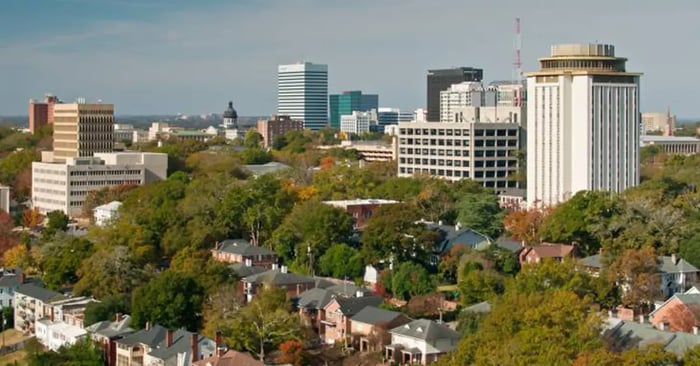
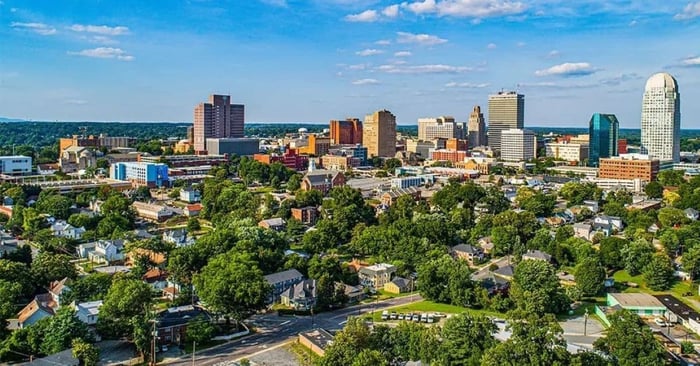
If you want to walk to dinner, a ballgame, and a concert all in the same week, downtown is your spot. Old tobacco and textile warehouses have been turned into lofts, and newer apartments and condos fill in the gaps. The 350-acre Innovation Quarter anchors the east side, and you're just steps from Truist Stadium (home of the Winston-Salem Dash), the Stevens Center, and live shows at The Ramkat. Here, you can expect to pay about $1,030–$1,500 a month for a one-bedroom.
| Pros | Cons |
|
|
2. West End: best for historic charm near downtown
Just west of downtown, the West End is where you'll find some of the prettiest pre-Depression homes in North Carolina: Queen Anne, Colonial Revival, Craftsman, and Victorian houses tucked along hilly, tree-lined streets. Hanes Park is the neighborhood's backyard, with tennis courts, ball fields, and a track, and locals love grabbing a bite at Mozelle's or West End Cafe. As of 2026, homes here usually run from around $300,000 to well over $700,000.
| Pros | Cons |
|
|
3. Ardmore: best for healthcare workers and first-time buyers
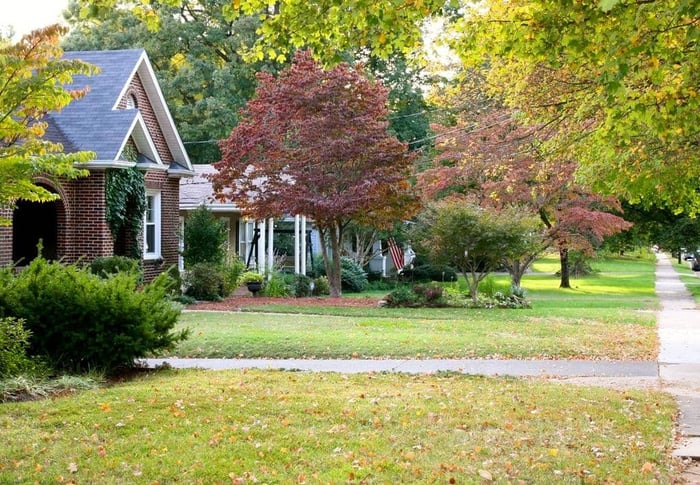
Ardmore is often called Winston-Salem's first commuter neighborhood, and with roughly 4,300 homes, it's one of the biggest, too. Think Craftsman bungalows, Colonial Revival houses, and American Foursquares from the 1910s–1960s, complete with front porches and sidewalks made for evening strolls. Because it sits right between Atrium Health Wake Forest Baptist and Novant Health Forsyth Medical Center, Ardmore is a great commuter neighborhood for nurses and doctors. Miller Park adds ball fields, playgrounds, and a dog park, and average home values hover around $300,000.
| Pros | Cons |
|
|
4. Buena Vista: best for upscale family living
If you've ever driven through Winston-Salem and wondered about the gorgeous houses under the giant oak trees, you were probably looking at Buena Vista. It's one of the city's most prestigious neighborhoods, full of Tudor, Colonial Revival, and Italian Renaissance-style homes shaded by 100-year-old oaks and maples. Nearby Stratford Road has boutiques, wine bars, and restaurants, and Reynolda House, Reynolda Gardens, and Reynolda Village are just a short drive away. Average home values are on the higher side and fall roughly between $690,000 and $740,000.
| Pros | Cons |
|
|
5. Washington Park: best for walkable historic living on a budget
Love historic homes but not historic price tags? Washington Park, southeast of downtown, is worth a look. The neighborhood is on the National Register of Historic Places and is packed with Colonial Revival, Queen Anne, and Craftsman homes from the late 1800s and early 1900s. Its namesake park has play areas and pet-friendly spaces, and downtown is about 10 minutes away. Average home values sit around $325,000, with rents near $1,350.
| Pros | Cons |
|
|
6. Old Salem: best for history lovers
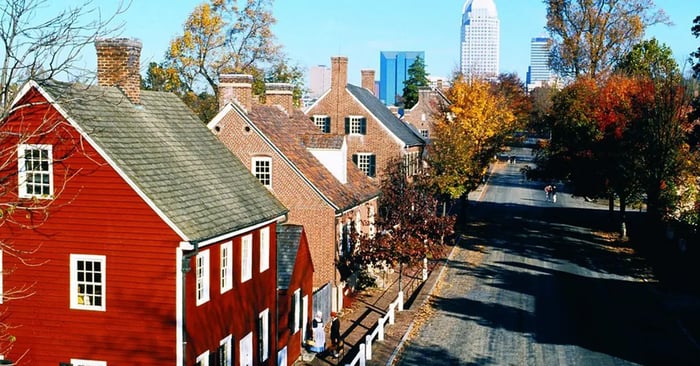
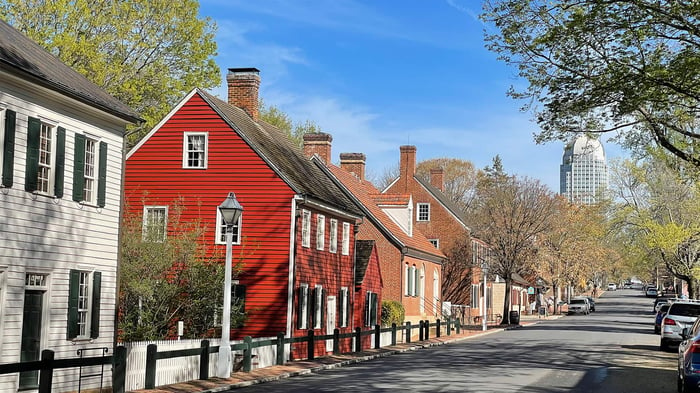
Here's something a lot of newcomers don't realize: people actually live in Old Salem. Founded by Moravian settlers in 1766, it's one of the best-preserved historic towns in the country, and homes are scattered throughout the district. You'll be neighbors with Old Salem Museums & Gardens, Winkler Bakery (get the sugar cake), and Salem College and Academy, and downtown is a short walk or bike ride up the road.
| Pros | Cons |
|
|
7. Sherwood Forest: best for suburban families inside the city
Want suburban space without leaving the city? Sherwood Forest, on Winston-Salem's west side, is a favorite with families for exactly that reason. Old Sherwood Forest has 1960s–70s homes on quarter- to full-acre wooded lots, while New Sherwood Forest was built out between the 1980s and 2000s. Residents have multiple parks, greenways, and public pools to choose from, including Leinbach Park. Average home values land somewhere between $390,000 and $515,000.
| Pros | Cons |
|
|
8. Mount Tabor: best for quiet, wooded affordability
If your idea of a perfect evening is a quiet street and a view of the trees, the Mount Tabor area on the northwest side might be for you. It's a forested, low-key community of mid-century ranch and split-level homes wrapped in mature woodland. History buffs will like being near Historic Bethabara Park, the site of North Carolina's first Moravian settlement, and Wake Forest University and the Reynolda area are close by. Average home values are around $216,000, with rents near $1,225.
| Pros | Cons |
|
|
9. West Salem: best for renters and budget-minded buyers
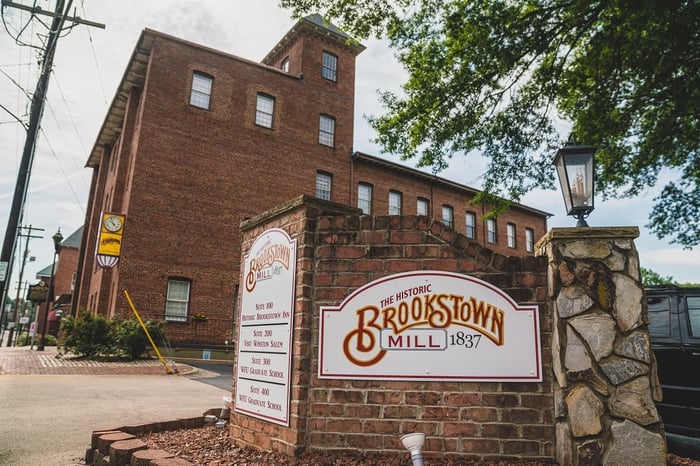
West Salem is one of Winston-Salem's oldest areas, originally built as housing for industrial workers. These days, many of its old factory buildings have been reborn as local businesses. South Broad Street is easy to explore on foot, with stops like Lesser-Known Beer Co. and the Saturday Cobblestone Farmers Market. Rents here are some of the lowest in the city at around $825 a month, and average home values are about $240,000.
| Pros | Cons |
|
|
10. Clemmons and Lewisville: best for newer homes and space
Okay, technically these are their own towns, but plenty of people who work in Winston-Salem choose to live in Clemmons or Lewisville, just outside the city limits. The draw? Newer homes and more house for your money. The crown jewel is 1,100-acre Tanglewood Park, with championship golf, equestrian trails, and the famous Tanglewood Festival of Lights every holiday season. The Muddy Creek Greenway adds miles of paved trail, and homes typically range from about $280,000 to $500,000.
| Pros | Cons |
|
|
How self-storage can help when moving to a new Winston-Salem neighborhood
Let's be real: moves seldom line up perfectly. Maybe you're downsizing from a Sherwood Forest ranch into a downtown loft, renting in West Salem while you hunt for the right house in Buena Vista, or clearing out a historic Ardmore bungalow before the renovation crew shows up. Self-storage gives you some breathing room so you can settle in on your own timeline.
That's where Storage Star comes in. We have two facilities across the Winston-Salem area with unit sizes for everything from a few boxes to a whole household:
Check out your nearest Storage Star or reserve your unit online today, and make your move to Winston-Salem a whole lot easier.
Housing and demographic figures in this post are estimates based on publicly available sources as of 2026 and are subject to change. Restaurant and business information was current at the time of publication but may change. Please confirm hours and status before visiting. This post is intended as a general neighborhood guide, not financial or real estate advice.FAQs
What is the best neighborhood in Winston-Salem for families?
Sherwood Forest and Buena Vista are family favorites, thanks to their bigger lots, parks, and well-regarded schools. If you're after newer construction and more elbow room, a lot of families end up in Clemmons or Lewisville, just outside the city.
What is the most affordable neighborhood in Winston-Salem?
Check out West Salem, Mount Tabor, and Ardmore. Average rents (as of 2026) run about $825–$1,225 a month, and home values generally range from the low $200,000s to around $300,000.
What is the most walkable neighborhood in Winston-Salem?
Downtown and the West End win this one, with restaurants, parks, and entertainment close by. Old Salem and parts of West Salem are easy to get around on foot, too.
Where do young professionals live in Winston-Salem?
You'll find a lot of them downtown and in the Innovation Quarter, where loft living, nightlife, and short commutes are the big draws. The West End and Ardmore are popular picks, too, thanks to their character and how close they are to downtown and the hospitals.
What is the most upscale neighborhood in Winston-Salem?
That title usually goes to Buena Vista. Average home values (as of 2026) sit around $690,000–$740,000, and you get large wooded lots plus easy access to Stratford Road and Reynolda.
Do I need a car in Winston-Salem?
In most neighborhoods, yes. Downtown is the big exception, but if you're living in areas like Sherwood Forest, Mount Tabor, or Clemmons, you'll want a car to get around.
What size storage unit do I need for a move in Winston-Salem?
It depends on how large your belongings are and how many you have. A 5x5 or 5x10 is great for boxes, seasonal decorations, or a few small pieces of furniture. A 10x10 usually fits a one-bedroom apartment, and a 10x20 can hold most of a two- or three-bedroom home. Storage Star's two Winston-Salem locations offer units from 5x5 up to 20x25, plus parking spaces for cars, boats, and RVs, all with month-to-month rentals.
Do I need climate-controlled storage in Winston-Salem?
For certain items, it's worth it. Winston-Salem summers are hot and humid, and winters get chilly, which can be rough on sensitive belongings like wood furniture, electronics, photos, and important papers. Storage Star's Winston-Salem facilities offer climate-controlled units, kept between 55 and 80 degrees year-round, plus standard drive-up units for items that can handle the temperature swings.