
Table of Contents
You’re ready to rent a storage unit. You’ve picked the size. You’ve checked pricing. But the next question is: “Does my renters’ insurance cover storage unit rentals, or will I need additional coverage?”
The short answer? Yes, homeowners’ and renters’ insurance often covers items stored off-premises, but only up to a certain amount.
Let’s explore when homeowners’ or renters’ insurance is enough, and when you’ll need additional storage rental insurance.
Why Do I Need Storage Insurance?
Adding storage unit insurance isn’t about upselling — it’s about protecting what matters to you. And many people don’t realize how quickly the value of what’s inside a storage unit can add up.
Consider what you might be storing. A single room of furniture can easily be worth $5,000 to $10,000. Add electronics, appliances, antiques, motorcycles, boats, or collectibles, and that number can easily climb to the tens of thousands.
When you look at it that way, having the right level of protection isn’t about obligation. It’s about making sure the things you’ve worked hard for are covered the way you expect them to be.
Storage facilities like Storage Star invest in high-security features, 24/7 surveillance, and modern amenities to keep your belongings safe. Adding coverage is simply an extra layer of confidence.
Does Renters’ Insurance Cover a Storage Unit?
Most renters insurance policies include a coverage type called off-premises coverage. That means your belongings are protected even when they’re not inside your home.
Sounds great, right? But here’s where things get interesting… and risky.
The 10% Rule Most People Don’t Realize
Many renters’ insurance policies limit self-storage unit coverage (off-premises coverage) to just 10% of your total personal property limit.
So if your policy covers:
$30,000 in personal property
Your storage unit may only be covered up to $3,000
Total Personal Property Coverage | Off-Premises Coverage (10%) |
$30,000 | $3,000 |
$50,000 | $5,000 |
$100,000 | $10,000 |
That adds up fast. Think about what people typically store:
Electronics
Appliances
Seasonal equipment
Collectibles
Family heirlooms
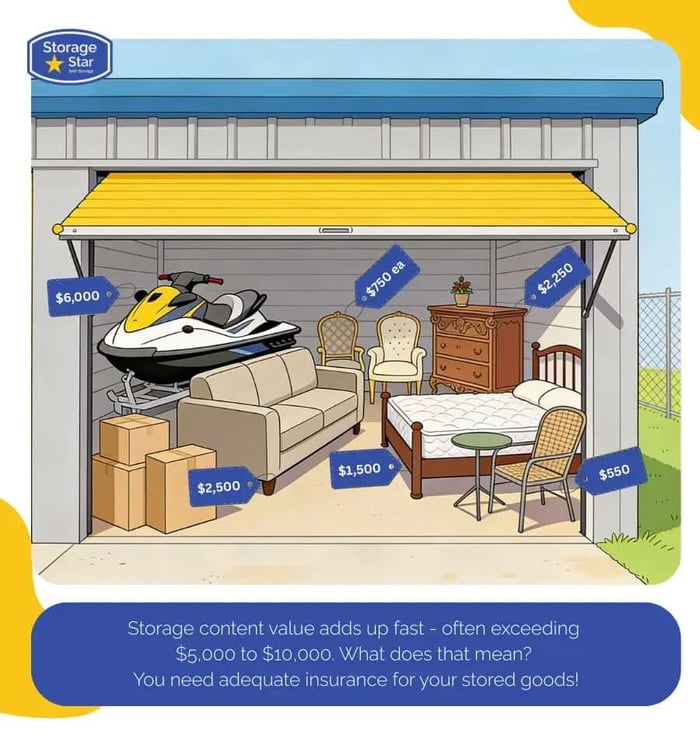
For many renters, that 10% cap disappears quicker than they expect. And that’s before we even talk about deductibles.
Does Homeowners Insurance Cover a Storage Unit?
If you own your home, the answer is similar. Homeowners insurance policies usually include off-premises coverage too, and yes, it often follows that same 10% limitation structure.
That means:
$100,000 personal property coverage
Could mean $10,000 for items stored off-site
Again, it depends on your policy, but the 10% limit is common. And here’s something many people overlook:
If you file a claim for items in storage, it’s still a claim against your homeowners' policy. That can impact deductibles and even future premiums.
Sometimes using your primary insurance for storage losses isn’t the most strategic move.
When Your Current Policy May Not Be Enough
Here are a few situations where your existing coverage might fall short:
High-Value Items
Certain items often have category limits:
Jewelry
Collectibles
Fine art
Business equipment
Even if you’re under your 10% cap, specific items may have lower limits.
Deductibles Matter More Than You Think
If your deductible is $1,000 and you experience a $1,200 loss, your actual payout may be minimal.
That’s not much protection for something that meant a lot to you.
Policy Exclusions
Not every type of damage is considered a covered event under renters insurance coverage or homeowners insurance coverage. While many policies cover risks like theft, vandalism, or fire and smoke damage, others may require separate protection.
Common exclusions or limitations may include:
Flood damage (usually requires separate flood insurance)
Earthquake damage
Mold or mildew not caused by a covered event
Pest or rodent damage
Gradual water damage
Business property stored off-site
Certain high-value or valuable items beyond category limits
Every insurance company defines policy limits differently, which is why reviewing your insurance coverage details matters — especially when you’re storing high-value belongings.
And if their storage coverage isn’t enough, you have options.
How Storage Unit Insurance Works
When you rent a storage unit, you’re typically required to carry insurance on your stored belongings.
This can happen in one of two ways:
Option 1: Use Your Existing Renters or Homeowners Policy
If your current policy provides enough off-premises coverage to meet the facility’s requirements, and you’re comfortable with the limits and deductible, you can use it.
Just keep in mind:
Off-premises coverage is often capped (commonly around 10%)
Your deductible still applies
Filing a claim may impact your primary insurance policy
For some people, that’s perfectly fine. For others, it’s not ideal.
Option 2: Enroll in a Storage Protection Plan
Reputable self-storage facilities offer protection plans designed specifically for stored belongings.
These plans typically:
Cover items while they’re inside your storage unit
Do not affect your renters or homeowners policy
Are offered at a low monthly cost
Can be added at the time of rental
They’re designed to be simple, because storage should feel simple.
How Storage Star Makes Storage Insurance Simple
At Storage Star, we make this process easy.
You can:
Use your existing policy if it works for you
Or add protection during checkout when you rent your unit
There’s no complicated paperwork, no insurance jargon to decode, and no pressure, just clear options so you can choose the level of protection that feels right for you.
And because these plans are typically very affordable, many renters see them as a small monthly investment to protect much larger or more precious belongings.
You can rent a storage unit online in just minutes, and if you’d like protection, you can add it in a few clicks. Simple. Transparent. Stress-free.
The Bottom Line: Smart Coverage = Stress-Free Storage
Storage is supposed to make your life easier, not riskier. Yes, your renters or homeowners insurance may cover your storage unit, but it’s worth checking the limits before assuming you’re fully protected.
And if you decide you want a little extra peace of mind? Storage Star’s storage rental insurance is affordable, easy to add, and designed specifically for storage units.
When you’re ready, you can find a Storage Star near you and reserve or rent an insured storage unit in just a few clicks.
Because having your space back should feel exciting, not uncertain.
FAQs
Does renters' insurance automatically cover items in storage?
Usually, yes, but often only up to about 10% of your total personal property limit. It’s important to confirm your exact policy details with your insurance company.
Does homeowners' insurance cover my storage unit?
Typically, yes, under off-premises coverage. However, limits and deductibles apply, and filing a claim may affect your policy.
Can I use my existing insurance instead of buying a separate policy?
Yes, as long as your policy provides enough coverage and meets facility requirements. Many renters choose additional protection simply to avoid coverage gaps.
What are three things renters insurance typically does not cover?
Most renters insurance coverage does not automatically cover:
Flood damage (separate flood insurance is usually required)
Earthquake damage
Certain high-value or valuable items beyond policy limits
While many policies cover theft, fire, and vandalism as a covered event, coverage for stored items may be limited by your personal property coverage limit. Always review your policy limits carefully with your insurance company.
Are valuable items covered in a storage unit?
Valuable items may be covered, but often only up to certain policy limits.
For example, jewelry, collectibles, fine art, and business equipment frequently have category caps under renters insurance coverage. Even if you haven’t exceeded your overall personal property coverage limit, individual items may still have lower limits.
If you’re storing high-value or sentimental belongings, it’s important to confirm whether your insurance company considers them fully covered under off-premises insurance coverage.
What happens if my storage unit is broken into?
If you’re using your renters or homeowners insurance, you would file a claim through your insurer and pay your deductible. If you have a storage protection plan, claims are typically handled separately and don’t impact your primary policy.
How much is storage rental insurance?
The cost of self-storage insurance depends on how much insurance coverage you select and the total value of your stored items.
In many cases, storage rental insurance costs far less per month than increasing your homeowners or renters insurance coverage. Because it’s designed specifically for stored belongings, it can provide targeted protection at a low monthly rate.
If you’re unsure what coverage amount you need, consider estimating the total value of your personal property inside the unit first.