
Table of Contents
Sometimes life shifts faster than your space can keep up. Whether you’re downsizing to a smaller home, moving abroad for work, or simply reclaiming space at home, long-term storage can give you the breathing room you need.
But storing items for months, or even years, comes with its own set of challenges. How do you protect furniture, electronics, clothing, or even vehicles from damage? Do you need climate control? How do you make sure you can actually find what you need later?
This guide walks you through everything you need to know about long-term storage: how to prep your belongings, choose the right unit, and store them safely for the long haul. You’ll also see real-life examples from people who’ve successfully stored their items, giving you the confidence to make the most of your storage space.
What Is Long-Term Storage – and Who Needs It?
Long-term storage is typically for any situation where you need to keep your belongings safe for three months or more. It’s a practical solution for people downsizing to a smaller home, relocating for work, traveling abroad, or managing a digital nomad lifestyle.
When choosing a long-term storage unit, a few key factors can make all the difference:
Security: Gated access, cameras, and on-site staff help protect your belongings.
Climate control: Protects sensitive items like electronics, furniture, fabrics, and antiques from extreme temperatures or humidity.
Access & flexibility: Choose a facility that lets you check in when needed and adjust your rental period easily.
With the right unit and proper preparation, long-term storage can be a stress-free way to keep your items safe until you’re ready to use them again.
Find a Storage Star Self-Storage Facility
Real Talk: What Long-Term Storage Is Like (From People Who’ve Done It)
Long-term storage doesn’t just create space; it provides flexibility and peace of mind.
Making a smaller apartment work: One customer downsized to a cozy suburban apartment that couldn’t fit their bedroom set or sectional sofa. Storing their furniture allowed them to keep the pieces they loved without overcrowding their new space.
Protecting valuable heirlooms: Another customer used a climate-controlled unit to store antiques and family heirlooms. Knowing their cherished items were safe gave them true peace of mind.
These stories show that long-term storage can save space, protect valuables, and reduce stress during life transitions.
Reviews from Long-Term Storage Star Customers
“I have been in this location since 2019. I have always been impressed with the cleanliness both inside the facility and around the building. The staff has always been extremely friendly and helpful. Today, Nayla helped me close out one of my 2 units in a timely manner. Have recommended Storage Star to anyone looking for a place for their belongings.” - Carolyn Smith, Plano Storage Star
“We rented from Storage Star for just over a year. We dealt with Cody for move in and move out. During our time there we noticed Cody's meticulous attention to detail in his paperwork, and in the cleanliness of the units. He responded to calls in a timely manner and was always professional and personable.” - Lisa Hill, Rio Vista Storage Star
“6 STARS!!! Makayla & Diana provide excellent, friendly customer service! Units are clean & well-maintained with Carnaros bay breeze providing perfect storage! I’ve rented 4 units & the girls always make me feel welcome with easy access -so convenient. I’ll be renting more soon. Good job, Storage Star girls!” - Doug Hitt, Napa Storage Star
How to Prep for Long-Term Storage Like a Pro
Long-term storage isn’t just about packing efficiently—it’s about protecting the items that don’t age well when ignored. Some things are perfectly fine sitting untouched for months. Others need a little extra prep to avoid damage, odors, or expensive surprises when you return.
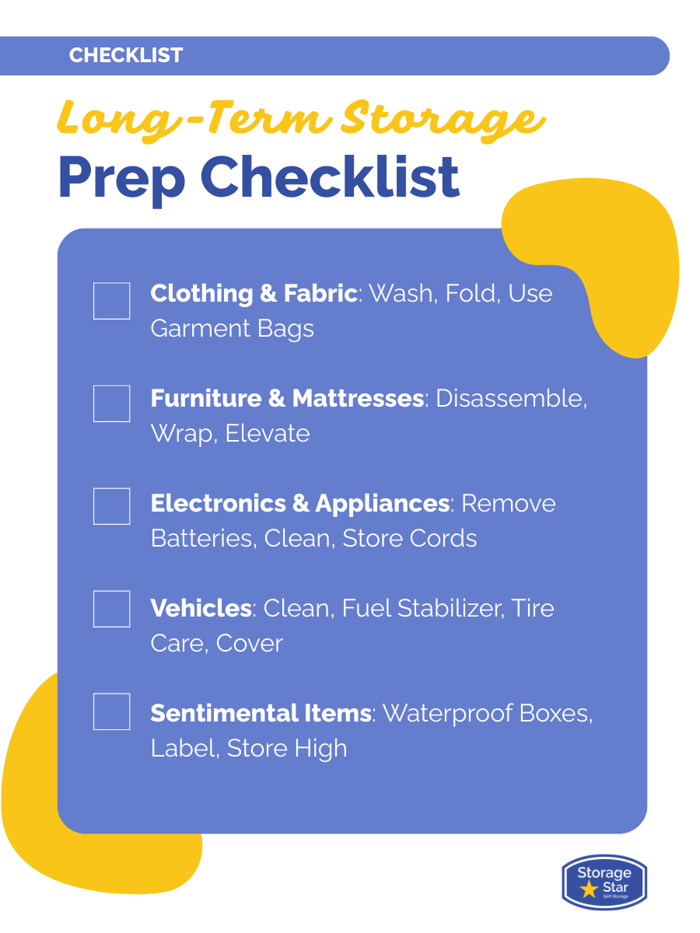
Here’s how to store common long-term items the right way:
Clothing, Shoes & Fabrics
These are some of the most commonly damaged items in long-term storage—usually from moisture, pests, or poor airflow.
Wash or dry-clean everything first (even items that “seem clean”)
Avoid vacuum-sealing natural fibers like wool or leather for long periods
Store shoes with cedar blocks or acid-free paper to help them keep their shape
Use breathable garment bags or wardrobe boxes—not plastic trash bags
Furniture & Mattresses
Furniture can warp, crack, or absorb moisture over time if it’s not prepped correctly.
Disassemble large pieces when possible to reduce stress on joints
Wrap wood furniture with moving blankets (not plastic wrap alone)
Stand mattresses upright and use a breathable mattress cover
Keep furniture off the floor using pallets or shelving to improve airflow
Learn how to store furniture in a non-climate-controlled unit, how to store a mattress, or check out our mattress size chart guide to help you choose the best unit.
Electronics & Appliances
Long periods of inactivity can be just as risky as heavy use.
Remove batteries from all electronics and small devices
Clean appliances thoroughly and leave doors slightly open (fridges, washers)
Coil cords loosely and store them with their corresponding devices
Avoid stacking electronics directly on concrete floors
Vehicles (Cars, Motorcycles, or Recreational Vehicles)
Many Storage Star locations offer dedicated vehicle storage options, but this is where proper prep makes all the difference:
Clean the interior and exterior to prevent corrosion and odors
Fill the gas tank and add a fuel stabilizer
Disconnect or maintain the battery
Inflate tires properly to prevent flat spots
Use a breathable vehicle cover if storing indoors
Learn more about long-term car storage tips. Or, learn about how much it costs to store a vehicle.
Documents, Photos & Sentimental Items
Even if they don’t take up much space, these items may be irreplaceable. Preparation goes a long way:
Store documents in waterproof, fire-resistant containers
Avoid stacking heavy items on top of photo boxes
Keep sentimental items in labeled bins so they’re easy to locate later
Store these items higher in the unit to protect against humidity
Seasonal & “I’ll Need This Eventually” Items
Think tools, sports gear, décor, or hobby equipment.
Group items by how soon you’ll need them again
Label bins by timeline, not just category (e.g., “First Month Back”)
Leave a narrow walkway so you can access items without unpacking everything
What to Expect From Long-Term Storage Units
When you select a storage company with a good reputation, you’ll enjoy a variety of benefits. For example, Storage Star offers friendly customer service and a user-friendly online portal. Check our website regularly to learn about web discounts on new rentals.
Other perks of long-term storage include:
Monthly rates to fit every budget
Units that range in size, location, and type
Climate-controlled units for electronics, furniture, and fabrics
Security features that include 24-hour surveillance, convenient access hours, and gated facilities
Affordable renters insurance
Our cost-effective storage solutions provide the ideal place to store collectibles and other personal items as you declutter your house.
Find & Rent a Storage Unit Near You
What Not to Do When Storing Items Long Term
Here are a few guidelines to help you protect your items while they remain in storage:
Avoid storing food, scented objects, and flammable products
Pack items properly prior to storage
Don’t use plastic bags, cardboard, or other materials that trap moisture
Compare online reviews and rates when choosing a storage company
When shopping for your storage facility, don’t forget to contact Storage Star. Ask us about our money-saving rental deals.
Have questions? Our friendly on-site teams can help you choose the right long-term storage solution.
Experience the Convenience and Security of Long-Term Storage
Long-term storage should feel simple, secure, and stress-free. When your life is changing, the last thing you should worry about is whether your belongings are protected.
With climate-controlled options, secure facilities, and flexible rentals, Storage Star makes it easy to store your things confidently for as long as you need—without long-term pressure.
Find a Storage Star location near you and reserve your long-term storage unit online today.
FAQs
What Is Considered Long-Term Storage?
Long-term self-storage typically refers to storing your belongings for three months or longer, especially when you’re planning an extended period away, like relocating for work, downsizing, or living abroad. Unlike short-term storage, which is meant for quick transitions, long-term storage is designed for items you won’t need immediate access to but still want protected and accessible when you return.
Do I Need Climate-Controlled Storage for Long-Term Use?
In most cases, yes. Climate-controlled storage is strongly recommended for long-term storage. Items stored for months or years are more vulnerable to temperature swings and humidity, which can damage fragile items like wood furniture, antiques, electronics, clothing, and important documents. Climate control helps maintain stable conditions so your belongings stay in the same condition you left them.
How Much Does Long-Term Storage Cost?
The cost of long-term storage depends on a few factors, including storage unit size, location, and whether you choose climate-controlled storage. Smaller units for boxes and seasonal items are typically more affordable, while larger units for furniture or vehicles cost more. Storage Star makes it easy to compare options online and get exclusive discounts, like $1 for your first month.
Can I Store a Car or Motorcycle Long Term?
Yes! Many Storage Star locations offer long-term vehicle storage for cars, motorcycles, and other vehicles. If you’re storing a vehicle for an extended period, proper prep is key. That includes stabilizing the fuel, maintaining the battery, inflating tires correctly, and protecting the vehicle from dust and moisture. When done right, long-term storage keeps your vehicle safe and ready when you return.
Is It Safe to Store Items for a Year or More?
Absolutely. With the right preparation and a secure facility, items can be safely stored for 12 months or longer. Choosing the appropriate storage unit size, using climate-controlled storage when needed, and packing with long-term conditions in mind all help protect your belongings over time. Long-term self-storage is designed for extended use - so your things stay secure, even when life takes you elsewhere.