
Table of Contents
Do you ever feel like storage terms all sound the same? If you’ve come across terms like “air-cooled” and “climate-controlled” and wondered what they really mean, you’re definitely not alone.
When it comes to choosing the right self-storage facility for your needs, it’s important to understand the differences between these terms so you can have a better idea of what each type of unit does and the kinds of stored items they’re best suited for.
That helps you not only protect your valuables from things like extreme heat and high humidity, but also save you money and stress. Take a closer look at the differences between air-cooled and climate-controlled storage options.
Need help deciding which unit is right for your storage needs? Find a Storage Star near you for help choosing between climate-controlled and air-cooled options.
What Is Air-Cooled Storage?
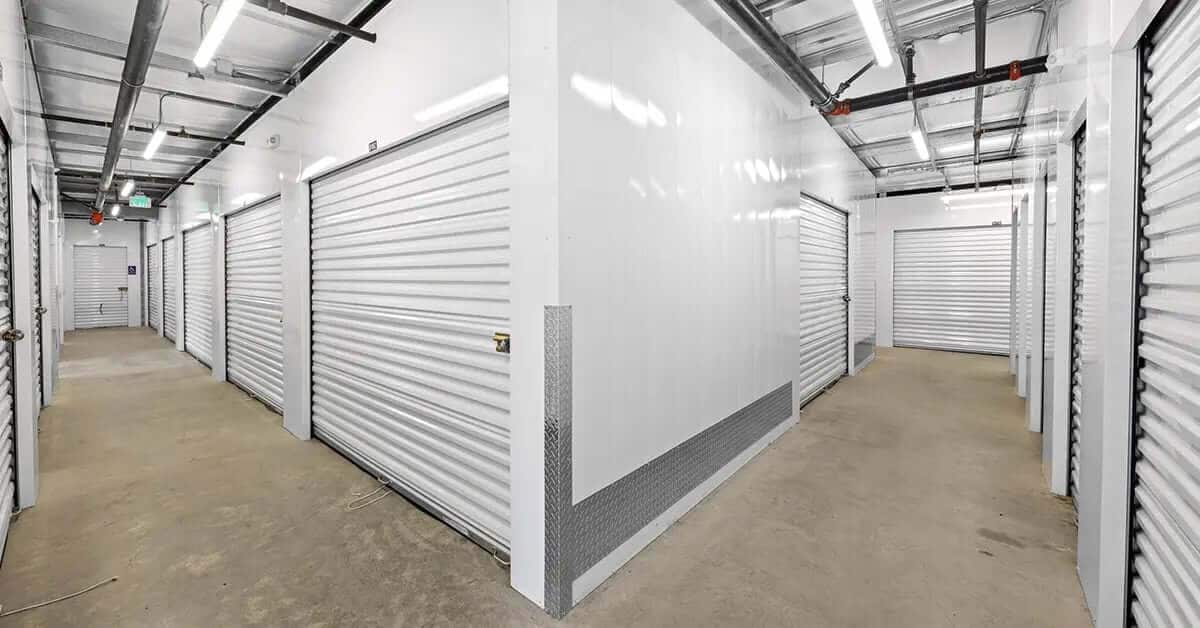
Air-cooled storage units circulate cooled air using vapor-based systems rather than air conditioning, ensuring the air inside the unit doesn’t stagnate.
Circulation helps moderate temperatures and reduce heat buildup during warmer months. However, air-cooled units do not regulate humidity, which may still be a concern for some items.
While not as protective as climate control, air-cooled options are a helpful upgrade over standard units in warm climates, as they maintain a more consistent temperature inside the unit.
This makes them budget-friendly units when humidity isn’t a concern, but you still want some extra peace of mind.
What Is Climate-Controlled Storage?
Climate-controlled storage is a step up from air-cooled units and is designed to protect your belongings year-round. These units use an HVAC system to maintain temperatures between 55 and 80°F, helping prevent warping, cracking, and other damage caused by extreme heat or cold.
Some climate-controlled units also help regulate humidity, making them a great option for delicate or moisture-sensitive items. Because this type of storage is both practical and widely useful, you’ll find climate-controlled units available at many Storage Star locations across the country.
Find a Climate-Controlled Facility Near You
Air-Cooled vs. Climate-Controlled: What’s the Difference?
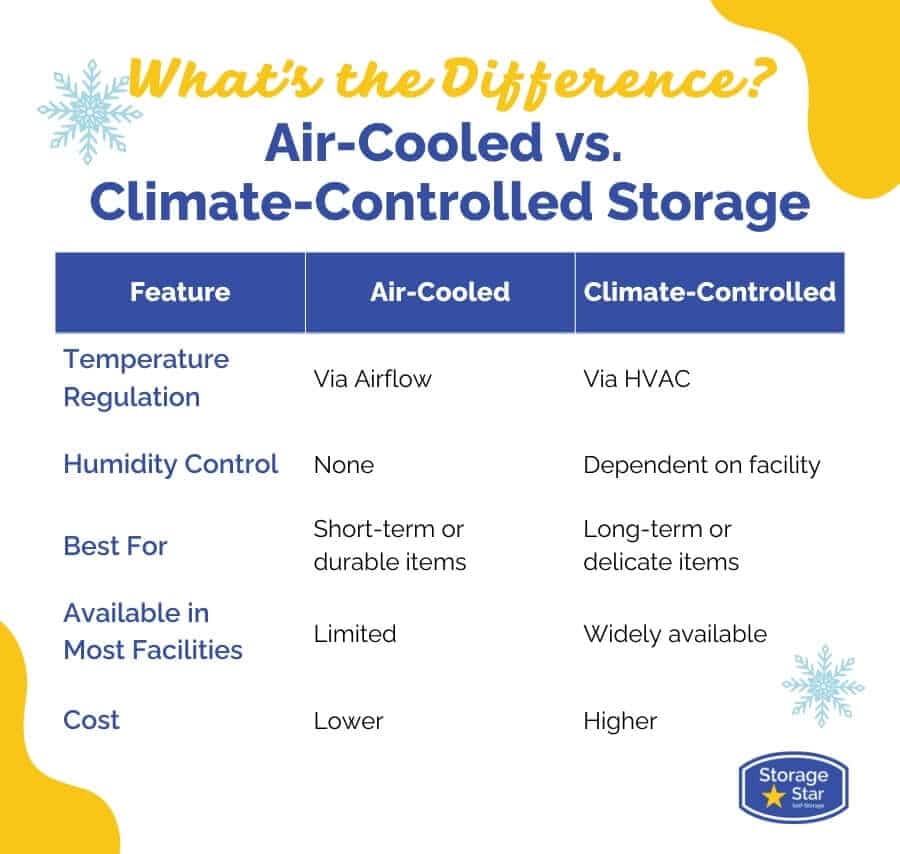
Air-cooled and climate-controlled storage units handle heat and humidity differently, making each suited for different uses. Here’s a closer look:
Feature | Air-Cooled | Climate-Controlled |
Temperature Regulation | Passive (via airflow) | Active (HVAC-controlled) |
Humidity Control | None | Dependent on Facility |
Best For | Short-term or durable items | Long-term or delicate items |
Available in Most Facilities | Limited | Widely available |
Cost | Lower | Higher |
Looking to compare unit types near you? Use Storage Star’s facility directory to find climate-controlled availability and pricing in your area.
When to Choose Air-Cooled Storage
Air-cooled storage is a solid option if you’re storing items short-term, typically three months or less, or if you live in a warmer, drier climate where humidity isn’t a major concern.
These units are great for durable items like:
Tools and hardware
Sealed plastic bins
Metal shelving & filing cabinets
Laminate or solid wood furniture without upholstery
Outdoor or weather-resistant items
Air-cooled units offer a practical, budget-friendly upgrade when you want a little extra protection without the cost of humidity or temperature control.
When to Choose Climate-Controlled Storage
Seasonal or year-round storage is often better handled with a climate-controlled unit. Many temperature and humidity-related issues only show themselves after time has passed.
If your region has high humidity, extreme cold, or temperature swings, then climate-controlled units can address those challenges. Certain items, such as electronics, instruments, wooden furniture, clothing, paper documents, and collectibles, also need more protection from weather conditions.
This makes climate-controlled storage the clear choice for extra protection and lasting peace of mind. Reserve your unit today to get web-only pricing.
What Items Need Climate Control?
Not all belongings need the extra protection of climate-controlled storage—but some items can be easily damaged by heat, humidity, or temperature swings. Consider climate control if you’re storing:
Electronics – TVs, speakers, computers, hard drives, and other sensitive devices
Paper items – Books, important documents, photographs, and artwork that can warp or curl
Furniture – Leather, upholstered, wooden, or antique pieces that are prone to mold, mildew, or cracking
Clothing & textiles – Shoes, linens, and fabrics that can absorb moisture or develop odors
Musical instruments & vintage gear – Wood and metal parts can warp, rust, or deteriorate in fluctuating conditions
Valuable items – Wine, antiques, or collectibles that need a stable environment to stay safe
Climate control helps ensure your valuable or delicate items stay in the condition you left them, even for long-term storage.
Finding the Right Unit Is Easy With Storage Star
Choosing between air-cooled vs. climate-cooled storage comes down to what you’re storing and how long you’ll be storing it. For high-value and sensitive items, climate-controlled is your best bet, but air-cooled is an affordable choice for many short-term needs.
Find your local Storage Star location to reserve the right storage unit for you, whether air-cooled or climate-controlled, and save more with web-only rates online.
FAQs
What’s the Main Difference Between Air-Cooled and Climate-Controlled Storage?
Air-cooled storage relies on airflow to reduce heat, but doesn’t provide humidity control. Climate-controlled storage carefully maintains both temperature and humidity.
Is Air-Cooled Storage Better Than Standard Storage?
Yes, air-cooled self-storage units are better than standard units, especially in hot climates. However, they aren’t as effective as climate-controlled storage units.
How Much Does Climate-Controlled Storage Cost?
Pricing depends on factors like unit size and location. In general, a climate-controlled storage facility is $20 to $50 more per month compared to standard units.
Can I Store Electronics in an Air-Cooled Unit?
Climate-controlled units are recommended for long-term electronics storage to protect against humidity levels and extreme temperatures.
Does Storage Star Offer Both Types?
Climate-controlled units are available at many Storage Star units, with air-cooled units available in select warm-weather regions.