
Table of Contents
Retirement lets you live the life you’ve always wanted. For some people, that means warm weather and low taxes. Others prioritize affordable housing, excellent healthcare, or living closer to family. That’s why there isn’t a single best state to retire in.
Instead, the right destination depends on your long-term plans and budget. In this guide, we’ll compare some of the best states to retire in 2026 using current data and explain what makes each one stand out. We’ll also cover how to make the move easier, from downsizing and decluttering to deciding what to do with a lifetime of belongings.
What Makes a State “Best” for Retirement
Retirement rankings don’t always agree, and that’s a good thing. Different organizations measure different factors, so the best states to retire in depend on what matters most to you.
WalletHub’s 2026 analysis uses 46 metrics spanning affordability, quality of life, and healthcare, and it crowned Wyoming the top state. U.S. News & World Report ranks metro areas rather than states, and its most recent analysis put Michigan, West Virginia, Florida, and Texas at the top of the list because several of their cities land on its top-ten-places-to-retire list.
As you compare states, pay attention to factors like:
Cost of living: Housing, groceries, utilities, and everyday expenses all affect how far your retirement savings will go.
Taxes: Consider state income tax, property taxes, taxes on retirement income, and sales tax. Even if a state has no income tax, it doesn’t make it the most affordable if it has higher property or housing taxes.
Healthcare access: As your healthcare needs change as you age, having access to quality hospitals, specialists, and primary care becomes more important.
Climate and natural hazards: Warm winters may sound appealing, but you also need to consider hurricane, wildfire, drought, or severe weather risks depending on the region.
Lifestyle and community: Recreation, volunteer opportunities, cultural attractions, walkability, and proximity to family can have just as much impact on your retirement as financial considerations.
Rather than searching for the perfect state, think about which tradeoffs you’re willing to make. The best retirement destination is the one that fits your finances and the lifestyle you want to enjoy.
Top States to Retire in 2026
No state is perfect for every retiree. The best choice depends on your budget, lifestyle, healthcare needs, and whether you want to stay close to family. Still, several states consistently rank near the top thanks to a strong mix of affordability, healthcare, tax policies, and quality of life.
1. Wyoming
WalletHub ranks Wyoming as the best state to retire in 2026, thanks to its combination of affordability and retiree-friendly tax policies. The state has no personal income tax, no estate or inheritance tax, relatively low living costs for retirees, and one of the nation’s lowest senior poverty rates. The tradeoff is its rural nature. Depending on where you live, specialized healthcare and shopping may require longer drives than they would in more populated states.
2. Florida
Florida remains one of the country’s most popular retirement destinations for good reason. The state has no personal income tax, and offers its residents year-round warm weather, miles of coastline, and countless communities perfect for active adults. WalletHub also ranks Florida first for overall quality of life for retirees. However, you should also budget for rising homeowners’ insurance premiums and higher housing costs in many coastal communities due to hurricanes.
3. South Dakota
South Dakota may not be the first state that comes to mind, but it consistently ranks high in retirement rankings. It has no state income tax and offers residents lots of healthcare access, clean air, and low rates of social isolation. The biggest drawback is the climate. It has harsh winters, which can be a deterrent if you’re hoping to avoid snow.
4. Colorado
If staying active is your priority, Colorado is a great option. It pairs outstanding healthcare with lots of outdoor recreation, making it appealing for retirees who enjoy hiking, cycling, skiing, and other year-round activities. The tradeoff is affordability. Housing costs in many Colorado communities are well above the national average.
5. Minnesota
Minnesota consistently earns high marks for healthcare, community services, and overall quality of life. It ranks nationally for healthcare, making it an attractive option for retirees who want access to excellent medical care. Of course, those benefits come with long winters that aren’t ideal for everyone.
6. Delaware
Delaware offers several financial advantages for retirees, including relatively low property taxes and favorable tax treatment for many forms of retirement income. It’s also close to major East Coast cities without the higher living costs of neighboring states. However, popular retirement communities still have premium home prices.
7. Pennsylvania
Pennsylvania often flies under the radar, but it’s one of the more tax-friendly states for many retirees because it doesn’t tax Social Security benefits or most retirement income. Combined with strong healthcare systems and a reasonable cost of living, it’s a solid all-around choice. But you do need to consider the winter weather, especially if you’re relocating from a warmer climate.
8. New Hampshire
New Hampshire appeals to retirees who value scenic landscapes, outdoor recreation, and a high quality of life. The state no longer taxes personal income, making it attractive from a tax perspective. That said, higher property taxes can offset some of those savings, depending on where you settle.
9. Alaska
Alaska has no state income tax and lots of natural beauty, making it great for retirees who love to spend time outdoors. However, everyday expenses and travel costs are higher than in most states due to its isolation.
10. Iowa
Iowa rounds out the list with a combination of affordable housing, welcoming communities, and a lower cost of living than many coastal states. It’s a good fit for retirees looking for a quieter pace of life without sacrificing access to healthcare and everyday amenities.
States to Approach with Caution
Every retirement destination comes with tradeoffs. A state that’s ideal for one person may not be the best fit for someone else. As you compare your options, consider the factors that could have the biggest impact on your day-to-day life.
States with High Cost of Living
States like California and Hawaii offer beautiful scenery and desirable climates, but they also have some of the nation’s highest housing and everyday living costs. Even retirees with substantial savings may find that higher home prices, utilities, and healthcare expenses reduce their purchasing power over time.
States with Higher Property Taxes
A low or nonexistent state income tax doesn’t always mean you’ll spend less overall. Some states offset lower income taxes with higher property taxes, which can significantly affect homeowners on a fixed income. Before you buy, compare the total tax picture, including income, property, and sales tax.
States with Higher Natural Disaster Risk
Depending on where you retire, you may need to consider hurricanes along the Gulf and Atlantic Coasts, wildfires in parts of the West, or severe winter weather in northern states. These risks influence everything from homeowners’ insurance premiums to evacuation planning and long-term maintenance costs.
States Farther from Family and Support Networks
Financial benefits are important, but they’re only part of what you should consider. Living near family, friends, or a trusted healthcare network can significantly impact your quality of life during retirement.

How to Plan a Retirement Move
Choosing the best states to retire in is only half the decision. The next step is figuring out how to get there without feeling overwhelmed. Whether you’re moving across town or across the country, planning can make the transition smoother. These strategies help you stay organized.
Do a Trial Run Before You Buy
If you’re moving to a state you’ve only visited on vacation, consider renting for a few months. Spending an extended time in your new community gives you a chance to experience daily life. Pay attention to things like:
Traffic and public transportation options
Access to healthcare
Grocery stores and everyday conveniences
Seasonal weather
Opportunities to meet people and stay active
A trial stay can give you confidence that you’ve chosen the right place before making a long-term investment.
Downsize Before You Put Your Home on the Market
If you’ve lived in your home for decades, downsizing can feel like one of the biggest parts of the moving process. Instead of trying to make every decision at once, start early and work through one room at a time.
As you sort through your belongings, create three categories:
Keep: Items you’ll use in your new home.
Donate or sell: Things you no longer need.
Decide later: Sentimental or seasonal items you’re not ready to part with.
This approach makes it easier to declutter your home before listing it for sale. It can also help create a more spacious look that allows potential buyers to picture themselves living there.
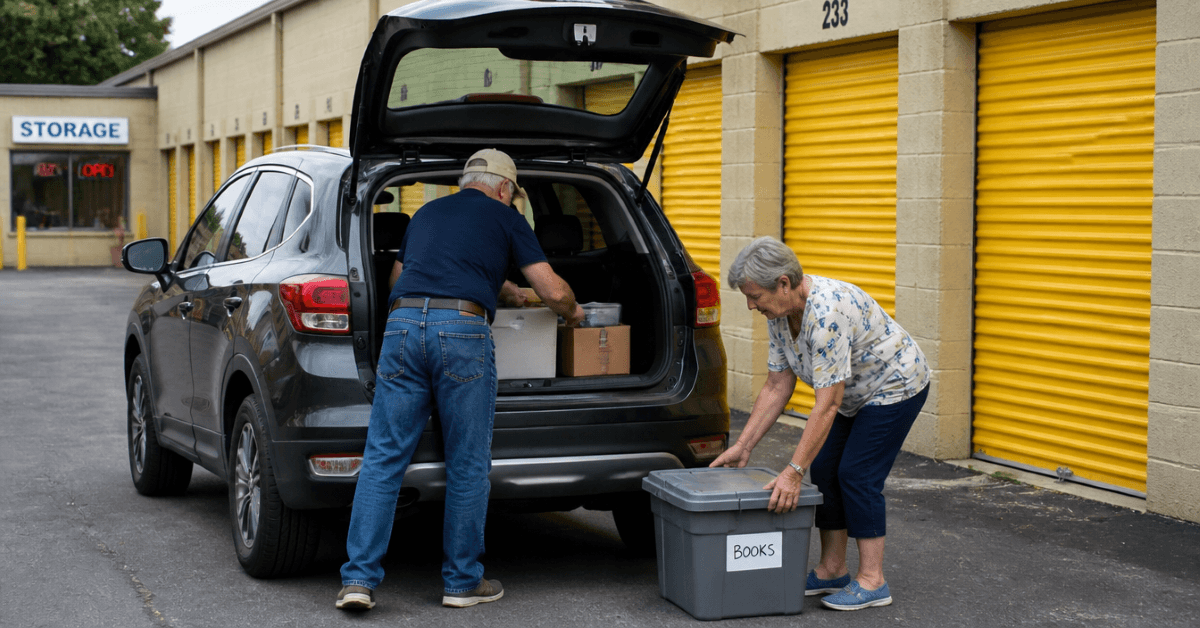
If you need extra space during the transition, a self-storage unit can provide a temporary place for the “decide later” items. That gives you time to settle into your new home before deciding what you need for your next chapter.
Plan for Your New Lifestyle
Retirement often brings lifestyle changes. If you’re planning to split your time between two homes, travel for extended periods, or become a seasonal resident, think about how you’ll manage the belongings that won’t travel with you.
Many retirees use self-storage to keep items such as holiday decorations, patio furniture, sporting equipment, extra household furniture, and seasonal clothing. Rather than overcrowding either home, you can keep those belongings secure until you need them again.
Give Yourself More Time Than You Think You’ll Need
One of the most common mistakes retirees make is trying to coordinate every step of the move on the same timeline. Building extra time into your moving plan helps reduce stress and gives you room to handle unexpected delays. If there’s a delay between selling your current home and moving into your next one, temporary storage can help bridge the transition without forcing rushed decisions about your belongings.
When you’re ready to move, having a convenient storage facility nearby can make the process much easier. Whether you need short-term storage while your home is on the market or extra space as you settle into retirement, Storage Star offers clean, secure storage solutions across the country.
You can explore locations and find a facility near you that fits your moving plans.
FAQs
What state has no income tax and is good for retirees?
Several states with no state income tax are popular with retirees, including:
Alaska
Florida
South Dakota
Tennessee
Texas
Wyoming
Nevada
Washington
However, income tax is only one factor. Before choosing a retirement destination, compare the overall cost of living, property taxes, healthcare access, and housing costs to find the best fit.
Should I rent or buy when I first move to a retirement state?
If you’re relocating to a new area, renting for several months before buying is smart. It gives you time to experience the community, explore different neighborhoods, and make sure the location meets your needs before buying a home.
What should I do with my belongings if I’m downsizing for retirement?
Start by sorting your belongings into keep, donate, or sell, and decide later piles. This makes downsizing more manageable and helps you avoid making rushed decisions about sentimental items. If you’re between homes or preparing your house to sell, a self-storage unit can provide temporary space for furniture, seasonal items, and boxes while you settle into your new home.
How much does a storage unit cost during a move?
The cost of a storage unit depends on several factors, including the unit size, location, amenities, and rental length. Smaller units generally cost less than larger ones, and prices vary by market.
If you only need storage while staging your home, waiting for a closing date, or completing a long-distance move, a month-to-month rental gives you flexibility without a long-term commitment. You can browse available unit sizes and pricing at a nearby Storage Star location to estimate your moving costs.
Is it better to retire near family or in a lower-cost state?
There’s no universal answer. A lower-cost state may help you stretch your retirement savings, while living closer to family can provide emotional support, easier visits, and assistance if your healthcare needs change over time. When comparing locations, think about the lifestyle you want. For many retirees, the best choice is the one that balances affordability with the people, activities, and healthcare resources that are important.