
Table of Contents
Selling a home means competing for buyer attention, and how a house is decorated can make or break that first impression. Staging your home helps buyers see past your furniture and family photos to picture their own life in the space, and it remains one of the highest-value steps a seller can take before listing.
This guide covers the best home staging tips that make the biggest difference, room by room, plus the mistakes that undo good staging work. It also covers a question most staging guides skip: what to do with everything you clear out of a room once you start packing away extra furniture and personal items. For most sellers, a self-storage unit turns out to be the simplest answer, and this guide will show you why.
Does Home Staging Really Work?
According to the National Association of Realtors' 2025 Profile of Home Staging, 83% of buyers' agents said staging makes it easier for their clients to picture a property as their future home. More than a quarter of real estate professionals reported that staged homes received offers 1% to 10% higher than comparable homes that were not staged, and roughly half of sellers' agents said staged listings sold faster than unstaged ones.
Staging doesn’t necessarily mean you’ll have to hire a professional decorator or buy new furniture. Many of the highest impact changes, like decluttering, deep cleaning, and depersonalizing, cost little more than time and a plan for where your extra belongings will go while your home is on the market.
Staging Options: DIY, Professional, or Virtual
Homeowners generally choose from three approaches.
- Full-service staging brings in a professional to rearrange your existing furniture, bring in new pieces, and style every room, which works well for vacant homes or homes with dated furniture.
- A staging consultation is a lower-cost option where a professional walks through your home and gives you a room-by-room plan to execute yourself, using furniture and decor you already own.
- Virtual staging adds furniture and decor to listing photos digitally rather than in person, which can work well for vacant properties, though the National Association of Realtors notes that any digital changes that materially alter a listing photo should be disclosed to buyers.
Whichever approach you choose, the preparation work is the same. Clearing clutter, deep cleaning, and depersonalizing come first, since no amount of styling fixes a room that still looks lived-in and crowded.
Before You Start: Declutter and Depersonalize
Every staging tip that follows works better once you have cleared the excess out of each room. What should you box up?
- Start with anything personal: family photos, collections, religious or political items, and anything else that makes a space feel like it belongs to your family rather than a future buyer's. Buyers need to be able to picture their own life in the house, and personal items make that harder.
- Then box up the knick-knacks, bulky appliances, and items that make the room feel busy.
- Next, tackle furniture. A room that is comfortable for daily living is often too full for staging. Removing a piece or two from each room, such as an extra armchair, a bulky bookshelf, or a coffee table, makes the space feel larger and gives buyers a clear path to walk through and imagine their own layout.
- And if the room still feels busy after that initial sweep, remember that your art and wall color can make a major impact on how a room feels. Stick with neutral colors and art.
So naturally, this step raises the question: where does everything go? Boxing it up and stacking it in the garage could work, but then the buyer won’t have access to your garage. A self-storage unit solves both problems by keeping your belongings safe and completely out of sight until closing, covered in more detail later in this guide.
As you pack, label boxes by room and keep a simple inventory of what went into storage. It sounds like an extra step, but it saves real time once your home sells and you need to find a specific box quickly during your next move.
Room-by-Room Staging Tips
Staging works best when you treat each room with a specific goal in mind, rather than applying the same handful of tricks everywhere.
Kitchen
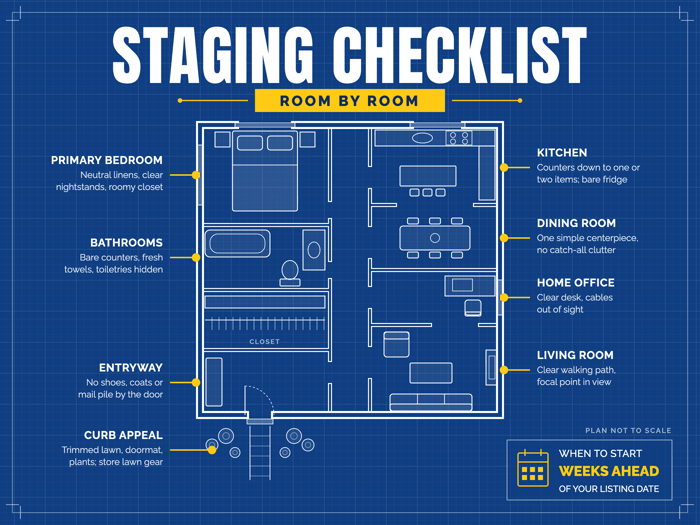
Clear countertops down to one or two intentional items, such as a bowl of fruit or a small plant, and put away small appliances that are not used daily. Buyers open cabinets and pantries during showings, so those need to look organized too, not just the visible surfaces.
A deep clean of the stove, sink, and floors makes a bigger impression here than in almost any other room. Take papers, magnets, and artwork off the refrigerator door so it reads as clean and neutral rather than lived-in.
Living Room
Arrange furniture around a clear walking path and a natural conversation area instead of pushing every piece against the wall. Remove any oversized furniture that crowds the room or blocks sightlines to windows. A neutral throw blanket and a couple of accent pillows add warmth without adding clutter.
If a sectional or a large entertainment center hides the room's natural focal point, such as a fireplace or a window, storing it usually does more for the space than rearranging it.
Primary Bedroom
Keep the bedroom simple with a made bed in neutral linens, nightstands cleared down to a lamp and maybe one book, and a closet organized enough that buyers see storage space rather than an overflowing rod when they open the door. Pack away out-of-season clothing, extra linens, and any bulky furniture crowding the room, and finish the look with matching pillows or a folded throw at the foot of the bed.
Bathrooms
Clear every personal care item off the counter and set out fresh, matching towels. Store medications and toiletries out of sight rather than in a visible cabinet. A bathroom should look ready for a guest, not like a space someone just used to get ready for work.
Dining Room
Set the table simply with neutral place settings or a single centerpiece instead of everyday clutter. If the room currently doubles as a home office or a catch-all storage space, clear it back to its intended purpose so buyers see a dining room, not a multi-purpose space.
Home Office
A dedicated office is a genuine selling point for many buyers, so keep the desk clear and cables out of sight. If the room has been serving double duty as storage, pack away anything that is not part of a clean, functional workspace.
Curb Appeal and Entryway
Buyers form an opinion before they reach the front door. Trim the lawn, clear the walkway, and add a fresh doormat or a couple of potted plants near the entrance. Touch up any chipped paint on the door or trim, make sure house numbers and light fixtures look current, and power wash the driveway or siding if it needs it. Store lawn equipment, extra vehicles, or recreational gear that make the property look crowded from the street. Just inside the door, clear away the shoes, coats, and mail pile that build up in most households, since this is the first impression that sets the tone for the entire showing.
Design Details That Make a Difference
A handful of smaller design choices help a staged home show and photograph well:
- Group decorative objects in odd numbers, like three candles or a plant paired with a small stack of books, since asymmetrical groupings tend to look more natural than matched pairs.
- Layer lighting with table or floor lamps in addition to overhead fixtures, and swap in warmer bulbs if your current lighting reads as cold or clinical.
- Add a plant or two, even in rooms with limited natural light, to bring life into a space without adding personal clutter.
- Keep one cohesive, neutral color palette running from room to room so the whole house feels connected instead of like a series of unrelated spaces.
- Use mirrors in smaller rooms or hallways to bounce light around and make the space feel larger than it is.
- Keep the home lightly scented or unscented rather than relying on strong candles or air fresheners, since heavy scents can make buyers wonder what they are covering up.
Common Home Staging Mistakes to Avoid
A few missteps come up again and again in home staging, according to the National Association of Realtors' guide for sellers:
- Overcrowding a room with furniture instead of removing pieces, which makes even a spacious room feel tight
- Skipping a deep clean, especially in kitchens and bathrooms, since buyers notice grime before they notice anything else
- Leaving personal, political, or religious items on display, which can make it harder for some buyers to picture the home as their own
- Ignoring high-traffic spaces like entryways and hallways that buyers pass through on every showing
- Choosing bold paint colors or decor that only appeals to a narrow group of buyers instead of a neutral palette with broader appeal
Avoiding these mistakes is often just as valuable as the staging itself. A single cluttered room or a lingering odor can undo the impression the rest of the house worked hard to create.
Why Self-Storage Is a Staging Must-Have
Every tip above points back to the same underlying task: clearing extra furniture and belongings so each room reads as open, neutral, and ready for a buyer to move in. The challenge is that those items still need somewhere to go, and a packed garage or an overflowing closet just moves the clutter instead of solving it.
A self-storage unit keeps everything you pack away safe and out of sight for as long as your home stays on the market, without locking you into a long-term commitment. Storage Star rents month-to-month, so your storage timeline can match your selling timeline instead of running longer than you need.
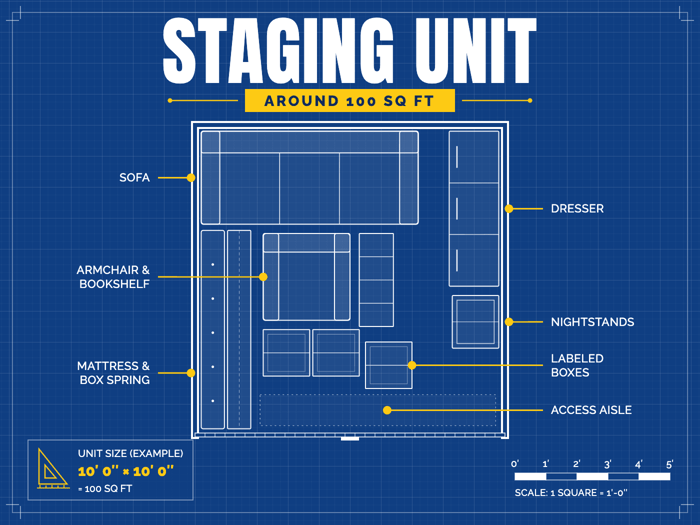
Most sellers staging a typical home do well with a unit around 100 square feet (10x10), about the size of a standard bedroom, which comfortably fits a bedroom set, a sofa, and a stack of boxes. Larger homes, or sellers clearing out a full garage along with their living space, may want to size up to 150 or 200 square feet.
Some belongings need more protection than a garage or a rented truck can offer. Artwork, electronics, musical instruments, and wood furniture are all sensitive to temperature swings and humidity, which makes a climate-controlled unit worth the small price difference over standard storage while your home is on the market.
Storage Star's storage unit size guide breaks down all seven available sizes so you can match the unit to what you are actually storing instead of guessing.
Timing matters too. Pack away out-of-season items, extra furniture, and anything you will not need before the sale closes as soon as you decide to list, rather than waiting until the week photos are scheduled. That gives you a head start on the decluttered look buyers respond to, and it means your storage unit is already in place when your agent wants to schedule showings on short notice.
Loading matters as much as space when you are moving furniture out on a deadline. Look for a facility with drive-up access so you can pull a vehicle right up to your unit instead of hauling boxes across a parking lot, along with access hours early and late enough to fit around your work schedule and your showings.
If you are staging a home in the Austin area, Staging Homes for Sale: Leveraging Self-Storage Units in Austin, TX covers local pricing and facility details in more depth. And if staging is part of a larger move, Storage Star's guides to downsizing with a storage unit and moving and packing supplies can help you plan the rest of the process.
Ready to Stage Your Home for Sale?
Staging works because it helps buyers see the potential in your home instead of the daily life you have built there. Clear the clutter, clean every room, and give your space the neutral, welcoming feel that leads to stronger offers and faster sales.
When you need somewhere secure to keep everything in the meantime, Storage Star makes it easy to find a self-storage facility near you and reserve a unit online in minutes.
FAQs
How much does home staging cost?
Cost depends on how much of the work you do yourself versus hiring a professional stager, whether you need to rent furniture, and how many rooms need attention. A consultation-only approach, where a stager advises you on changes to make yourself, typically costs less than full-service staging with rented furniture and decor.
Should I stage my home myself or hire a professional?
Many of the highest impact staging tips, like decluttering, deep cleaning, and depersonalizing, are things any seller can do without professional help. A professional stager adds the most value in homes with awkward layouts, outdated furniture, or rooms that are hard to photograph well, since they can address those challenges with training and an outside perspective on the space.
How long before selling should I start staging?
Start decluttering and depersonalizing as soon as you decide to sell, ideally several weeks before your home goes on the market. That gives you time to pack away extra belongings, arrange storage if you need it, and handle any deep cleaning or small repairs without rushing before your first showing.
Does virtual staging work as well as in-person staging?
Virtual staging can help buyers visualize furniture placement in an empty room, but it will not address clutter, dated finishes, or a home that needs a deep clean. It works best as a complement to the preparation work covered in this guide, not a replacement for it.