
Table of Contents
You finally did it. You bought the 12-foot skeleton. He towered over the neighborhood all October, LED eyes glowing, terrorizing children and bringing you pure joy. But now it's November, and you're standing in your driveway holding a rib cage the size of a canoe, wondering what exactly you're supposed to do with your large Halloween yard decorations.
This is the part nobody warns you about when you're standing, face to femur, in the Halloween aisle in September. So let's talk about where people actually put these massive lawn decorations once the season ends, why some of the usual go-to spots aren't doing your decorations any favors, and what actually works long-term.
Key Takeaways
Garages, attics, and sheds are the most common places people store oversized Halloween decor, but each comes with real tradeoffs.
Leaving giant decorations up year-round runs into HOA rules and neighbor patience well before it runs into weather problems.
Proper packing (deflating, disassembling, drying) matters more than where you store something.
A climate-controlled storage unit solves the space problem and the temperature-swing problem in one move.
Most Halloween collections, even a big skeleton and a few inflatables, fit comfortably in a small storage unit.
Where People Actually Store Large Halloween Yard Decorations
Ask around, and you'll get a pretty predictable list of answers.
Garage rafters or a storage loft. The classic move. If you've got overhead space and a system of hooks or platforms, this is where most oversized decor ends up, usually shoved up there in a hurry sometime in early November.
The attic. Popular for the same reason people store Christmas ornaments up there: it's out of sight and technically empty space.
The shed. A reasonable instinct, assuming your shed isn't already full of lawn equipment, half a bag of grass seed, and the pool noodles nobody's touched since July.
A spare closet or under a bed. This works fine for the smaller stuff, string lights, foam tombstones, the box of fake spiderwebs, but a 12-foot skeleton is not fitting under anyone's bed.
Just... leaving it up. Home Depot's own guide for the giant skeleton actually suggests this as an option, dressing him up as Santa in December, adding a top hat for New Year's, maybe a cap and gown if someone in the house is graduating. Commitment to the bit, honestly. But we'll get to why this isn't always the flex it sounds like.
Why These Spots Don't Always Work Out
Here's the thing nobody tells you about any of the above: they're all technically available, but they weren’t actually designed for a 12-foot skeleton, light-up inflatable ghost, or animatronic zombie… and a few of them come with consequences that aren’t so obvious.
Leaving It Up Year-Round
Leaving it up year-round runs into HOA rules before it runs into weather. If you live somewhere with a homeowners association, there's a real chance your neighborhood has a rule about how long seasonal decorations can stay up, and "permanently" is rarely the answer they're looking for. Even without an HOA, there's a social contract at play. Your neighbors were delighted by your 12-foot howling werewolf in October. They will not feel the same way about him standing sentinel in your yard through a Fourth of July barbecue. And on top of all that, most of these decorations genuinely aren't built for twelve months of sun, rain, snow, and whatever your climate throws at them. "Weather-resistant" on the packaging usually means "can handle a month outside," not "built to last a year."
Attic Storage
Attics run hot in summer and can trap moisture in humid climates. That combination is rough on plastic bones, foam props, and anything with a motor or LED wiring. Materials that were fine in October can turn brittle or warped by the time you pull them out again next fall.
Shed Storage
Sheds bring their own issues. Depending on your climate, that can mean humidity, temperature swings, or the occasional uninvited guest looking for a place to nest. And realistically, most sheds are already at capacity before Halloween decor enters the conversation.
Basement Storage
Basements can be damp, which is bad news for fabric-based inflatables in particular. Mildew doesn't care how much you paid for that 10-foot inflatable pumpkin patch.
None of this means your garage or attic is a lost cause. It just means the environment matters more than most people realize when you're storing something for eleven months out of the year.
How to Actually Pack These Things Up
Regardless of where it ends up, how you pack your decorations matters just as much as where you put them.
Deflate inflatables completely and let them air dry before folding or bagging them. Packing away a slightly damp inflatable is basically an invitation for mildew.
Disassemble large props and skeletons rather than trying to store them fully assembled. Most oversized decorations come with a box specifically designed to fit the parts; if that box didn't survive the season, a sturdy bin or a bag sized to the item works just as well.
Remove batteries from anything battery-powered before storage. A leaking battery in April is not the surprise you want.
Size your storage to the item, not the other way around. Forcing an oversized prop into an undersized bin usually ends in cracked plastic or a bent frame.
Why a Storage Unit Solves Both Problems at Once
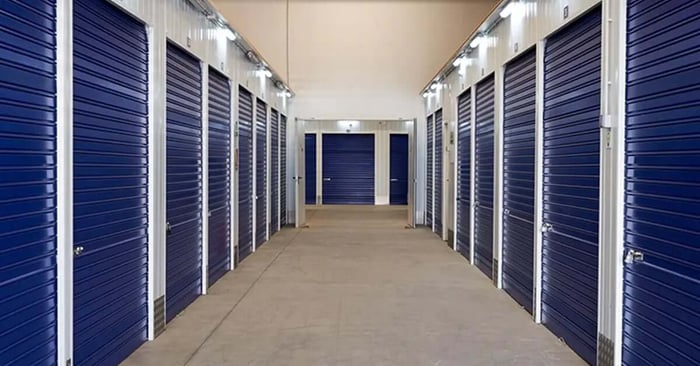
Once you've packed everything up properly, the question is simply where it should live for the next eleven months. This is where a storage unit earns its keep.
Space. An oversized Halloween collection takes up a disproportionate amount of room for something you use once a year. Freeing up that garage rafter space or shed corner means you actually get to park your car or find the lawnmower without an archaeological dig.
Climate stability. A climate-controlled unit avoids the heat and humidity swings that cause the most damage to plastic, foam, and fabric decor over time. Your skeleton and your inflatables spend the year in a stable environment instead of baking in an attic or absorbing moisture in a shed.
A happier household. No more stepping over a deflated 10-foot pumpkin patch to get to your Thanksgiving decorations, and no more admitting to your neighbors why it’s always spooky season at your place.
What Size Storage Unit Do You Need for Halloween Decorations?
Good news: most outdoor Halloween decor collections don't need much room at all. A single 12-foot skeleton, a couple of inflatables, and a few boxes of smaller decor typically fit comfortably in a 5x5 or 5x10 unit, which is roughly the size of a small walk-in closet or a standard walk-in pantry. If your collection has grown into full yard-haunt territory, with multiple large props, fog machines, and enough inflatables to rival a car dealership lot, a 5x15 or 10x10 gives you room to spare without paying for space you don't need.
FAQs About Storing Large Outdoor Halloween Decorations
Can you store an inflatable Halloween decoration outside year-round?
It's not a great idea. Even decorations marketed as weather-resistant are generally built to handle one season outside, not twelve months of sun exposure, rain, and temperature swings. UV exposure alone can fade colors and weaken the fabric well before next Halloween rolls around.
How do you keep a giant skeleton from getting brittle in storage?
The biggest factor is avoiding extreme heat and temperature swings, which is exactly what makes attics and uninsulated garages less than ideal. A climate-controlled space keeps the plastic from becoming brittle or warped between seasons.
Do storage units allow seasonal or short-term rentals?
Many facilities, including Storage Star, offer flexible month-to-month terms, so you're not locked into a long-term lease just to store something for part of the year. It's worth checking with your local facility about the specific rental terms available.
Give Your Massive Monsters a Proper Home
Your large Halloween outdoor decorations deserve better than a precarious spot on the garage rafters or a slow decline in a damp shed, and honestly, so do you. A little planning at the end of the season means next October's setup starts with decorations that are still in great shape, instead of a skeleton that's seen better days.
If your collection has outgrown what your garage or attic can handle, find a self-storage facility near you!
FAQs
Can you store an inflatable Halloween decoration outside year-round?
It's not a great idea. Even decorations marketed as weather-resistant are generally built to handle one season outside, not twelve months of sun exposure, rain, and temperature swings. UV exposure alone can fade colors and weaken the fabric well before next Halloween rolls around.
How do you keep a giant skeleton from getting brittle in storage?
The biggest factor is avoiding extreme heat and temperature swings, which is exactly what makes attics and uninsulated garages less than ideal. A climate-controlled space keeps the plastic from becoming brittle or warped between seasons.
Do storage units allow seasonal or short-term rentals?
Many facilities, including Storage Star, offer flexible month-to-month terms, so you're not locked into a long-term lease just to store something for part of the year. It's worth checking with your local facility about the specific rental terms available.