
Table of Contents
A coin collection carries weight beyond its face value, whether it represents decades of careful acquisition, a family inheritance, or a deliberate investment in precious metals. Yet coins are more delicate than some may think. A fingerprint, a humid afternoon, or a season spent in an attic can quietly erode both condition and value in ways that are difficult to reverse.
This guide covers what serious collectors need to know: how to handle and house coins properly, how storage needs shift depending on the type of collection, the mistakes that cause the most damage, and why a climate-controlled environment is often the most reliable long-term solution once a collection outgrows a drawer or a shoebox.
Key Takeaways
Coins are damaged far more often by improper handling and poor environmental conditions than by any single dramatic event.
The right holder depends on the coin's value and purpose: flips and albums for everyday collections, capsules and certified slabs for anything rare or valuable.
Stable conditions matter more than most collectors realize. Aim for 65 to 70°F and humidity under 50 percent.
Cleaning a coin is one of the most common and most damaging mistakes a collector can make.
Climate-controlled storage addresses the environmental risks that home storage, particularly attics, basements, and garages, cannot reliably control.
General Coin Storage Best Practices
Before considering where a collection should live long-term, it's worth establishing the fundamentals of handling and housing coins correctly. These practices apply whether a collection consists of a handful of inherited silver dollars or several thousand carefully catalogued pieces.
Handle Coins With Care
The oils and acids naturally present on skin can etch a coin's surface over time, even when the contact seems brief or incidental. Cotton or nitrile gloves are the standard recommendation among numismatic professionals, and coins should always be held by their edges rather than across the face. When gloves aren't available, edge handling alone significantly reduces the risk of damage. Working over a soft, clean surface also protects against the kind of accidental drop that can leave a permanent mark.
Choose the Right Holder
Not every coin requires the same level of protection, and matching the holder to the coin's value keeps a collection both practical and well cared for.
Coin flips, typically cardboard with a Mylar window, offer inexpensive, individual protection and are well suited to everyday or lower-value coins.
Coin tubes are ideal for bulk holdings, such as rolls of the same denomination or duplicate coins not part of a display collection.
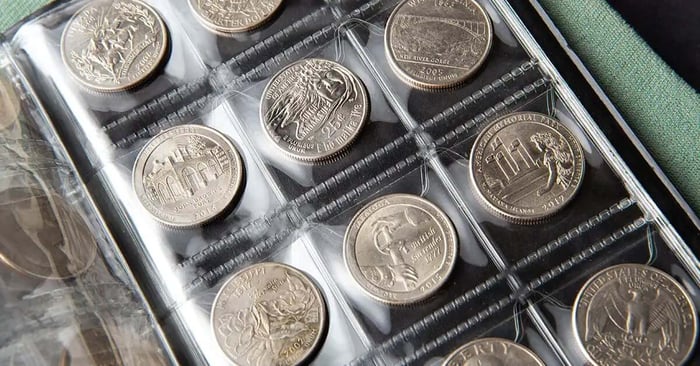
Albums allow for organized viewing of an entire set and work well for circulated coins, though they offer less protection than individual holders.
Capsules provide airtight, individual protection and are a strong choice for coins with meaningful but not extraordinary value.
Certified slabs, issued by third-party grading services, offer the highest level of protection and are generally reserved for rare or high-value coins where authentication and preservation both matter.
Avoid PVC and Other Damaging Materials
Not all plastic is created equal where coins are concerned. Holders made with PVC can break down over time and release chemicals that react with a coin's surface, leading to a hazy or greasy film that is difficult to remove without further damage. Reputable numismatic suppliers use Mylar or polypropylene instead, both of which are considered archival-safe. It's worth confirming this detail before purchasing any storage supplies, particularly older stock that may not reflect current material standards.
Control Temperature and Humidity
Environmental stability does more to protect a collection than almost any other single factor. The generally accepted range for coin storage is 65 to 70°F, with relative humidity kept below 50 percent. Silica gel packets can help manage moisture within an enclosed storage space, and coins should be kept out of direct sunlight, which can contribute to discoloration over time. Consistency matters as much as the specific numbers. A space that swings between extremes, even if it averages out to a reasonable temperature, poses more risk than one that stays steadily moderate.
Storing Different Types of Coins
Not every coin collection has the same needs. A box of inherited pocket change calls for a different approach than a curated set of graded rarities, and it's worth treating each category on its own terms.
Circulated and Common Coins
For coins with modest individual value, primarily historical or sentimental in nature, albums or coin tubes are generally sufficient. These formats prioritize organization and accessibility over maximum protection, which is a reasonable tradeoff when the coins in question aren't likely to appreciate significantly or require certification.
Rare or High-Value Coins
Coins with meaningful market value deserve individual protection, ideally in capsules or certified slabs. If a coin hasn't yet been professionally graded and its value is uncertain, it may be worth having it appraised before deciding on a long-term storage method, since the grading process itself requires specific handling that shouldn't be attempted casually at home.
Silver and Gold Bullion Coins
Bullion coins are particularly susceptible to tarnish, especially silver, which reacts to airborne sulfur compounds even in otherwise stable conditions. Airtight capsules or holders are strongly recommended, and bullion should be kept away from materials that off-gas chemicals, including certain adhesives, rubber, and low-quality plastics.
Inherited or Bulk Collections
Collections passed down through a family often arrive without documentation, in a mix of holders, envelopes, and loose containers. The first step is sorting, not storing. Separate anything that appears rare, unusual, or professionally graded from common circulated coins, and resist the urge to clean anything before an appraisal. What looks like tarnish to an untrained eye may in fact be original patina that a specialist would consider part of the coin's value.
Common Mistakes and What Can Go Wrong
Most damage to coin collections isn't the result of theft or disaster. It's the slow accumulation of small, avoidable errors, often made with good intentions.
Cleaning coins.
This is worth stating plainly: cleaning a coin, even gently, typically reduces its value rather than improving its appearance. What looks like grime to a collector is often original surface character that specialists and buyers specifically look for. If a coin appears to need cleaning, the better move is to consult a professional before doing anything.
Using PVC holders.
As covered above, PVC-based flips and pages can degrade and transfer a damaging residue onto a coin's surface, sometimes without the collector noticing until significant harm has already occurred.
Storing in attics, basements, or garages.
These spaces are convenient, but they tend to run hot in summer, damp in winter, or both, depending on climate and season. Coins stored in these conditions are exposed to exactly the temperature swings and humidity that accelerate tarnish and material degradation.
Using tape, glue, staples, or plastic bags.
Adhesives and improvised containers like Ziploc bags introduce chemicals and trap moisture against a coin's surface. None of these should come into direct contact with a coin, regardless of how temporary the arrangement seems.
Skipping documentation.
A collection without an inventory, photographs, or purchase records is harder to insure, harder to appraise, and harder to pass down accurately. Keeping even a simple written or digital record of what a collection contains, along with any relevant grading or purchase information, pays off considerably if the collection is ever lost, damaged, or transferred to someone else.
At Storage Star, we offer storage unit insurance to help keep your collection safe.
Why Climate-Controlled Storage Is the Best Long-Term Option
Even collectors who follow every best practice above often run into the same limitation: they run out of storage in the main house and need to resort to the garage, attic, or basement. What’s wrong with keeping your collection at home? Nothing, really, but keep in mind:
An attic bakes in summer.
A basement holds onto moisture through winter.
A closet in a home without a central HVAC system can swing more than most collectors realize over the course of a year.
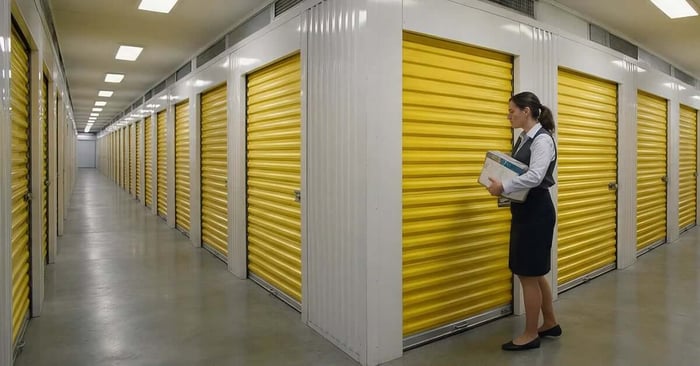
Climate-controlled storage units are built specifically to maintain a consistent temperature and humidity range regardless of the season outside, which addresses the single biggest environmental risk to a coin collection. This matters most for collections that have outgrown a home safe or a single drawer, or for anyone who has inherited a substantial collection and doesn't yet have a secure, appropriate place to keep it.
It's worth being clear that climate-controlled storage complements proper packaging rather than replacing it. Coins should still be housed in appropriate holders, flips, or capsules before being placed in storage. The unit itself protects against the broader environmental swings that no holder can fully counteract on its own, while the holder protects each coin individually from handling and surface contact.
If you're weighing storage options for a broader range of valuables, our guide to climate-controlled storage covers what else benefits from this kind of environment.
FAQs About Storing a Coin Collection
Is it OK to store coins in a safe deposit box instead?
A safe deposit box offers strong security and is a reasonable option for smaller, high-value collections. The tradeoffs are limited access, since you can only retrieve coins during bank hours, and the fact that bank vaults aren't always climate-controlled to the same standard as a dedicated storage unit. Many collectors use a combination approach, keeping their most valuable individual pieces in a safe deposit box while storing the broader collection in a climate-controlled unit.
Should I get my coin collection insured?
If a collection has meaningful monetary value, insurance is worth pursuing. Most standard homeowners or renters policies offer limited coverage for collectibles, so a specialty collectibles policy or a rider is usually necessary for adequate protection. An appraisal and a documented inventory, ideally with photographs, will make the insurance process considerably smoother.
How do I know if my coins need to be professionally graded before storing them?
If a coin appears older, unusually well preserved, or part of a limited or historically significant mintage, it's worth having it evaluated by a professional grading service before deciding on long-term storage. Grading not only establishes authenticity and condition but also determines the most appropriate holder, since certified coins are typically housed in tamper-proof slabs rather than standard flips or albums.
Preserve the Collection You've Built
A coin collection reflects years of attention to detail, and its storage deserves the same level of care. Proper handling and the right holders protect each coin individually, but the environment surrounding that collection matters just as much, particularly for anyone whose home doesn't offer a consistently stable space.
If your collection has outgrown what your home can safely accommodate, or if it's currently sitting in a space exposed to heat, humidity, or temperature swings, a climate-controlled storage unit offers a more reliable solution. Find a self-storage facility near you and give your collection the stable, secure environment it deserves.
FAQs
Is it OK to store coins in a safe deposit box instead?
A safe deposit box offers strong security and is a reasonable option for smaller, high-value collections. The tradeoffs are limited access, since you can only retrieve coins during bank hours, and the fact that bank vaults aren't always climate-controlled to the same standard as a dedicated storage unit. Many collectors use a combination approach, keeping their most valuable individual pieces in a safe deposit box while storing the broader collection in a climate-controlled unit.
Should I get my coin collection insured?
If a collection has meaningful monetary value, insurance is worth pursuing. Most standard homeowners or renters policies offer limited coverage for collectibles, so a specialty collectibles policy or a rider is usually necessary for adequate protection. An appraisal and a documented inventory, ideally with photographs, will make the insurance process considerably smoother.
How do I know if my coins need to be professionally graded before storing them?
If a coin appears older, unusually well preserved, or part of a limited or historically significant mintage, it's worth having it evaluated by a professional grading service before deciding on long-term storage. Grading not only establishes authenticity and condition but also determines the most appropriate holder, since certified coins are typically housed in tamper-proof slabs rather than standard flips or albums.