
Table of Contents
- Why Do Texas Retailers Use Self-Storage for Overstock Inventory?
- What Should You Look for in a Retail Storage Unit?
- How Should You Rotate Retail Overstock Inventory in Storage?
- Where Can Texas Retailers Find Storage for Retail Overstock?
- Frequently Asked Questions About Retail Overstock Storage
- Find Retail Storage for Your Texas Business
- FAQs
Self-storage is a practical, lower-cost way for Texas retailers to manage their overstock inventory without leasing more retail or warehouse space. Retail storage units give you flexible space for seasonal products, excess stock, or overflow inventory that doesn’t fit in a cramped storeroom, at a fraction of the cost. This guide covers how to choose the right retail unit, plus the inventory rotation habits that keep products organized instead of turning into clutter.
Why Do Texas Retailers Use Self-Storage for Overstock Inventory?
Using part of the sales floor or a crowded stockroom for products you don’t need right away can make everyday operations less efficient. Retail storage units give businesses another place to keep overflow inventory, seasonal merchandise displays, decorations, and other excess stock until it’s needed.
Self-storage can also be more practical than adding retail square footage or leasing a separate warehouse, especially when you only need extra room periodically. Instead of committing to a larger commercial space or long-term rental, retailers can choose a monthly storage unit based on their current inventory needs. This is especially helpful ahead of the holidays, during a seasonal inventory change, or after receiving a large shipment. Month-to-month terms let you scale space up or down as needed.
At Storage Star, our business storage solutions give you additional space without adding unnecessary complexity. With several units and convenient access options available, retailers can keep extra inventory nearby while preserving valuable space at the store.
What Should You Look for in a Retail Storage Unit?
The best storage unit for retail overstock depends on what you sell, how much inventory you need to store, and how often employees need to retrieve it. For most Texas retailers, there are three main factors to consider:
Size: Choose a unit based on inventory volume rather than the square footage of your store. Our storage unit size guide can help you estimate how much space you need before renting.
Climate control: Texas heat can be tough on certain products. Climate-controlled storage is worth considering for apparel, electronics, cosmetics, vinyl records, and other products affected by high temperatures or humidity.
Access: Drive-up storage can make frequent loading and unloading faster because employees can pull a vehicle close to the unit. Extended or 24-hour access, where available, can also help retailers restock before opening, after closing, or whenever it works best.
How Should You Rotate Retail Overstock Inventory in Storage?
A storage unit only helps if inventory stays organized once it’s there. These habits keep overstock from turning into a forgotten pile in the back of the unit.
Use First In, First Out (FIFO) placement. Move newer overstock to the back and older stock to the front so nothing gets buried or forgotten.
Label every box or container clearly. Organize inventory by SKU, product line, department, or season, depending on how your store tracks merchandise.
Maintain an inventory log. Keep a simple spreadsheet or shared inventory list stating what’s in the storage unit, how much you have, and when it was stored. Update it whenever products enter or leave the unit.
Plan seasonal rotations. Set dates for moving holiday merchandise or seasonal displays into and out of storage. Once a season ends, review what remains instead of automatically storing everything until next year.
Leave room to move. Create a clear walkway from the entrance to the back of the unit. Keep frequently needed products within easy reach so employees don’t have to move stacks of boxes.
Where Can Texas Retailers Find Storage for Retail Overstock?
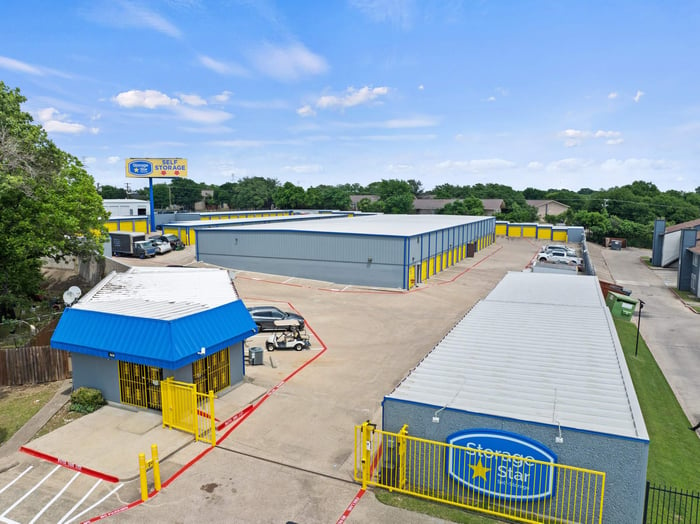
Storage Star has retail storage options across several major Texas markets, giving businesses a way to keep overstock closer to their stores. Current locations serve Austin, Dallas, El Paso, Irving, Laredo, Pasadena, Plano, Tomball, and Baytown.
Available storage types vary by facility. Depending on the location, Texas retailers may find options such as:
Climate-controlled storage
Drive-up storage
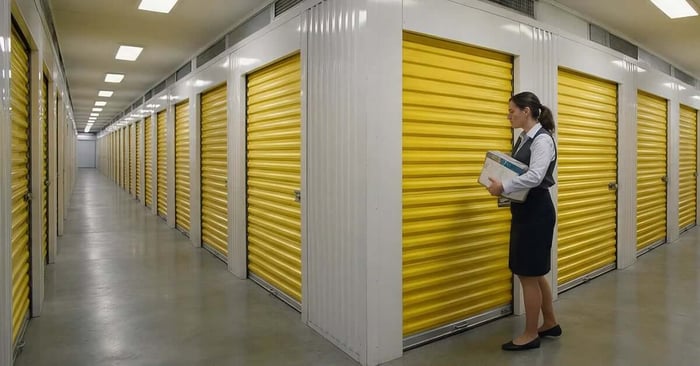
Indoor storage
Larger storage units
Outdoor parking for company vehicles
Some of our locations even offer extended access hours from 6 a.m. to 10 p.m. Exact unit sizes, amenities, hours, and availability differ by location.
Texas Market | Facility Location(s) | Storage Types Available |
East Ben White Blvd, N FM 620, N Mopac Expy, Pond Springs Rd | Drive-up, climate-controlled | |
Forest Ln, S Tyler St | Drive-up, climate-controlled, parking | |
Dyer St | Drive-up | |
N O'Connor Rd | Drive-up, climate-controlled, parking | |
Quail Creek Rd | Drive-up, climate-controlled, parking | |
Red Bluff Rd | Drive-up, climate-controlled, parking, extra-large flex units, fully insulated, fully powered units | |
Alma Dr | Drive-up, climate-controlled, parking | |
Spring Cypress Rd | Drive-up, climate-controlled, parking | |
N Main St | Drive-up, climate-controlled, parking |
When searching for the best storage units for retail inventory near Texas stores, start with proximity. From there, compare unit size, climate control, loading access, and access hours to find the facility that best supports your store’s day-to-day operations.
Frequently Asked Questions About Retail Overstock Storage
Do I need climate control to store retail inventory?
Not necessarily. Climate-controlled storage is worth the extra cost for apparel, electronics, cosmetics, and vinyl products because heat and humidity can damage these items over time. Bulkier, less sensitive inventory, like nonwooden furniture or hard goods, often does fine in a standard unit.
Can multiple employees access a business storage unit?
Yes. Most business storage units allow multiple authorized users, so staff can access inventory without waiting for a manager to unlock the unit. Most Storage Star facilities use either a gate code or access card, making it easy for you to share access with authorized staff. Ask your local facility about adding employees to your account.
Is self-storage cheaper than renting warehouse space for overstock?
Yes, in most cases. Self-storage typically costs less per square foot than warehouse leasing, and month-to-month terms help you avoid the long-term commitment that comes with a warehouse lease. If you only need extra space seasonally, self-storage is usually the more cost-effective option.
Find Retail Storage for Your Texas Business
Extra inventory shouldn’t have to compete with customers for space. Storage Star offers business storage options across Texas, including climate-controlled, drive-up, and larger storage units. Find a self-storage facility near you and get your overflow inventory organized today.
FAQs
Do I need climate control to store retail inventory?
Not necessarily. Climate-controlled storage is worth the extra cost for apparel, electronics, cosmetics, and vinyl products because heat and humidity can damage these items over time. Bulkier, less sensitive inventory, like non-wooden furniture or hard goods, often does fine in a standard unit.
Can multiple employees access a business storage unit?
Yes. Most business storage units allow multiple authorized users, so staff can access inventory without waiting for a manager to unlock the unit. Most Storage Star facilities use either a gate code or access card, making it easy for you to share access with authorized staff. Ask your local facility about adding employees to your account.
Is self-storage cheaper than renting warehouse space for overstock?
Yes, in most cases. Self-storage typically costs less per square foot than warehouse leasing, and month-to-month terms help you avoid the long-term commitment that comes with a warehouse lease. If you only need extra space seasonally, self-storage is usually the more cost-effective option.