
Table of Contents
- Is Chicago’s Far North Side a Good Place to Live?
- What Does It Cost to Live on Chicago’s Far North Side?
- Transportation and Commuting from Chicago’s Far North Side
- Why People Love Living in Chicago
- A Guide to Chicago’s Far North Side Neighborhoods
- Moving and Storage Tips for Chicago’s Far North Side
- Explore More Moving and Storage Resources in Chicago
- Self Storage Near West Ridge, Rogers Park & Lincolnwood
- FAQs
If you're planning on moving to Chicago’s Far North Side, neighborhoods like West Ridge, Rogers Park, Lincolnwood, and Albany Park offer a unique mix of cultural diversity, access to Lake Michigan, and convenient connections to the rest of the city.
Located near Peterson Avenue and McCormick Boulevard along the North Shore Channel, these neighborhoods sit just north of Chicago’s North Park area and provide easy access to major routes like I-94 (Edens Expressway) and Lake Shore Drive. Whether you're relocating for work, school, or simply looking for a vibrant community with strong neighborhood character, this area offers something for everyone.
This guide explores what it’s like to live on Chicago’s Far North Side, including neighborhoods such as West Ridge, Rogers Park, Lincolnwood, and Albany Park. We’ll cover the cost of living, transportation, neighborhood highlights, and helpful moving tips for people planning a relocation to this part of the city.
Is Chicago’s Far North Side a Good Place to Live?
Chicago’s Far North Side is a great option for people who want access to city amenities while still enjoying quieter residential neighborhoods. Areas like West Ridge, Rogers Park, Lincolnwood, and Albany Park offer a mix of cultural diversity, public transit access, and relatively affordable housing compared to some of Chicago’s trendiest neighborhoods.
Many residents appreciate the balance these neighborhoods provide: easy access to Lake Michigan, strong local dining scenes, and convenient commuting routes via the CTA and major roads like Peterson Avenue and the Edens Expressway.
For students attending nearby universities, young professionals working downtown, and families looking for more space, Chicago’s Far North Side often provides a practical and welcoming place to live.
Pros of Living on Chicago’s Far North Side
More affordable housing compared to downtown Chicago neighborhoods
Easy access to Lake Michigan beaches and lakefront parks
Strong cultural diversity and international dining options
Convenient transit access via CTA buses and trains
Close proximity to universities like Northeastern Illinois University and Loyola University Chicago
What Does It Cost to Live on Chicago’s Far North Side?
Compared to some of Chicago’s trendiest neighborhoods, the Far North Side offers relatively affordable housing while still providing convenient access to downtown, Lake Michigan, and major universities.
Neighborhoods like West Ridge, Rogers Park, Albany Park, and Lincolnwood often provide larger apartments and quieter residential streets at lower price points than areas closer to the city center.
Below is a general comparison of typical rent ranges across several Chicago neighborhoods.
Chicago Neighborhood Rent Comparison
| Neighborhood | Typical 1-Bedroom Rent | Typical 2-Bedroom Rent | Neighborhood Character |
|---|---|---|---|
| West Ridge | $1,200 – $1,600 | $1,600 – $2,200 | Quiet residential area with diverse dining along Devon Avenue |
| Rogers Park | $1,300 – $1,800 | $1,800 – $2,500 | Lakefront neighborhood near Loyola University with beaches and nightlife |
| Albany Park | $1,200 – $1,700 | $1,700 – $2,400 | Diverse neighborhood known for global cuisine and transit access |
| Lincolnwood | $1,400 – $2,000 | $2,000 – $2,800 | Suburban feel just outside Chicago with parks and shopping |
| Lincoln Park | $2,000 – $2,800 | $2,800 – $4,000+ | Popular upscale neighborhood near the lake and downtown |
| River North | $2,300 – $3,200 | $3,200 – $4,500+ | Downtown high-rise district known for nightlife and luxury apartments |
Rent estimates are based on rental market data from Zumper and reflect average apartment prices across Chicago neighborhoods.
Why Many Renters Choose Chicago’s Far North Side
While downtown neighborhoods may offer proximity to offices and nightlife, many residents choose the Far North Side because it provides:
Lower housing costs compared to central Chicago neighborhoods
Larger apartments and vintage buildings with more space
Easy transit access via CTA buses and trains
Close proximity to Lake Michigan beaches and parks
For students attending Northeastern Illinois University or Loyola University Chicago, these neighborhoods can also provide a more affordable alternative to living closer to downtown.
Transportation and Commuting from Chicago’s Far North Side
Chicago’s Far North Side offers several convenient transportation options for residents commuting to downtown Chicago, nearby universities, or surrounding neighborhoods. Whether you prefer public transit, biking, or driving, areas like West Ridge, Rogers Park, Lincolnwood, and Albany Park provide multiple ways to get around the city.
CTA Train Access
Many Far North Side residents rely on the Chicago Transit Authority (CTA) rail system for commuting. Rogers Park is served by the CTA Red Line, which runs directly to downtown Chicago and popular neighborhoods like Lakeview and the Loop.
Albany Park residents often use the CTA Brown Line, which provides convenient service through neighborhoods like Lincoln Square and eventually into downtown Chicago.
These train lines make it possible to reach downtown offices, restaurants, and attractions without needing to drive.
Residents who want to explore train routes, stations, and connections can view the full CTA rail system map, which shows all Chicago “L” lines and major transfer points across the city.
Bus Routes Across the North Side
Several Chicago Transit Authority (CTA) bus routes serve Chicago’s Far North Side and connect neighborhoods like West Ridge, Rogers Park, and Albany Park to nearby train stations and surrounding communities. Major corridors such as Peterson Avenue, Devon Avenue, and Western Avenue are served by CTA bus routes that run east–west and north–south across the North Side.
These routes make it easy for residents to connect to CTA train lines, nearby universities, and other Chicago neighborhoods without needing to drive.
Driving and Major Roadways
For residents who drive, the Far North Side offers convenient access to major highways and thoroughfares. The Edens Expressway (I-94) runs just west of these neighborhoods and provides a direct route to downtown Chicago as well as the northern suburbs.
Major roads like McCormick Boulevard, Touhy Avenue, and Peterson Avenue also serve as important commuting corridors for residents traveling across the North Side.
Biking and Lakefront Trails
Chicago is increasingly bike-friendly, and many residents take advantage of the city’s expanding network of bike lanes and trails. The nearby Lakefront Trail offers a scenic route for cyclists and runners along Lake Michigan, while paths like the North Shore Channel Trail provide additional recreational and commuting options.
For residents who enjoy an active lifestyle, these trails make it easy to bike to nearby neighborhoods, parks, and lakefront beaches.
Why People Love Living in Chicago
Chicago consistently ranks among the most exciting cities in the United States thanks to its food scene, cultural institutions, architecture, and vibrant neighborhoods. For new residents, the city offers a unique blend of big-city vibes, Midwest friendliness, and strong local communities.
World-Famous Chicago Food
Chicago’s food culture is legendary, and local foodies have access to everything from iconic comfort foods to award-winning restaurants.
Chicago’s most iconic foods include:
Chicago deep-dish pizza
Chicago-style hot dogs
Italian beef sandwiches
Plus, global cuisine is available throughout the city’s many diverse neighborhoods. Whether you are dining at a neighborhood restaurant or exploring new spots downtown, Chicago offers an incredible range of culinary experiences.
Museums and Cultural Attractions
Chicago is home to some of the most respected museums and cultural institutions in the country. Residents can easily spend weekends exploring exhibits, art collections, and historical landmarks.
Popular destinations include:
Art Institute of Chicago
Field Museum
Museum of Science and Industry
Shedd Aquarium
Rate Field for a White Sox game
These institutions make Chicago a hub for education, art, and history.
Lake Michigan and Outdoor Activities
One of Chicago’s biggest advantages is its location along Lake Michigan. The city offers miles of lakefront parks, beaches, and walking trails that provide beautiful views of the skyline, including Navy Pier.
The lakefront trail is popular for biking, running, and walking, while nearby beaches offer places to relax during the summer months.
A City of Unique Neighborhoods
One of Chicago’s defining characteristics is its collection of distinct neighborhoods. Each area offers its own personality, architecture, dining scene, and local businesses. Because of this, it's hard to go wrong when moving to Chicago.
From the historic homes of West Ridge to the lakefront energy of Rogers Park, Chicago’s neighborhoods allow residents to find a community that fits their lifestyle while still being connected to the larger city.
A Guide to Chicago’s Far North Side Neighborhoods
Chicago’s Far North Side offers a mix of vibrant city neighborhoods and quieter residential communities. Areas like West Ridge, Rogers Park, Lincolnwood, and Albany Park each have their own character, but all provide convenient access to major roads like Peterson Avenue and the Edens Expressway while remaining close to Lake Michigan and several universities.
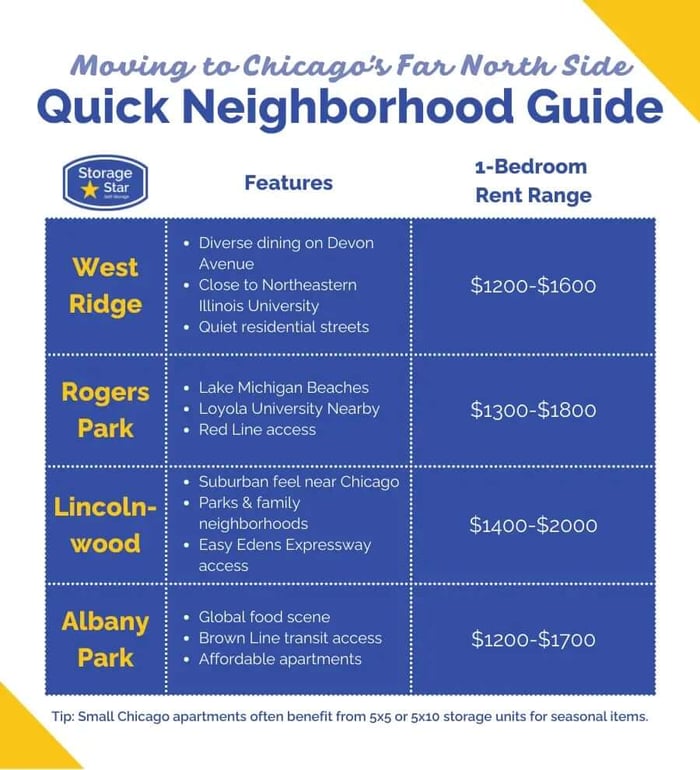
Infographic showing key neighborhoods on Chicago’s Far North Side—including West Ridge, Rogers Park, Lincolnwood, and Albany Park—with typical rent ranges and neighborhood highlights.
West Ridge (Chicago)
West Ridge is one of Chicago’s most culturally diverse neighborhoods and a popular place for families, students, and professionals seeking quieter residential streets while staying connected to the city. The neighborhood sits near the Devon Avenue dining corridor, famous for its Indian, Pakistani, and Middle Eastern restaurants, and is also home to Warren Park, one of the largest parks on Chicago’s Far North Side.
The neighborhood is known for its historic homes, tree-lined blocks, and strong community feel. If you’re considering moving to this area, you can learn more in our guide to moving to West Ridge Chicago.
Why People Move to West Ridge
Diverse dining along Devon Avenue
Easy access to Peterson Avenue and I-94
Close to Northeastern Illinois University
Quiet residential streets with classic Chicago architecture
Rogers Park
Just east of West Ridge along Lake Michigan, Rogers Park is known for its lakeside parks, beaches, and vibrant arts community. Residents enjoy easy access to Loyola Beach and the Lakefront Trail, while the nearby Loyola University Chicago campus contributes to the neighborhood’s energetic atmosphere.
The neighborhood offers a mix of apartments, vintage courtyard buildings, and lakefront condos.
Why People Move to Rogers Park
Access to Lake Michigan beaches
Walkable neighborhoods and public transit
Strong arts and music scene
Close proximity to Loyola University
Rogers Park is one of the most popular neighborhoods for renters and students on Chicago's North Side. Learn more in our guide to moving to Rogers Park Chicago.
Lincolnwood
Located just north of Chicago’s city limits, Lincolnwood is a suburban community that offers a quieter environment while still providing quick access to downtown Chicago. The village features several popular parks, including Proesel Park, and convenient shopping and dining along Touhy Avenue.
Many residents appreciate Lincolnwood for its parks, family-friendly neighborhoods, and accessibility to the Edens Expressway.
Why People Move to Lincolnwood
Suburban feel close to the city
Highly rated schools and parks
Easy commuting via the Edens Expressway
Nearby shopping and dining options
Albany Park
South of West Ridge, Albany Park is another diverse Chicago neighborhood known for its global food scene and strong community roots. The neighborhood sits along the North Shore Channel Trail, a popular path for biking and walking, and has convenient transit access via the CTA Brown Line.
With access to major roads and public transportation, Albany Park offers relatively affordable housing compared to many other Chicago neighborhoods.
Learn more in our guide to moving to Albany Park Chicago.
Why People Move to Albany Park
Affordable housing options
Excellent international restaurants
Convenient public transportation
Diverse and welcoming community
Moving and Storage Tips for Chicago’s Far North Side
Moving to Chicago’s Far North Side often means apartment living, vintage buildings, and limited closet space. Whether you're relocating to West Ridge, Rogers Park, Lincolnwood, or Albany Park, a few moving and storage strategies can make the transition easier.
Prepare for Chicago Parking
Street parking can vary by neighborhood, and many areas require residential parking permits. If you are using a moving truck, check your building’s parking rules in advance and plan where the truck will park during your move.
Scheduling your move during less-busy times of day can also make loading and unloading much easier on Chicago's busy streets.
Plan for Apartment Move-In Requirements
Many apartment buildings require residents to reserve elevators or loading zones during move-in days. This is especially common in larger buildings and complexes.
Contact your building management ahead of time so you can reserve your moving window and avoid delays.
Use Storage to Simplify Apartment Moves
Apartments on Chicago’s North Side often have limited closet space and smaller storage areas, particularly in vintage buildings. A nearby storage unit can help make moving easier by giving you a place to store items that don’t need to be in your apartment year-round.
Self-storage can be especially helpful during apartment transitions, when lease dates overlap, or when residents are downsizing to smaller Chicago apartments.
seasonal clothing and winter gear
bikes and outdoor equipment
extra furniture that doesn’t fit in smaller apartments
moving boxes during lease transitions
When budgeting for self-storage, it's important to factor in how much storage units cost in Chicago, which can depend on size, facility location, climate control, and more.
Best Storage Unit Sizes for Apartment Renters
Choosing the right unit size depends on how much you plan to store. For many apartment residents in West Ridge, Rogers Park, and surrounding neighborhoods, these sizes are the most common:
About the size of a small closet. Ideal for boxes, seasonal clothing, luggage, and small household items.
5×10 Storage Unit
Great for studio or one-bedroom apartments. This size can typically hold furniture such as a mattress set, chairs, small shelving units, and several boxes.
10×10 Storage Unit
A popular option for renters moving between apartments. A 10×10 unit can usually store the contents of a one- to two-bedroom apartment, including larger furniture pieces.
Seasonal Storage for Chicago Winters
Chicago weather (including its harsh winters) often requires extra storage space for items like:
winter tires
snow gear and heavy coats
patio furniture
bikes and outdoor equipment
Rotating seasonal items into storage can help maximize space in smaller apartments while keeping your living area organized.
Explore More Moving and Storage Resources in Chicago
If you’re planning on moving to Chicago’s Far North Side, these additional guides can help you prepare for your move, choose the right storage solution, and settle into your new neighborhood.
You may also find these resources helpful:
Apartment Storage Size Guide
A quick guide to selecting the right storage unit for apartment moves, furniture storage, and seasonal items.Apartment Moving Checklist for Chicago Apartment Rentals
Step-by-step tips to help renters prepare for move-in day, including figuring out parking, applying for your lease, and setting up utilitiesStudio Apartment Storage Unit Size Guide
A breakdown of why you need storage when renting a studio apartment in Chicago, and what units will work best for your needs.
Self Storage Near West Ridge, Rogers Park & Lincolnwood
If you're moving to Chicago, relocating to a new apartment, or simply need extra space, having a nearby storage option can make the transition easier.
Storage Star on N McCormick Blvd offers secure, modern self-storage units conveniently located near West Ridge, Rogers Park, Lincolnwood, and Albany Park. With climate-controlled units and flexible month-to-month rentals, it’s a practical solution for apartment moves, student storage, and seasonal storage needs.
FAQs
What neighborhoods are considered Chicago’s Far North Side?
Chicago’s Far North Side generally includes neighborhoods such as West Ridge, Rogers Park, and Albany Park, along with nearby communities like Lincolnwood just outside the city limits. These areas sit along the northern edge of Chicago near Lake Michigan and the North Shore Channel.
Is Chicago’s Far North Side a good place to live?
Many people choose the Far North Side because it offers a mix of cultural diversity, access to Lake Michigan, and more affordable housing compared to many downtown Chicago neighborhoods. Areas like Rogers Park and West Ridge also provide convenient public transit access and strong local dining scenes.
How expensive is it to live on Chicago’s Far North Side?
Housing costs on Chicago’s Far North Side are typically lower than in neighborhoods closer to downtown. Rent for a one-bedroom apartment in areas like West Ridge or Albany Park often ranges between $1,200 and $1,800, while similar apartments in downtown neighborhoods can cost significantly more.
What CTA train lines serve Chicago’s Far North Side?
Residents commonly use the CTA Red Line, which runs through Rogers Park and provides direct service to downtown Chicago. The CTA Brown Line also serves nearby neighborhoods such as Albany Park and connects riders to the Loop.
Do Chicago apartments usually have storage space?
Many apartments in older Chicago buildings have limited closet space or storage areas, especially in vintage buildings. Because of this, some residents use self-storage units to store seasonal items, extra furniture, or belongings during apartment moves.
What size storage unit is best for apartment renters?
Smaller storage units are often ideal for renters. A 5×5 unit works well for boxes and seasonal items, while a 5×10 unit can hold furniture and belongings from a studio or one-bedroom apartment. A 10×10 unit is often suitable for storing the contents of a one- to two-bedroom apartment.