
Table of Contents
- What Storage Actually Costs in Chicago Right Now (April 2026)
- Real Chicago Storage Prices (What You'll Actually Pay)
- Storage Costs by Chicago Neighborhood
- What Size Storage Unit Makes Sense for Your Situation?
- What Features Make Storage More (or Less) Expensive?
- Is Climate-Controlled Storage Worth Paying For in Chicago?
- Is 24/7 Access Worth Paying For?
- Ground Floor vs Elevator Units: Is Convenience Worth the Cost?
- Why Storage Prices Vary Across Chicago
- When People in Chicago Actually Use Storage
- How to Save Money on Storage in Chicago
- What Our Chicago Customers Say
- So, What Should You Expect to Pay?
- FAQs
If you’re looking for storage in Chicago, one of the first questions you’ll have is simple: how much does a storage unit cost?
The answer depends on several factors, including unit size, location, and features like climate control. In general, Chicago storage prices vary widely, but understanding the typical ranges can help you find the right option for your needs and budget.
This guide breaks down average storage unit costs in Chicago, what affects pricing, and how to save money.
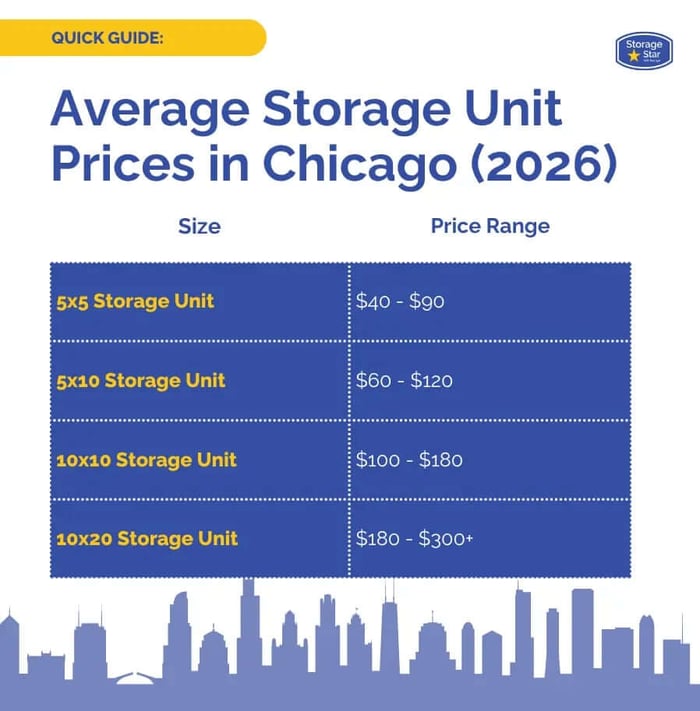
What Storage Actually Costs in Chicago Right Now (April 2026)
Storage prices in Chicago can vary widely depending on where you look and what you need.
Typical Monthly Storage Costs
| Unit Size | Average Monthly Cost |
|---|---|
| 5x5 | $40 – $90 |
| 5x10 | $60 – $120 |
| 10x10 | $100 – $180 |
| 10x15 | $140 – $220 |
| $180 – $300+ |
Estimated pricing based on market data from major storage providers and listing platforms (2025–2026). Actual rates may vary depending on availability, location, and promotions.
Real Chicago Storage Prices (What You'll Actually Pay)
While averages give you a general idea, real pricing can vary based on promotions, availability, and timing.
Here’s a snapshot of current pricing at Storage Star locations in Chicago:
Example Storage Unit Pricing in Chicago
| Unit Size | Typical Monthly Price (Web Rate) | Standard Monthly Rate |
|---|---|---|
| 5x5 | ~$30 – $50 | ~$50 – $70 |
| 5x10 | ~$30 – $60 | ~$50 – $100 |
| 10x10 | ~$100 – $125 | ~$170 – $200+ |
| 10x15 | ~$120 – $160 | ~$200 – $260+ |
| 10x20 | ~$160 – $300+ | ~$260 – $400+ |
Based on recent pricing from Storage Star Chicago locations. Web rates and promotions may vary depending on availability and timing.
What This Means
- Smaller units can start as low as $30–$50/month with promotions
- Mid-size units (like 10x10) typically fall in the $100–$200 range
- Larger units vary depending on demand and availability
- Online discounts can significantly reduce your initial cost
In most cases, your monthly price comes down to three things: size, location, and features.
Storage Costs by Chicago Neighborhood
Storage prices in Chicago don't follow a single city-wide rate. They shift from one neighborhood to the next, driven by real estate costs, population density, apartment sizes, and how much competition exists in a given area. Here's a look at what you can expect to pay across four neighborhoods where Storage Star has locations:
Mount Greenwood — Affordable Storage on Chicago's South Side
Mount Greenwood is one of Chicago's most affordable neighborhoods for storage. Average rates in Mount Greenwood depend on what size storage unit you need, but they’re typically well below the city average — making it a strong option for residents and families looking for reliable, cost-effective space.
Storage Star's West 111th Street location serves Mount Greenwood and the surrounding southwest side with climate-controlled units in Chicago and flexible month-to-month rentals. Here’s a look at the current storage unit cost in Chicago’s Mount Greenwood area as of May 2026.
Unit Size | First Month Discount* | Monthly Price |
5x5’ | $29 | $48 |
5x8’ | $50 | $83 |
5x10’ | $67 | $112 |
5x13’ | $78 | $130 |
10x15’ | $149 | $248 |
10x20’ | $187 | $312 |
This location is also convenient for residents of Oak Lawn, Evergreen Park, and other southwest suburbs looking for a facility close to home.
West Loop — Storage in One of Chicago's Fastest-Growing Neighborhoods
The West Loop has transformed dramatically over the past decade, and with that growth has come significant demand for storage. Residents in high-rise condos and converted lofts along Randolph Street and Fulton Market typically have limited in-unit storage, making off-site units a common part of life here. Proximity to the Loop also means this is one of the pricier areas of the city for storage, but the convenience factor for downtown residents is hard to beat.
Storage Star's West Washington Boulevard location puts climate-controlled storage within reach for West Loop residents and nearby businesses. Here’s a look at the current storage unit cost in the west Chicago area as of May 2026.
Unit Size | First Month Discount* | Monthly Price |
3x2’ | $8 | $15 |
5x5’ | $74 | $123 |
7x7’ | $154 | $257 |
9x10’ | $178 | $297 |
10x16’ | $252 | $420 |
10x20’ | $356 | $593 |
North Park — Quiet, Residential, and Well-Priced
North Park sits in Chicago's far north side, a quieter residential neighborhood anchored by North Park University and a mix of longtime homeowners and renters. Storage needs here tend to be practical — seasonal items, student storage between semesters, and overflow from older homes and apartments that lack modern closet space. Pricing in North Park is generally more moderate than trendier north side neighborhoods, offering good value for residents who want a convenient location without downtown premiums.
Storage Star's North McCormick Boulevard location serves North Park and the surrounding North Chicago neighborhoods. Here’s a look at the current storage unit cost at your local Storage Star:
Unit Size | First Month Discount* | Monthly Price |
5x4’ | $16 | $27 |
5x5’ | $21 | $35 |
5x10’ | $31 | $52 |
10x7’ | $40 | $67 |
10x10’ | $101 | $168 |
10x15’ | $115 | $192 |
10x20’ | $194 | $323 |
20x12’ | $169 | $282 |
Wicker Park — Higher Demand, Premium Location
Wicker Park is one of Chicago's most sought-after neighborhoods, and that demand extends to storage. Storage Star's North Ashland Avenue location serves Wicker Park, Bucktown, and Ukrainian Village with modern climate-controlled storage right in the neighborhood.
Keep in mind that these prices and discounts are subject to change. For the most up-to-date rental information, find a Chicago Storage Star near you and explore the current prices or give us a call! And for more information about Chicago neighborhoods, check out these articles:
What Size Storage Unit Makes Sense for Your Situation?
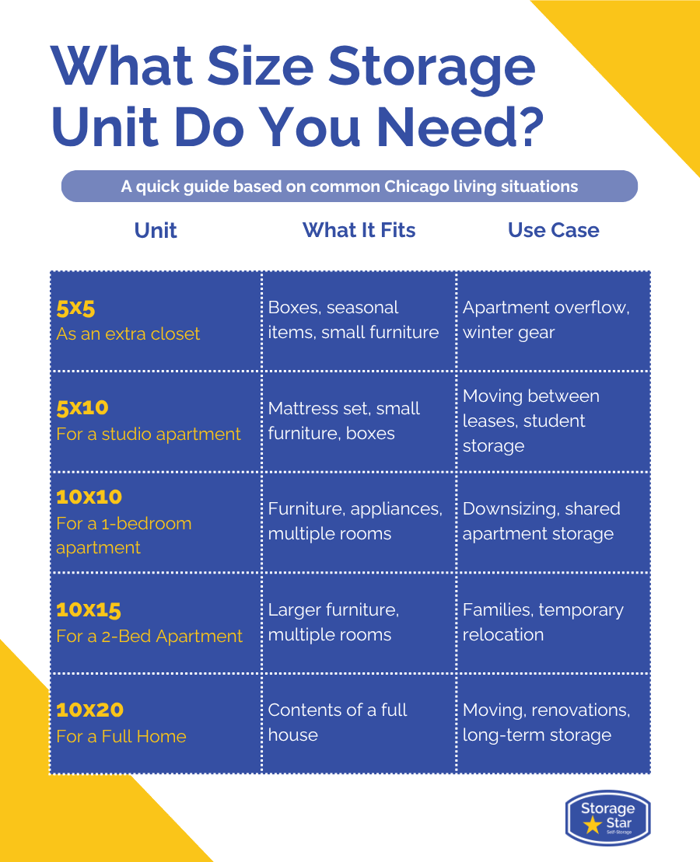
Most people either overestimate or underestimate how much space they need — so it helps to think about what you’re actually storing before choosing a unit size.
Quick Guide: Storage Sizes by Apartment or Home
| Unit Size | Best For | What It Fits | Typical Use Cases in Chicago |
|---|---|---|---|
| 5x5 | Small storage needs | Boxes, seasonal items, small furniture | Apartment overflow, winter clothing, sports gear |
| 5x10 | Studio apartments | Mattress set, small furniture, boxes | Moving between leases, student storage |
| 10x10 | 1-bedroom apartment | Furniture, appliances, multiple rooms | Downsizing, shared apartments |
| 10x15 | 2-bedroom apartment | Larger furniture, multiple rooms | Families, temporary relocation |
| 10x20 | 2–3 bedroom home | Full household contents | Full moves, renovations |
If you’re unsure what size you need, check out our guide on how to pick the perfect apartment storage unit size for a more detailed breakdown.
What Features Make Storage More (or Less) Expensive?
Beyond size and location, certain features can also impact what you’ll pay each month.
How Storage Features Affect Pricing
| Feature | Typical Impact on Price | What It Means for You |
|---|---|---|
| Climate-Controlled Units | +20% to 50% | Protects items from temperature and humidity changes |
| 24-Hour Access | Slight premium | Access your unit anytime |
| Ground Floor Units | Higher demand = higher price | Easier loading and unloading |
| Elevator Access Units | Often slightly cheaper | Less convenient but more affordable |
| Drive-Up Access | Higher cost | Direct vehicle access |
| Indoor Units | Varies by facility | Added protection from weather |
Is Climate-Controlled Storage Worth Paying For in Chicago?
Chicago’s weather can be unpredictable — from freezing winters to hot, humid summers — which makes climate-controlled storage an important consideration for many renters. In most cases, it’s worth the added cost.
Chicago’s weather includes:
- Cold winters
- Hot, humid summers
- Rapid temperature swings
Climate-controlled units help protect:
- Furniture
- Electronics
- Clothing
- Documents
They typically cost 20%–50% more, but for long-term storage or sensitive items, they’re often worth it.
Is 24/7 Access Worth Paying For?
Some facilities offer extended or 24/7 access, which can slightly increase pricing.
This is useful if:
- You need access outside business hours
- You’re storing business inventory
- You plan to visit your unit frequently
If you only need occasional access, standard hours are usually enough.
Ground Floor vs Elevator Units: Is Convenience Worth the Cost?
The location of your unit inside a facility can also affect pricing.
- Ground floor units tend to cost more due to convenience
- Elevator-access units are often more affordable
If you’re moving heavy furniture or accessing your unit often, ground-level access can be worth the extra cost.
Why Storage Prices Vary Across Chicago
Storage prices don’t just come down to unit size or features — they’re also shaped by how the city itself works, from population density to how much storage space is actually available.
The Main Factors Behind Chicago Storage Costs
| Factor | What It Looks Like in Chicago | Why It Affects Pricing |
|---|---|---|
| Population Density | Dense neighborhoods with apartments and shared housing | Less living space means more people need off-site storage |
| High Renter Population | Large percentage of residents rent rather than own | More frequent moves and smaller units drive consistent storage demand |
| Limited Storage Supply | ~3.6 sq ft of storage per person (below national average) | Fewer units available per person increases competition |
| Development Constraints | Zoning restrictions and limited land for new facilities | Slower supply growth keeps prices from dropping |
| Neighborhood Demand Differences | Higher demand near downtown and dense North Side areas | Prices vary depending on location and accessibility |
What’s Driving Demand
Chicago’s dense population and apartment-heavy housing create consistent demand for storage.
The city has about 3.6 square feet of storage per person, which is relatively limited, helping keep prices stable.
Renters, in particular, drive demand due to:
- frequent moves
- smaller living spaces
- shared housing situations
At the same time, new storage development is limited by:
- zoning restrictions
- land availability
- construction costs
All of this contributes to steady pricing across the market.
When People in Chicago Actually Use Storage
In Chicago, storage is often tied to how people live — smaller apartments, seasonal weather, and frequent moves all play a role in when and why people need extra space.
Here are some of the most common situations where Chicago residents use storage:
Apartment renters
Many apartments — especially in older buildings — have limited closet space. Storage is often used for overflow items, extra furniture, or things that don’t fit comfortably in smaller layouts.
Seasonal storage (a big one in Chicago)
With cold winters and hot summers, people rotate items throughout the year. Storage is commonly used for:
- Winter gear (coats, boots, snow equipment)
- Summer items (patio furniture, bikes, sports gear)
Students (especially around Loyola and North Side schools)
Students frequently use storage between leases or during summer break rather than moving everything back home.
Moving between apartments or leases
Chicago’s rental cycle means people are often between places for a short period. Storage helps bridge the gap during moves, especially at the end of the summer moving season.
Homeowners and renovations
For homeowners, storage is often used during renovations, downsizing, or to free up space in basements, garages, or multi-unit buildings.
Small businesses and side hustles
From contractors to online sellers, many Chicago residents use storage units for tools, inventory, and equipment — especially when working out of apartments or shared spaces.

How to Save Money on Storage in Chicago
If you’re trying to keep your monthly cost down, here are a few simple ways to save:
- Choose a facility outside of downtown
- Rent only the space you need
- Take advantage of promotions
- Share space with someone else
- Compare multiple locations
For many people, neighborhood storage offers the best mix of price and convenience.
What Our Chicago Customers Say
Don't just take our word for it! Here's what real Storage Star customers in Chicago have shared:
"I had an excellent experience with this storage facility. The staff were friendly, professional, and always willing to help. The property is clean, secure, and well-maintained, and accessing my unit was always fast and convenient. Pricing is fair, and the entire process — from signing up to moving in — was smooth and stress-free." — Vladyslav P.
"Been a customer of this storage location for 2 years now; the facility is great: dry, cold, and protected behind several locks. The front office is extremely helpful as well... just great service and very happy to keep my business here." — Shashank A.
"Andrew was extremely kind and made sure to follow up on my questions and concerns proactively... Highly recommend working with Andrew!" — A.W.
So, What Should You Expect to Pay?
Most people in Chicago will pay somewhere between $40 and $300+ per month, depending on their storage needs.
By choosing the right size, location, and features, you can find something that fits your budget without overpaying.
And whether you’re between leases, clearing out space, or just trying to stay organized, storage can make those transitions a lot easier.
FAQs
How much does a storage unit cost in Chicago per month?
Most units range from about $40 to $300+ per month depending on size and features.
What is the cheapest storage unit size?
5x5 units are usually the most affordable.
Are storage units expensive in Chicago?
They can be, especially downtown — but more affordable options are available in residential areas.
Do prices change throughout the year?
Yes, especially during peak moving seasons like summer.
How much do storage prices fluctuate month to month?
Storage unit prices in Chicago tend to follow a seasonal pattern. Rates typically peak in summer when moving activity is highest, then soften in winter. The swing is usually a few percentage points — a unit priced at $150/month in July might dip to $135–$140 in December.
How much notice will I get if my storage unit rental price increases?
At Storage Star, we aim to keep pricing transparent and communicate any changes well in advance. We’ll give you 30 days’ notice if there will be increases or decreases in your Chicago storage unit cost.