
Table of Contents
- Best Neighborhoods in Chicago West
- Which West Side Neighborhood Is Right for You?
- Why You Might Need a Storage Unit in Chicago West
- FAQs
- What is the most affordable neighborhood on Chicago's West Side?
- Which West Side neighborhoods are best for young professionals?
- Is the West Side of Chicago safe?
- Can I rent a storage unit temporarily in the West Side?
- Does Storage Star have climate-controlled storage in West Chicago?
- Are storage units good for renters in Chicago West?
- Which part of Chicago is best?
- Ready to Make Your Move to Chicago West?
- FAQs
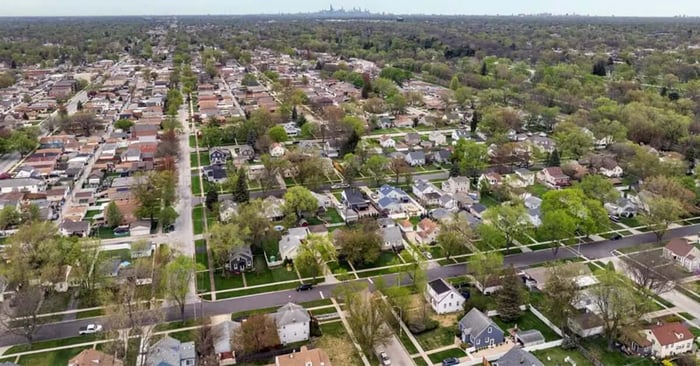
Chicago's West Side is having a moment — and depending on which neighborhood you're looking at, that moment has been quietly building for decades or arrived almost overnight. From the high-gloss transformation of the West Loop and Fulton Market to the creative energy of Wicker Park and Logan Square, and the more affordable character of Humboldt Park and East Garfield Park, the West Side offers more range than almost any other part of the city.
This guide breaks down the best West Side neighborhoods by vibe, price point, and what daily life actually looks like — whether you're relocating to Chicago for the first time or making a move within the city.
And when you're ready to make the move, Storage Star has two conveniently located facilities to serve the West Side:
Storage Star West Washington Blvd — 1230-1242 W Washington Blvd, serving the West Loop, Near West Side, and surrounding neighborhoods
Storage Star North Ashland Avenue — 1300 N Ashland Avenue, serving Wicker Park, Ukrainian Village, Bucktown, and the Near North Side
Best Neighborhoods in Chicago West
Chicago's West Side spans some of the city's most talked-about neighborhoods. Whether you're drawn to the creative energy of Wicker Park, the cultural richness of Humboldt Park, or the quiet vintage charm of Ukrainian Village, each neighborhood has a distinct personality worth understanding before you sign a lease. Here's a closer look at what makes each one worth considering:
West Loop & Fulton Market
Best for: Young professionals, foodies, anyone who wants to be at the center of the action
Vibe: Sleek, high-energy, rapidly evolving
Avg. 1BR rent: ~$2,700–$3,200/mo
Good fit if: You work in or near the Loop or West Loop, want to walk to world-class restaurants, and are willing to pay for a neighborhood at the top of its game.
The West Loop is the single most dramatic neighborhood transformation in Chicago's recent history. What was once a meatpacking and warehouse district just west of downtown has become one of the city's most sought-after addresses — driven by the arrival of major employers and a restaurant corridor on West Randolph Street that now includes some of the most talked-about dining in the country.
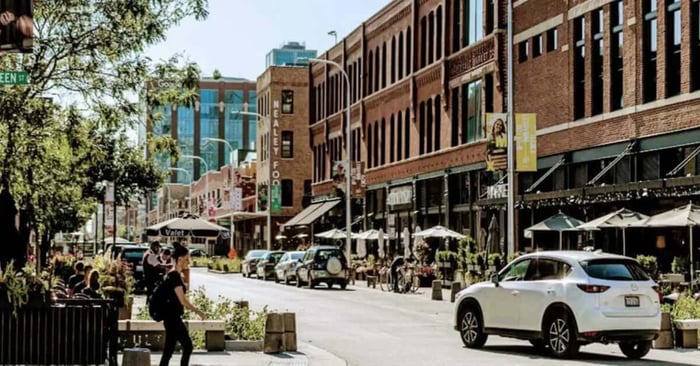
Fulton Market, the northern sub-district of the West Loop, is where much of the new development energy has landed. Former cold-storage facilities and loading docks have given way to boutique hotels, tech office campuses, and luxury residential buildings. The streetscape still has enough industrial bones to give it character — exposed brick, wide loading bays converted into restaurant patios — but make no mistake: this is now a premium address.
The food scene alone is worth the rent premium. Time Out Market Chicago at 916 W Fulton packs over 15 eateries and three bars under one roof, while spots like Publican on Fulton and the rotating cast of Michelin-recognized concepts on Randolph Street keep the neighborhood firmly on every food lover's radar. The Fulton Market District's official site is a good starting point for exploring what's new.
Transit access is excellent. The Blue, Green, and Pink CTA lines all serve the neighborhood, and interstates 90 and 290 form the southern and eastern borders, making car-based commuting straightforward, too. The West Loop is also one of Chicago's most bikeable neighborhoods, with dedicated lanes connecting it to downtown and the broader Lakefront Trail.
One-bedroom apartments in the West Loop average around $2,748 per month, with newer luxury buildings pushing considerably higher. It's one of the priciest neighborhoods in the city — but for residents who can swing it, few Chicago addresses offer this combination of walkability, dining, and proximity to major employers.
Wicker Park
Best for: Young professionals, creatives, music and nightlife lovers
Vibe: Cool, walkable, energetic — Chicago's answer to Brooklyn
Avg. 1BR rent: ~$1,900–$2,400/mo
Good fit if: You want Chicago's most culturally vibrant neighborhood, Blue Line access to downtown, and a street life that's hard to replicate anywhere else in the city.
Wicker Park sits at the intersection of Milwaukee, Damen, and North Avenues — one of Chicago's most recognizable and lively crossroads — and has been the city's creative and cultural hub for decades. It's the neighborhood that launched careers, incubated scenes, and gave Chicago's arts and music culture much of its identity.
Today it's more polished than its scrappy early days, but it hasn't lost its edge. Milwaukee Avenue is still lined with independent boutiques, vintage shops, and record stores. Myopic Books, a three-floor used bookstore with over 80,000 titles, remains an institution. The Flat Iron Arts Building at the six-corner intersection hosts artists' studios and galleries, with First Friday openings drawing the neighborhood out monthly. And the dining scene, anchored by spots along Damen and North, including the Michelin-recognized Mott St, is genuinely excellent.
The 606 Trail, a 2.7-mile elevated greenway built on a former rail line, runs through the southern edge of Wicker Park, connecting it to Bucktown, Logan Square, and Humboldt Park on foot or by bike. It's one of Chicago's best urban amenities, and Wicker Park residents have two main access points within walking distance. The Wicker Park Fest each July is one of the city's best summer street festivals.
Transit is a strong point. The Blue Line's Damen and Division stops put you downtown in under 15 minutes, and eight bus routes fan out across the neighborhood.
Average rent in Wicker Park runs approximately $2,757 per month across all unit types, though the vintage two- and three-flat stock that defines the neighborhood's residential character offers more affordable entry points for renters willing to trade newer finishes for character and location.
Bucktown
Best for: Young professionals, families, design-minded renters
Vibe: Hip but settling down — Wicker Park's slightly more grown-up neighbor
Avg. 1BR rent: ~$2,000–$2,500/mo
Good fit if: You want Wicker Park proximity and energy on a slightly quieter residential block, with easy 606 access and a neighborhood that skews toward stability over scene.
Bucktown sits directly north of Wicker Park and is so closely linked in character that the two are often discussed in the same breath. If Wicker Park is where the nightlife happens, Bucktown is where people go when they want the same zip code but a quieter block. The residential character is more pronounced here: tree-lined streets, vintage graystones and two-flats, and a mix of long-term residents and newer arrivals who came for the energy and stayed for the neighborhood.
The 606 Trail runs directly through Bucktown, giving residents immediate access to one of Chicago's best cycling and running routes. The Bucktown Garden Walk each summer showcases the neighborhood's green spaces and community spirit — a good indicator of the kind of neighbors you'll have. Along the North Avenue corridor, Margie's Candies has been a neighborhood institution since 1921 and is worth a visit regardless of where you end up living.
Bucktown's average rent sits around $3,074 per month when averaged across all building types, though that figure is pulled up by newer construction. Vintage apartments in the neighborhood's two- and three-flat stock typically run lower, making Bucktown more accessible than the headline number suggests.
Ukrainian Village
Best for: Budget-conscious renters who want West Side character without West Loop prices
Vibe: Historic, quiet, genuinely neighborhood-y
Avg. 1BR rent: ~$1,500–$1,900/mo
Good fit if: You want West Side proximity and vintage Chicago character at a price point that doesn't require a West Loop salary. A great pick for renters priced out of Wicker Park who don't want to stray too far from it.
Ukrainian Village is one of Chicago's best-kept secrets for renters. Sandwiched between Wicker Park to the north and the Illinois Medical District to the south, it retains a quiet, residential character that its hipper neighbors have largely traded away. The neighborhood's name isn't just marketing — it reflects a genuine history of Ukrainian immigrant settlement, still visible in the ornate Orthodox churches that anchor several blocks, including St. Volodymyr Ukrainian Orthodox Cathedral on Cortez Street.
The housing stock is quintessential Chicago: brick two-flats, vintage courtyard buildings, and greystones that predate most of what's been built in the city since. The stretch of Chicago Avenue through Ukrainian Village offers independent coffee shops, bars, and restaurants that draw from both the neighborhood's heritage and its younger influx of residents. Rents are meaningfully lower than in Wicker Park or Bucktown, with one-bedrooms typically in the $1,500 to $1,900 range.
Transit access includes several bus routes along Chicago and Western Avenues, with the Blue Line's Division stop within reasonable walking distance for most of the neighborhood.
Logan Square
Best for: Creatives, young families, renters seeking the sweet spot between affordability and cool
Vibe: Bohemian, bike-friendly, food-forward
Avg. 1BR rent: ~$1,500–$2,000/mo
Good fit if: You want a neighborhood with genuine creative energy, excellent food and drink, bike-friendly infrastructure, and rents that don't require a second job to sustain.
Logan Square is where Chicago's creative class landed when Wicker Park got expensive — and it's been thriving ever since. The neighborhood is built around a series of wide, tree-lined boulevards designed in the 1870s, giving it a scale and grandeur that most Chicago neighborhoods can't match. The landmark Greystones along Logan and Kedzie Boulevards remain some of the most architecturally striking residential streets in the city.
The food and bar scene here has become genuinely destination-worthy:
Lula Cafe — a farm-to-table pioneer since 1999 — remains one of the best brunch spots in the city.
The James Beard Award-winning Longman & Eagle on Kedzie is the neighborhood's flagship gastropub.
Revolution Brewing on Milwaukee is a Chicago craft beer institution.
And the Logan Square Farmers Market — every Sunday from May through October along Logan Boulevard — draws the whole neighborhood out each week.
The 606 Trail terminates at Logan Square, making it the western anchor of one of Chicago's best urban cycling routes. The Logan Theatre, a restored 1915 Art Deco movie house, anchors Milwaukee Avenue with its glowing neon marquee. The Blue Line's Logan Square stop puts you downtown in about 20 minutes.
Average rent in Logan Square runs approximately $1,476 per month for a one-bedroom — among the more affordable of the active West Side neighborhoods, and significantly below Wicker Park or the West Loop.
Humboldt Park
Best for: Budget renters, anyone drawn to the city's most vibrant Puerto Rican cultural community
Vibe: Culturally rich, affordable, community-driven
Avg. 1BR rent: ~$1,000–$1,400/mo
Good fit if: Affordability is the top priority, you're drawn to the neighborhood's cultural identity and deep community roots, and you're comfortable doing block-by-block research before committing.
Humboldt Park is anchored by two things that make it unlike anywhere else in Chicago: its namesake park and Paseo Boricua. The 207-acre Humboldt Park, with its lagoons, boathouse, soccer fields, and beach, is one of the most underrated public parks on the West Side. And Paseo Boricua, the stretch of Division Street marked by two massive steel Puerto Rican flags arching overhead, is home to one of the largest Puerto Rican communities in the United States, with a cultural life to match.
The National Museum of Puerto Rican Arts & Culture, housed in the historic Humboldt Park stables, is the only museum in the country dedicated entirely to Puerto Rican arts and culture — and it's right here in the neighborhood. The Chicago History Museum's Paseo Boricua walking tour is a great way to understand the depth of history on these six blocks of Division Street.
The neighborhood has a complex reputation, and it's important to be honest: safety varies significantly by block, and prospective residents should research specific streets rather than relying on neighborhood-level generalizations. But Humboldt Park also has deep community roots and ongoing investment that paint a more nuanced picture than the reputation alone suggests.
Average rent in Humboldt Park runs approximately $851 to $1,196 per month for one- and two-bedroom apartments, making it one of the most affordable neighborhoods on the West Side.
East Garfield Park
Best for: Budget-conscious renters, buyers seeking value in an appreciating area
Vibe: Residential, green, transitional
Avg. 1BR rent: ~$1,000–$1,300/mo
Good fit if: Budget is the primary driver, you love green space and park access, and you're prepared to research specific blocks carefully before choosing a unit.
East Garfield Park is defined by two things: its extraordinary conservatory and its price point. The Garfield Park Conservatory — one of the largest in the United States and often called "landscape art under glass" — anchors the western edge of the neighborhood with eight indoor display gardens, thousands of plant species, and 12 acres of outdoor gardens. It's one of Chicago's great public institutions and alone makes the neighborhood worth knowing.
The 170-acre Garfield Park surrounding the conservatory offers pathways, lagoons, a field house, and green space on a scale that's genuinely unusual for a neighborhood this close to downtown. Each spring, Beer Under Glass — a showcase for Chicago craft breweries held inside the conservatory itself — draws residents and visitors from across the city.
Rent here is among the lowest of any West Side neighborhood with CTA access. One-bedroom apartments average around $1,033 per month, with the Green Line and Blue Line providing access to the Loop and the rest of the city. Like Humboldt Park, East Garfield Park's safety varies by block — prospective residents should research specific streets rather than relying on neighborhood-level generalizations.
Which West Side Neighborhood Is Right for You?
You'll love the West Loop or Fulton Market if you want Chicago's most transformed neighborhood — restaurant row, tech employers, and a luxury rental market that reflects the demand. The premium is real, but so is the lifestyle.
You'll love Wicker Park if you want Chicago's cultural energy at its most concentrated — Blue Line access, the 606, Milwaukee Avenue, and a street life that rewards walkers and night owls equally.
You'll love Bucktown if you want Wicker Park's zip code with a slightly quieter block, a more residential feel, and a neighborhood that skews toward young families and design-minded renters.
You'll love Ukrainian Village if you've been priced out of Wicker Park and want to stay close without settling — vintage housing stock, real neighborhood character, and some of the best rent-to-location value on the West Side.
You'll love Logan Square if you want creative energy, wide boulevards, excellent food, and Blue Line access at prices that are meaningfully more accessible than the neighborhoods closer to downtown.
You'll love Humboldt Park or East Garfield Park if affordability is the deciding factor and you're willing to do block-level research. Both offer authentic Chicago character and significant green space at some of the city's lowest rents.
Why You Might Need a Storage Unit in Chicago West
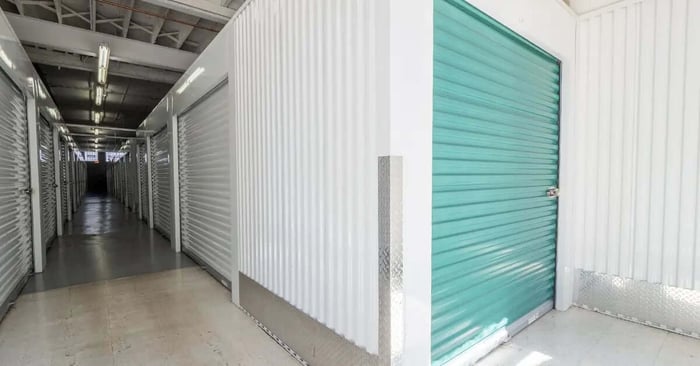
Chicago's West Side is home to some of the city's most active renovation corridors — and some of its most renter-dense neighborhoods. Either way, self-storage tends to come up sooner or later. Here's where it makes the most practical difference:
Condo and apartment renovations. The West Loop and Wicker Park are full of older buildings undergoing kitchen and bathroom upgrades. Clearing furniture and belongings into storage temporarily protects your stuff and gives contractors the room they need to work efficiently.
Downsizing from a house to a city apartment. The West Side has a lot of two-flats, greystones, and bungalows that people are transitioning into and out of. A storage unit lets you keep furniture you're not ready to part with while you figure out what fits in the new space.
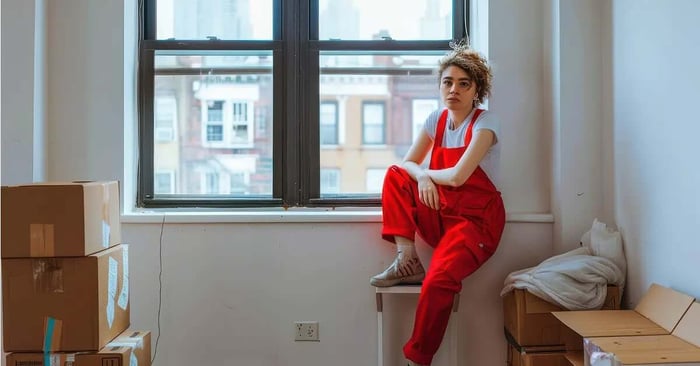
Between leases. Chicago's rental market moves fast, especially in Wicker Park and Logan Square. If your new lease doesn't start until the 1st and your current one ends on the 15th, a month-to-month unit bridges the gap without the pressure of a rushed move.
Seasonal rotation. Chicago winters are not optional. Bikes, outdoor furniture, sports gear, and seasonal clothing take up real space in West Side apartments — many of which are vintage buildings with limited closet and storage space to begin with.
Storage Star has two Chicago locations that serve the West Side:
Storage Star West Washington Blvd — 1230-1242 W Washington Blvd (serving the West Loop, Near West Side, and surrounding neighborhoods)
Storage Star North Ashland Avenue — 1300 N Ashland Avenue (serving Wicker Park, Ukrainian Village, Bucktown, and the Near North Side — coming soon)
Not sure what size unit fits your budget? Our Chicago storage unit cost guide breaks down what to expect by unit size. We also have locations serving the North Side and South Side if you're still weighing your options across the city.
Once you've narrowed down the neighborhood and the logistics start moving fast — lease signing, overlapping timelines, the realization that your new place has half the storage you were counting on — reserve your unit online with no credit card required.
Find your Chicago storage unit →
FAQs
What is the most affordable neighborhood on Chicago's West Side?
East Garfield Park and Humboldt Park offer the lowest rents on the West Side, with one-bedrooms typically in the $1,000 to $1,300 range. Ukrainian Village and Logan Square offer a step up in neighborhood amenities at $1,500 to $2,000 per month — a strong middle ground for renters who want affordability without sacrificing walkability.
Which West Side neighborhoods are best for young professionals?
The West Loop and Wicker Park are the top choices for young professionals, with strong transit, walkable streets, and proximity to major employers. Logan Square is increasingly popular for those who want a slightly lower price point without sacrificing neighborhood quality.
Is the West Side of Chicago safe?
Safety varies significantly by neighborhood and by specific block within each neighborhood. The West Loop, Wicker Park, Bucktown, and Ukrainian Village consistently rank among Chicago's safer neighborhoods. Humboldt Park and East Garfield Park have more mixed reputations — block-level research is important before committing to a specific address.
Can I rent a storage unit temporarily in the West Side?
Absolutely! Month-to-month storage is the most flexible option. Storage Star at 1230-1242 W Washington Blvd serves the West Side with climate-controlled units and no long-term commitment required — so you can keep your belongings safe while your move timeline sorts itself out.
Does Storage Star have climate-controlled storage in West Chicago?
Yes. Our Chicago facilities offer climate control to keep your things safe year-round, no matter how cold or humid it gets!
Are storage units good for renters in Chicago West?
For sure! When you rent a studio, apartment, townhouse, or even a full home, storage units give you extra storage space and flexibility to move in and out when you need to. Plus, Storage Star offers flexible monthly rentals, so you’re never locked into a long-term contract.
Which part of Chicago is best?
Chicago is a large city with distinct districts, fabulous dining, and a lot of personality. What’s best for you may not be the best fit for someone else. Explore neighborhoods in South Chicago and the North Chicago region to find the best fit for your lifestyle and goals.
Ready to Make Your Move to Chicago West?
Picking the right West Side neighborhood is the hard part. Once you've done that, the to-do list moves fast — leases, timelines, and the moment you realize your new place has a fraction of the storage you're used to.
That's where Storage Star comes in. Whether you need a temporary home for furniture between leases, a place to rotate seasonal gear in and out, or just some breathing room while you get settled, we've got flexible, month-to-month units across Chicago with no credit card required to reserve.
Storage Star West Washington Blvd — 1230-1242 W Washington Blvd (West Loop, Near West Side, and downtown-adjacent neighborhoods)
Storage Star North Ashland Avenue — 1300 N Ashland Avenue (Wicker Park, Ukrainian Village, Bucktown, and the Near North Side)
Storage Star North McCormick Blvd — 6341 N McCormick Blvd (West Ridge, Rogers Park, Albany Park, Lincolnwood, and the Far North Side)
Storage Star West 111th Street — 3914 W 111th Street (Beverly, Mount Greenwood, Morgan Park, and the South Side)
Not sure what size you need or what to budget? Our Chicago storage unit cost guide and our interactive storage unit size tool have got you covered. And if you're still exploring Chicago neighborhoods before committing, we've got in-depth guides to Albany Park, Rogers Park, West Ridge, and the Far North Side to help you decide.
FAQs
What is the most affordable neighborhood on Chicago's West Side?
East Garfield Park and Humboldt Park offer the lowest rents on the West Side, with one-bedrooms typically in the $1,000 to $1,300 range. Ukrainian Village and Logan Square offer a step up in neighborhood amenities at $1,500 to $2,000 per month — a strong middle ground for renters who want affordability without sacrificing walkability.
Which West Side neighborhoods are best for young professionals?
The West Loop and Wicker Park are the top choices for young professionals, with strong transit, walkable streets, and proximity to major employers. Logan Square is increasingly popular for those who want a slightly lower price point without sacrificing neighborhood quality.
Is the West Side of Chicago safe?
Safety varies significantly by neighborhood and by specific block within each neighborhood. The West Loop, Wicker Park, Bucktown, and Ukrainian Village consistently rank among Chicago's safer neighborhoods. Humboldt Park and East Garfield Park have more mixed reputations — block-level research is important before committing to a specific address.
Can I rent a storage unit temporarily in the West Side?
Absolutely! Month-to-month storage is the most flexible option. Storage Star at 1230-1242 W Washington Blvd serves the West Side with climate-controlled units and no long-term commitment required — so you can keep your belongings safe while your move timeline sorts itself out.
Does Storage Star have climate-controlled storage in West Chicago?
Yes. Our Chicago facilities offer climate control to keep your things safe year-round, no matter how cold or humid it gets!
Are storage units good for renters in Chicago West?
For sure! When you rent a studio, apartment, townhouse, or even a full home, storage units give you extra storage space and flexibility to move in and out when you need to. Plus, Storage Star offers flexible monthly rentals, so you’re never locked into a long-term contract.
Which part of Chicago is best?
Chicago is a large city with distinct districts, fabulous dining, and a lot of personality. What’s best for you may not be the best fit for someone else. Explore neighborhoods in South Chicago and the North Chicago region to find the best fit for your lifestyle and goals.