
Table of Contents
- What Can Happen to Books if They're Not Stored Properly?
- How to Prepare Books for Long-Term Storage
- What Is the Best Way to Pack Books for Long-Term Storage?
- Should You Store Books in Plastic Bins or Cardboard Boxes?
- Where Should You Store Books Long Term?
- How to Check on Books in Storage and Unpack Them Safely
- Keep Your Collection in Reading Shape for Years
- FAQs
Books can last for generations, but only if they're kept in the right conditions. If you're wondering how to store books long term, especially antique books or collector’s editions, the answer comes down to four things: clean books, the right containers, steady humidity, and a stable temperature. Get those right, and your collection comes out of storage looking the way it went in. Here's how to protect everything from everyday paperbacks to antique first editions.
Key Takeaways
- Moisture is the biggest threat to stored books. It warps pages, feeds mold, and attracts pests.
- Clean and inspect every book first, and keep any book with mold or mildew out of the box.
- Pack books in acid-free boxes or clean, dry plastic bins, never in plastic bags or newspaper.
- Skip attics, garages, and basements, where heat and humidity swing the most.
- For antique or valuable books, a climate-controlled storage unit is the best long-term choice.
What Can Happen to Books if They're Not Stored Properly?
Books stored in the wrong conditions can warp, grow mold, turn yellow, or become food for insects. Most of this damage comes from moisture, heat, and light, and much of it can't be undone. Knowing what to look for makes it easier to prevent.
Warped and Rippled Pages
Paper soaks up moisture from the air like a sponge. The Northeast Document Conservation Center (NEDCC) notes that fast changes in humidity can distort paper and bindings. Once a book absorbs too much moisture, its pages swell and ripple as they dry. Even after they dry out, those pages rarely lie flat again.
Pages That Stick Together
Damp pages can bond to each other, especially the glossy pages in art books and photo books. Pulling them apart can tear the paper or lift the printing right off the page.
Mold, Mildew, and Musty Odors
According to NEDCC, mold will normally grow on wet materials in about 48 hours. It shows up as fuzzy or powdery spots and a musty smell that lingers. Mold also spreads, so one damp book can affect a whole box.
Yellowed, Brittle Paper
Heat and light break paper down over time. NEDCC warns that UV light weakens, bleaches, and yellows paper, and that light damage is cumulative and irreversible. The National Archives adds that heat and high humidity make paper brittle.
Faded Spines and Loose Bindings
Sunlight fades book covers, especially spines left in direct sunlight for years, according to the National Archives. Swings in temperature also stress the glue and leather that hold a book together, which can loosen bindings.
Pest Damage
Silverfish scratch the surface of paper and eventually eat holes through it, according to a pest fact sheet published by English Heritage. They do the most damage in humid spaces. The good news is that every one of these problems can be prevented with a little preparation.
How to Prepare Books for Long-Term Storage
Preparing books for long-term storage means cleaning them, checking them for damage, and protecting their covers before they go in a box. A few minutes per book now saves you from unpleasant surprises later.
Clean and Inspect Each Book
Flip through the pages and look for insects, stains, or a musty smell. Make sure every book is completely dry before you pack it. For valuable antique books, you may also want to dust each book with a soft, dry brush or cloth.
Set Aside Any Book With Mold or Mildew
Never pack a book with mold or mildew alongside the rest of your collection. NEDCC recommends keeping moldy items away from the main collection in a space below 55% relative humidity.
Protect Dust Jackets and Bindings
Dust jackets add value to collectible books, so cover them with clear archival jacket protectors. Wrap fragile or valuable books in acid-free paper. Skip newspaper, since the ink can rub off and the paper itself is acidic. Need supplies? Many Storage Star locations carry small boxes sized for books, plus packing paper and bubble wrap. Browse our moving and packing supplies and call your local facility to check what's in stock.
What Is the Best Way to Pack Books for Long-Term Storage?
The best way to pack books for long-term storage is in sturdy, lidded containers, packed snugly so nothing shifts. Store small and medium books upright, the way they sit on bookshelves. Lay large, heavy volumes flat. That follows guidance from the National Archives, which recommends storing atlases and other large volumes flat.
- Pack snugly, not tightly. Books should stand without leaning, but you shouldn't have to force the last one in.
- Fill the gaps. Crumpled acid-free packing paper or a light layer of bubble wrap keeps books from sliding around.
- Keep boxes light. Books get heavy fast, so use small boxes that are still easy to lift when full.
- Skip plastic bags. Sealed bags trap moisture right against the paper.
- Label every box. List what's inside and mark any fragile or valuable books so they're easy to find later.
Should You Store Books in Plastic Bins or Cardboard Boxes?
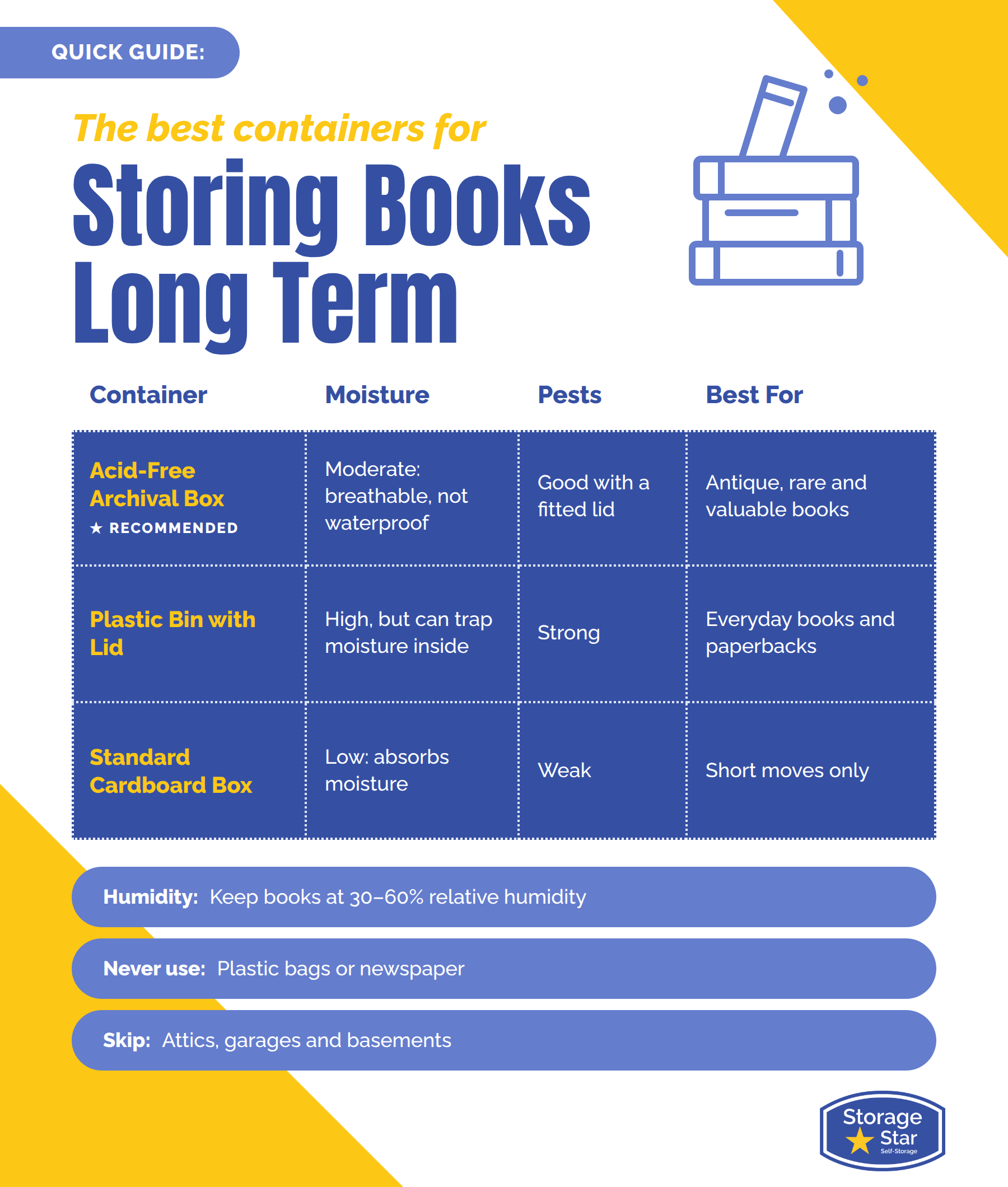
Acid-free archival boxes are the best choice for valuable books. Clean plastic bins work well for everyday collections, as long as the books go in completely dry. Standard cardboard boxes are fine for a short move but not for long-term storage.
Book Storage Containers Compared:
| Feature | Acid-Free Archival Boxes (Recommended) | Plastic Bins With Lids | Standard Cardboard Boxes |
|---|---|---|---|
| Moisture Protection | Moderate. Breathable, but not waterproof. | High against leaks, but can trap moisture inside | Low. Absorbs moisture. |
| Pest Protection | Good with a fitted lid | Strong | Weak |
| Best For | Antique, rare, and valuable books | Everyday books and paperbacks | Short moves and temporary storage |
If you use plastic bins, toss in a few silica gel packets to absorb extra moisture. And don't seal in any book that's even slightly damp.
Where Should You Store Books Long Term?
Store books long term in a cool, dry place with steady humidity and no direct sunlight. NEDCC recommends keeping paper and books between 30% and 60% relative humidity. Most homes have a hard time holding those conditions in the spaces people usually use for storage.
- Attics get hot in summer and cold in winter, and heat speeds up yellowing.
- Garages see big temperature swings and high humidity. The National Archives specifically advises against storing books in attics and garages.
- Basements are often damp and can flood, which puts books at risk of mold growth.
- Interior closets and bookshelves are a better fit, as long as they're out of direct sunlight.
If your home library is running out of room or you're getting ready to move, a storage unit gives your books steady conditions without taking over your space. Inside the unit, set boxes on shelving or pallets instead of the floor, and leave a little space between stacks for airflow. For more on what to expect, see our guide to long-term storage.
Why Climate-Controlled Storage Is Best for Antique and Valuable Books
Climate-controlled storage is the best way to store books in a storage unit because it keeps conditions steady all year. Without big swings in heat and humidity, paper is far less likely to warp, yellow, or grow mold.
Storage Star's climate-controlled storage units are typically kept between 55 and 80 degrees Fahrenheit, and most are indoors. That means you can load and check on your books without exposing them to rain or summer heat. A traditional unit still protects against rain and sun, but it doesn't regulate the temperature or humidity inside.
Climate control matters most for antique books. Leather bindings, older paper, and original dust jackets are hard to replace, and a collectible book is often only as valuable as its condition.
Want the full picture? Learn what climate-controlled storage is and how it works. If your collection is valuable, also review your storage unit insurance options before you move in.
How to Check on Books in Storage and Unpack Them Safely
Check on stored books every few months, especially after a stretch of hot or humid weather. Open a box or two and look for musty odors, damp boxes, or signs of pests. Catching a problem early keeps it from spreading to the rest of your collection.
When it's time to bring your books home, take it slow. Let the boxes sit indoors for a day before opening them so the books can adjust to the room. Then return them to shelves away from direct sunlight.
Keep Your Collection in Reading Shape for Years
Your books hold stories, memories, and sometimes real value. Now that you know how to store books long term, put it into practice. With clean books, the right containers, and a climate-controlled storage unit, they'll be ready whenever you want them back. Collect more than books? Read our guide on how to store a coin collection.
Find Affordable Self-Storage Near You
FAQs
How Do You Store Books Long Term?
To store books long term, clean and fully dry each book, then pack it in an acid-free box or a clean, lidded plastic bin. Keep small books upright and large ones flat. Store the boxes off the floor in a cool, dry space with steady humidity, ideally a climate-controlled storage unit.
Can You Store Books in a Storage Unit?
Yes, you can store books in a storage unit as long as the space stays dry and the temperature stays steady. A climate-controlled unit is the best choice for long-term storage or valuable books. Find a Storage Star location near you and rent online.
Do Books Need Climate-Controlled Storage?
Books don't always need climate control for a short move. For storage longer than a few months, or for antique, rare, or valuable books, climate control is the safer choice. Steady temperature and humidity help prevent warping, mold, and yellowing.
How Do You Store Antique Books?
Wrap antique books in acid-free paper or place them in archival boxes, and lay large or fragile volumes flat. Keep them in a climate-controlled space away from direct sunlight. If a book shows mold or a damaged binding, have a conservator look at it before you store it.
Is It OK to Store Books in a Garage or Attic?
Garages and attics aren't good places to store books long term. Both see big swings in heat and humidity, which can make paper brittle and invite mold and pests. A climate-controlled storage unit or an interior closet is a better option.
Will Books Get Moldy in Plastic Bins?
Books can get moldy in plastic bins if they're packed damp or the bins sit somewhere humid. Make sure every book is completely dry, and add silica gel packets to absorb extra moisture. Keeping the bins in a climate-controlled unit lowers the risk even more.
What Size Storage Unit Do I Need for a Book Collection?
Many personal book collections fit in a small unit. A 5x5 storage unit offers about 200 cubic feet of space, roughly the size of a small walk-in closet. Larger libraries, or books stored with furniture, may need more room, so compare options in our storage unit size guide.