
Table of Contents
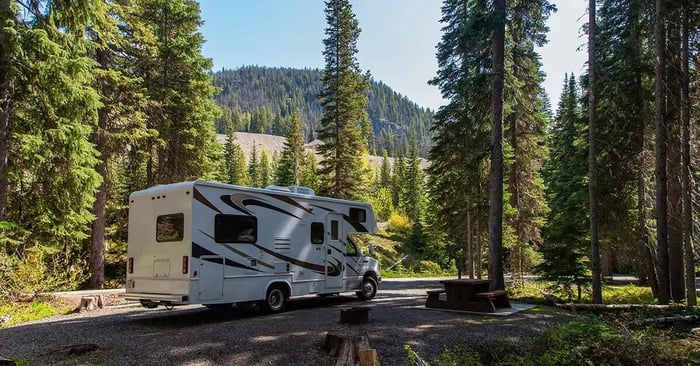
Anchorage is one of the best starting points for RV travel in the world. Within a few hours of the city, you can be fishing the Kenai River, watching bears at Katmai, pulling into a campsite with views of Resurrection Bay in Seward, or heading north toward Denali on the Parks Highway. Alaska's RV and camping season runs roughly from late May through early September — a short but spectacular window that most Anchorage residents make the most of.
But that season ends. And when it does, you're left with a large vehicle that needs somewhere to go for the next eight or nine months — through freeze-thaw cycles, -20°F nights, and everything else an Anchorage winter brings. How you store it, and how well you prepare it for storage, determines what condition it's in when RV season rolls around again.
The Off-Season Storage Window in Anchorage
Unlike most of the Lower 48, where RV use stretches well into fall and starts back up in early spring, Anchorage's winter arrives decisively. Temperatures regularly drop below freezing by October and don't recover reliably until April or May. That means most Anchorage RV owners are looking at roughly eight months of storage — a significantly longer off-season than RV owners in most other parts of the country have to plan for.
That length matters for a few reasons:
Longer storage means more time for moisture damage, corrosion, and pests to cause problems
Deeper cold means more serious consequences for unprotected plumbing, batteries, and seals
The short active season means you want the rig ready to go the moment conditions allow — not spending May at the shop
Getting winterization and storage right the first time pays for itself every season.
Winterizing Your RV for Alaska Storage: What's Different Here
Standard RV winterization advice was written for places where winter means 30°F nights and the occasional freeze. Anchorage is not that place.
Temperatures regularly hit -10°F to -20°F, and colder snaps are not uncommon. The consequences of skipped or incomplete winterization are more severe here. Here's what matters most when prepping your RV for storage in Anchorage:
Plumbing: Non-Negotiable
This is the most critical winterization step, and in Anchorage, there's no margin for error. Water left in pipes, tanks, or the water heater will freeze and expand — cracking pipes, fittings, and the water heater itself. Repairs from freeze damage routinely run $3,000 or more.
The process: drain the fresh water tank completely, open all faucets and drain lines until only air comes through, drain the water heater after it cools, empty all holding tanks, and then run RV antifreeze rated for -50°F or lower through every water line until pink liquid appears at all faucets and drains. Don't skip the toilet, the outdoor shower if you have one, or any low-point drains. Pour a small amount of antifreeze into all drain traps.
A bypass kit for the water heater saves antifreeze — install it before running antifreeze through the system so you're not filling the heater tank unnecessarily.
Batteries: Remove and Store Indoors
Lead-acid and AGM batteries can freeze when discharged in extreme cold, and Anchorage winters will discharge a battery left in an unheated rig faster than most owners expect.
Remove both the house batteries and the chassis battery, fully charge them, and store them somewhere they won't see freezing temperatures. Connect to a trickle charger to maintain charge through the off-season.
Leaving batteries in a stored RV through an Anchorage winter is one of the most sure-fire ways to need new batteries in spring.
Propane: Turn It Off
Turn off propane tanks during storage and inspect the regulator and lines for any cracks or damage before you do. Seals and rubber components become brittle in extreme cold, and a slow propane leak in a stored, unattended vehicle is a serious hazard. If your tanks are removable, storing them separately is the safest approach.
Moisture Control
Anchorage's humidity remains around 68% even in the drier months, and a sealed RV sitting through the off-season can develop condensation, mold, and mildew — particularly in soft furnishings, mattresses, and cabinetry. Before closing it up for storage:
Remove all food and any items that could attract pests or freeze and expand
Leave interior cabinet doors and drawers slightly open to allow air circulation
Place desiccant packs or a passive dehumidifier inside to absorb moisture
Leave the refrigerator door slightly ajar, cleaned out, and turned off
Roof, Seals, and Exterior
Inspect roof seams, window seals, and door gaskets before storage. Winter precipitation — snow, ice, and the freeze-thaw cycle — will find any weakness and make it worse. Reseal anything that looks compromised now rather than discovering water damage in spring. Clean and wax the exterior before storage to protect the finish through the winter.
Inspect the undercarriage and underbelly insulation as well. Any gaps are rodent entry points — and in Anchorage, rodents actively seek warm, sheltered spaces as temperatures drop.
RV Storage Options in Anchorage: What to Consider
RV storage in Anchorage comes down to three main options, each with meaningfully different tradeoffs:
Storage Option | Protection Level | Best For |
Outdoor parking / uncovered | Minimal | Short-term or low-budget; acceptable only with thorough winterization |
Indoor / enclosed unit | Good | Protection from precipitation, UV, and most temperature swings |
Heated indoor unit | Best | Full protection from freeze damage; ideal for incomplete winterization or sensitive rigs |
Outdoor Parking
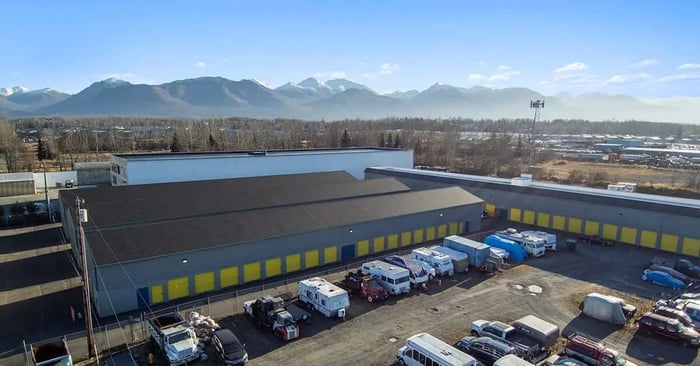
The most affordable option and the most exposed. Your RV will sit through whatever Anchorage's winter delivers — heavy snowfall, freeze-thaw cycles, ice storms, and months of UV exposure. If you go this route, thorough winterization is not optional, it's critical.
Storage Star's Boniface Parkway location offers outdoor 10x20 parking spaces starting at $120/month (first month discounted to $72) — a budget-friendly option for owners who have fully winterized their rig and want secure, gated off-site parking.
Keep in mind that prices may change, so find an Anchorage Storage Star near you to check the most up-to-date pricing.
Heated Indoor Storage
For Anchorage conditions, a heated indoor unit is the gold standard — and meaningfully different from simply "enclosed" storage. A heated unit keeps temperatures above freezing, which eliminates the risk of residual water freezing even if your winterization wasn't perfect, protects rubber seals and gaskets from extreme cold, and is significantly easier on batteries and propane systems.
Storage Star's Old Seward Highway location offers heated drive-up units sized for RVs and campers:
10x20 heated drive-up — starting at $348/month (first month discounted), then $580/month
15x20 heated drive-up — starting at $581/month (first month discounted), then $968/month
15x30 heated drive-up — starting at $581/month (first month discounted), then $968/month
The Arctic Boulevard facility also offers a 10x20 heated drive-up starting at $375/month (first month discounted), then $625/month.
Drive-up access means you can pull your RV straight in without navigating tight indoor corridors — important for larger rigs.
What Size Storage Unit Do You Need?
Sizing depends on your rig's length plus the room you need to walk around it and access storage bays:
RV Type | Typical Length | Recommended Unit |
Pop-up / teardrop camper | Up to 15 ft | 10x15 |
Travel trailer / small motorhome | 15–20 ft | 10x20 |
Mid-size Class A / fifth wheel | 20–28 ft | 15x20 |
Large Class A motorhome | 28–40 ft | 15x30 |
When in doubt, size up. Extra space makes it easier to walk alongside the rig, access compartments, and store gear in the same unit — which is worth the modest difference in monthly cost.
Getting Your RV Ready for Spring
When May arrives and the trails are calling, don't just de-winterize and go. A quick pre-season inspection saves you from discovering problems at the campground:
Reinstall batteries and verify they hold a charge
Flush antifreeze from all water lines with fresh water before using
Refill the fresh water tank and run all faucets, checking for leaks at connections
Inspect the water heater before using — check the anode rod annually
Test propane systems and check regulator and line connections for any damage
Check roof seals and any exterior areas that were borderline before storage
Test all appliances — refrigerator, furnace, water heater, stove
Inspect tires for flat spots, cracking, or pressure loss from the cold
Frequently Asked Questions
How much does RV storage cost in Anchorage?
It varies significantly by type. As of June 2026, outdoor parking at Storage Star's Boniface location starts at $120/month. Heated indoor drive-up units at Old Seward Highway start at $580/month for a 10x20. The difference reflects a meaningful difference in protection — heated storage is worth serious consideration given Anchorage's winters. Check your local Storage Star for the most up-to-date prices.
Do I have to fully winterize if I use a heated storage unit?
Heated storage significantly reduces the risk of freeze damage and gives you a buffer if your winterization isn't perfect. That said, we'd still recommend draining and antifreeze-treating the water system and removing the batteries as best practice — heated units maintain above-freezing temperatures but aren't a substitute for proper winterization.
Can I rent a storage unit temporarily?
Absolutely! Storage Star's rentals are month-to-month, making them a natural fit for Anchorage's seasonal lifestyle. Rent for the off-season and cancel when you're ready to hit the road again — no long-term commitment required.
Can I access my RV during the off-season?
Yes. Storage Star's Anchorage locations offer extended daily access hours, so you can get to your rig when you need to — whether that's to grab gear, do maintenance, or check on it mid-winter.
What’s the best way to store an RV in Anchorage?
The best option for most Anchorage RV owners is indoor RV storage — ideally in a heated unit to keep temperatures above freezing through the winter. Covered RV storage in Anchorage is a step up from outdoor parking, protecting your rig from snow load, UV exposure, and precipitation, but a fully enclosed, heated unit offers the most complete protection given how severe and prolonged Anchorage winters are.
Make the Most of Every Alaska Summer
Alaska's RV season is short but worth every minute. The Kenai Peninsula, Denali corridor, and the road to Homer offer some of the most spectacular camping anywhere in North America — and Anchorage puts you within a few hours of all of it.
Storing your rig properly through the off-season means it's ready when the season opens, not sitting at a repair shop in June. For secure, flexible RV storage in Anchorage, find your nearest Storage Star location and reserve online in minutes.
Heading into the off-season with other gear to store too? Check out our guides on snowmobile storage in Anchorage, hunting and fishing gear storage, and how much a storage unit costs in Anchorage.
FAQs
How much does RV storage cost in Anchorage?
It varies significantly by type. As of June 2026, outdoor parking at Storage Star's Boniface location starts at $120/month. Heated indoor drive-up units at Old Seward Highway start at $580/month for a 10x20. The difference reflects a meaningful difference in protection — heated storage is worth serious consideration given Anchorage's winters. Check your local Storage Star for the most up-to-date prices.
Do I have to fully winterize if I use a heated storage unit?
Heated storage significantly reduces the risk of freeze damage and gives you a buffer if your winterization isn't perfect. That said, we'd still recommend draining and antifreeze-treating the water system and removing the batteries as best practice — heated units maintain above-freezing temperatures but aren't a substitute for proper winterization.
Can I rent a storage unit temporarily?
Absolutely! Storage Star's rentals are month-to-month, making them a natural fit for Anchorage's seasonal lifestyle. Rent for the off-season and cancel when you're ready to hit the road again — no long-term commitment required.
Can I access my RV during the off-season?
Yes. Storage Star's Anchorage locations offer extended daily access hours, so you can get to your rig when you need to — whether that's to grab gear, do maintenance, or check on it mid-winter.
What’s the best way to store an RV in Anchorage?
The best option for most Anchorage RV owners is indoor RV storage — ideally in a heated unit to keep temperatures above freezing through the winter. Covered RV storage in Anchorage is a step up from outdoor parking, protecting your rig from snow load, UV exposure, and precipitation, but a fully enclosed, heated unit offers the most complete protection given how severe and prolonged Anchorage winters are.