
Table of Contents
Landed a summer internship in another city? Heading abroad for a semester? Your apartment doesn't have to sit empty while you're gone. You can sublease or sublet your space. But what is subletting? It's renting out your place, or part of it, to someone else while you stay on the original lease. Here's how a sublet works, from getting the green light to deciding where your stuff goes.
Key Takeaways
- Subletting means renting your apartment to a subtenant while you stay on the original lease.
- You're still responsible to your landlord for rent and any damage during the sublet.
- Check your lease and get your landlord's written consent before you sublet.
- Put the sublet agreement in writing, including rent, dates, and what stays in the unit.
- A storage unit keeps your valuables and personal items safe while someone else lives in your space.
What Is Subletting?
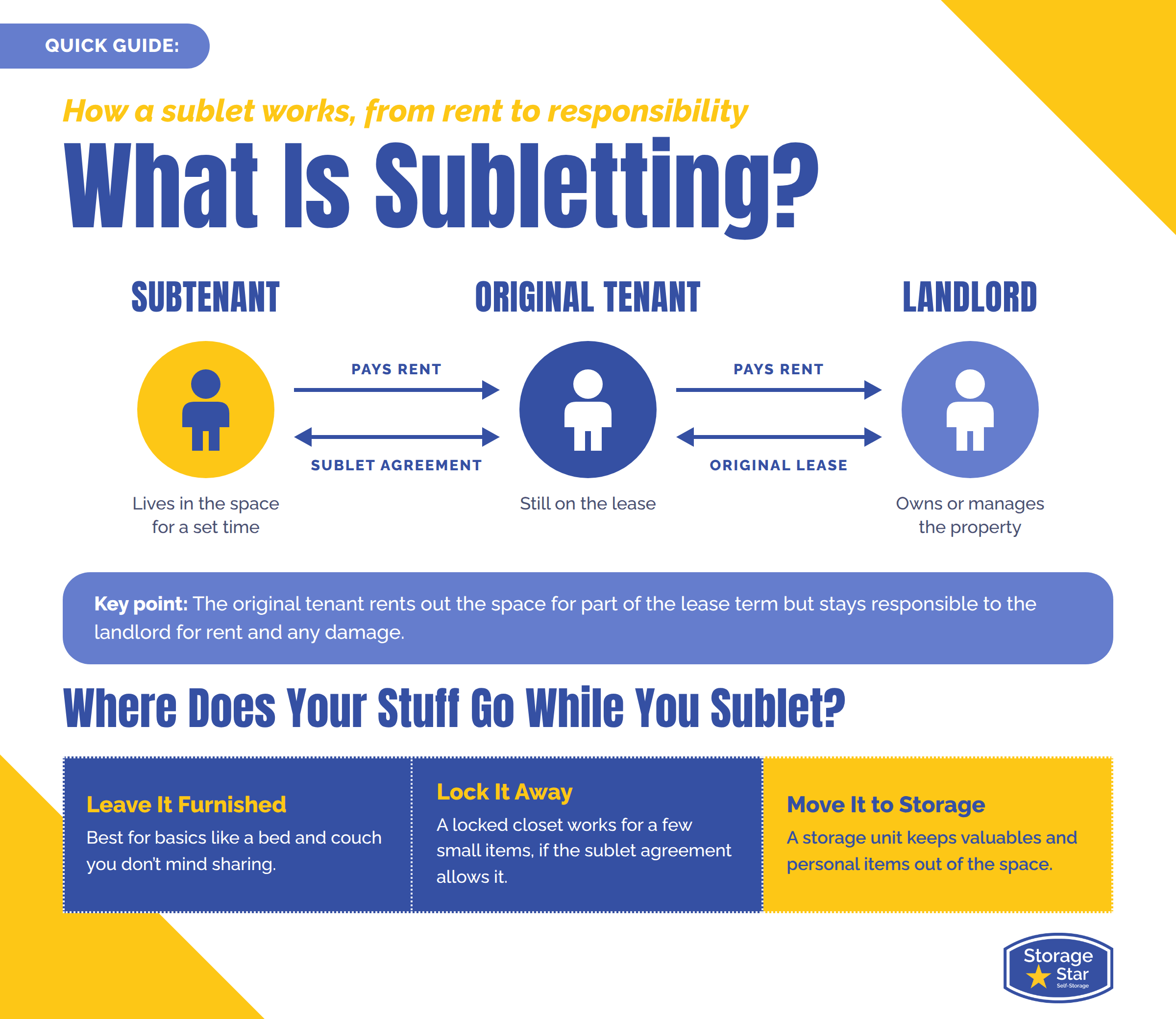
Subletting is when you rent all or part of your apartment to another person for a set amount of time, while your name stays on the original lease. The new resident pays rent to you. You keep paying rent to your landlord and stay responsible for the lease.
According to Cornell Law School's Legal Information Institute, a sublease is a new contract between the tenant and the sublessee, and the original tenant still has to meet the lease obligations. In other words, you're handing over the keys, not the responsibility.
Every sublet has three key players:
- The original tenant: that's you. You're also called the sublessor or primary tenant.
- The subtenant: the person living in your space for a while, also called a subletter or sublessee.
- The landlord: the property owner or property manager who signed the original lease agreement with you.
Sublet vs. Sublease: Is There a Difference?
For apartments, not really. Most people use "sublet" and "sublease" to mean the same thing: renting your place to someone else while you stay on the lease. The bigger difference is between a sublet and a lease assignment. With an assignment, the new tenant takes over your lease and deals with the landlord directly, and you're usually not planning to move back.
Sublet vs. Lease Assignment vs. Breaking Your Lease
Feature | Sublet (Best for Short Trips) | Lease Assignment | Breaking Your Lease |
|---|---|---|---|
| Who Lives There | A subtenant, for a set time | A new tenant, for the rest of the lease | No one, unless the landlord re-rents it |
| Who Answers to the Landlord | You, the original tenant | Usually the new tenant, so ask if you’re fully released | You, for any fees or rent your lease requires |
| Can You Move Back In? | Yes, when the sublet ends | No | No |
| Best For | Internships, study abroad, and short trips | Permanent moves | When subletting or assigning isn’t an option |
How Does Subletting Work?
Subletting works in five basic steps: check your lease, get your landlord's OK in writing, review your renter's insurance, find a subtenant you trust, and sign a sublet agreement. Skipping any of them can turn a smart money move into a headache.
1. Check Your Lease for Subletting Clauses
Start with the fine print. Many leases include subletting clauses that either ban subletting or require the landlord's permission first. If your lease terms are unclear, ask your property manager before you post a single listing.
2. Get Your Landlord's Written Consent
Even if your lease doesn't mention subletting, get your landlord's written consent before anyone moves in. A quick email or signed form protects you if questions come up later. Rules also vary by state and city. In New York, for example, state law lets tenants in buildings with four or more units sublet with the landlord's advance written consent, which can't be unreasonably withheld. Sublets without permission can lead to eviction, so this step is worth the wait.
3. Review Your Renter's Insurance
Call your insurance provider and ask whether your renter's insurance covers a subtenant or their belongings. Some policies only cover the people named on them, so your subletter may need a policy of their own. While you're at it, find out whether your renter’s insurance covers a storage unit if you plan to store some of your things.
4. Find and Screen a Subtenant
Friends, classmates, and campus housing boards are great places to start, since you already share a connection. Online listings, including Craigslist, can widen your search. Whoever you choose, do some tenant screening. Meet them, ask for references, and consider a background check.
5. Put a Sublet Agreement in Writing
A written sublet agreement keeps everyone on the same page. Make sure yours covers:
- Move-in and move-out dates
- Monthly rent and how rent payments are made
- The security deposit amount and when it's returned
- Who pays for utilities and Wi-Fi
- House rules, including guests and pets
- Which furniture and belongings stay in the apartment
Why Do People Sublet Their Apartments?
Most people sublet because life takes them somewhere else for a while, and paying rent on an empty apartment is no fun. A sublet keeps the rent covered and your apartment waiting for you. Here are the most common reasons people sublet.
Students Heading Home Between Semesters
Many college leases run 12 months, but plenty of students spend summer break back home. Subletting covers those months of rent when students aren’t in town, so you’re not paying for a room you aren’t using.
A storage unit can give you peace of mind while a subtenant settles in, keeping your personal belongings safe until you head back to campus. Storage Star’s student storage comes with month-to-month leases, so you only pay for the months you’re away.
Summer Internships and Co-Ops
Landing an internship in another city is exciting, until you realize you’d be paying rent in two places. Subletting your current apartment while you’re away can free up money for your temporary place.
Study Abroad Semesters
A semester abroad usually lines up neatly with a sublet. Another student often needs housing for those exact months, and you come home to the same apartment and the same lease.
Remote Workers Trying Out a New City
If you can work from anywhere, a sublet lets you spend a few months somewhere new without giving up your home base. Some remote workers also take a sublet in a new city as a test run before they sign a full lease there.
Travel Nurses and Temporary Job Assignments
Contract work and temporary assignments can take you away for weeks or months at a time. Subletting covers your rent at home while you’re on the road.
Long Trips and Life Changes
An extended trip, a family situation, or a home renovation can all pull you away from your apartment for a while. A sublet gives you breathing room without breaking your lease.
Subletting can also help you avoid breaking your lease early, which often means fees or paying the rest of your rent, depending on your lease. For many renters, a short sublease beats both of those options.
What Are the Risks of Subletting?
The biggest risk is that you're still on the hook. If your subtenant pays late, skips rent, or causes property damage, your landlord will look to you. A few simple habits help protect you:
- Get landlord approval in writing before anyone moves in.
- Collect a security deposit from your subtenant.
- Take photos of the apartment's condition on move-in day.
- Keep valuables and personal items out of the apartment.
This article is general information, not legal advice. Sublet rules depend on your lease and local laws.
What Should You Do With Your Stuff While You Sublet?
You have three main options: leave it, lock it, or store it. Most people use a mix, depending on what they own and how long they'll be gone.
Leave the Basics for Your Subtenant
Many subtenants are looking for a furnished place, so leaving basics like a bed, couch, and kitchen table makes sense. List everything that stays in your sublet agreement so there's no confusion at move-out.
Lock Away a Few Small Items
If your landlord and subtenant agree, a locked closet can hold a few boxes. It works for small things, but not for anything you'd hate to lose.
Move Valuables and Personal Items to Storage
For valuables, electronics, and personal items, a storage unit is the simplest way to keep your stuff safe and out of the way. Storage Star offers month-to-month leases, so you only pay for the time you need.
Not sure how much space a full apartment takes up? A 5x5 storage unit is about the size of a walk-in closet. 5x10 storage unit fits a twin mattress, desk, mini fridge, and 8 to 10 moving boxes.
Our guide to studio apartment storage unit sizes can help. For electronics, clothes, and important documents, climate-controlled storage adds extra protection from heat and humidity. Packing up your closet? Here's how to store clothes in a storage unit, and for more storage tips, see our temporary storage guide.
Sublet With Peace of Mind
Subletting lets you say yes to that internship or semester abroad without paying for an empty apartment. Get your landlord's OK, put everything in writing, and give your belongings a safe place to stay. Your apartment, and your stuff, will be ready when you get back.
Find Affordable Self-Storage Near You
FAQs
What Is Subletting?
Subletting is renting all or part of your apartment to someone else for a set period while you stay on the original lease. The subtenant pays rent to you, and you keep paying your landlord. You remain responsible for the lease, including rent and any damage.
Is Subletting Illegal?
Subletting isn't illegal in itself, but it can break your lease or local rules if you do it without permission. Many leases require the landlord's written consent, and some ban subletting entirely. Check your lease and local laws before you sublet.
What's the Difference Between a Sublet and a Sublease?
For apartments, there's little practical difference. Both describe renting your place to someone else while you stay on the original lease. The bigger difference is between a sublet and a lease assignment, where the new tenant takes over the lease directly.
Do I Need My Landlord's Permission to Sublet?
In most cases, yes. Many lease agreements require the landlord's written consent before you sublet, and getting approval in writing protects you even when the lease says nothing about it. Some states and cities have their own sublet rules, so check local law too.
Who Pays Rent When You Sublet?
The subtenant usually pays rent to you, and you pay your landlord under the original lease. If the subtenant misses a payment, you're still responsible for the full rent. Spell out rent amounts and due dates in your sublet agreement.
Can I Store My Belongings While I Sublet My Apartment?
Yes. Many people move valuables, electronics, and personal items into a storage unit before a subtenant moves in. Storage Star offers month-to-month leases, so you only rent for the months you need. Find a Storage Star location near you to get started.
What Size Storage Unit Do I Need While I Sublet?
It depends on how much you're taking out of the apartment. A 5x10 storage unit fits a twin mattress, desk, mini fridge, and 8 to 10 moving boxes, while a 10x10 can hold the contents of a studio apartment. Compare options in our storage unit size guide.